Roblox is giving creators a more direct route to make and sell avatar items based on approved entertainment, gaming, and other established intellectual property. With Marketplace licenses, creators can request permission from a rights holder before making an IP-based avatar item, then attach the approved license when they publish it. The system gives IP owners a defined way to approve designs, set usage rules, and receive a share of eligible sales.
Quick answer: Roblox Marketplace licenses let eligible creators apply to use approved intellectual property in avatar bodies, clothing, accessories, animations, and makeup. The rights holder reviews the request, sets the terms and revenue share, and decides whether to approve it. After approval, the creator selects that license in the item’s publishing settings. A license is not automatic permission to use any popular character or brand.

What Roblox announced about Marketplace licenses
On October 8, 2026, Roblox announced that its Licensing catalog now supports Marketplace licenses for approved intellectual property. Supported avatar-item categories include body items, clothing, accessories, animations, and makeup. The rights holder decides whether to offer a Marketplace license for a particular IP and sets the revenue-share rate shown in the terms before a creator applies.
A Marketplace license is different from a full-game license or an in-game sales license. A full-game license covers building an experience around an IP. An in-game sales license covers specified game passes and developer products in an eligible experience. A Marketplace license covers IP-based avatar items sold through the Marketplace, including in games that support Marketplace sales.
Roblox says licensed avatar items can display a license badge. The October announcement said badges in games were still coming, so creators should not assume every in-experience display was already live at launch.
Which avatar items can use an IP license?
- Body items: approved character-body components and related avatar parts.
- Clothing: eligible apparel using licensed characters, designs, or brand elements.
- Accessories: wearable additions such as hats and bags.
- Animations: licensed avatar movement and performance content.
- Makeup: approved cosmetic looks and facial styling.
Roblox’s current creator documentation says each license allows up to 100 separate items. An individual Marketplace item can be associated with only one IP license at a time. A creator should therefore map each planned item to the right agreement instead of assuming one approval covers every character, brand, or related product.

How to request a Roblox Marketplace license
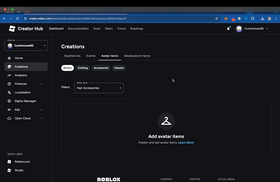
The process starts in Creator Hub, not in the item upload form. Find an IP listing that specifically offers a Marketplace license, then review its terms before applying.
- Open Creator Hub. Go to the Licenses catalog from the Explore menu.
- Choose an available IP. Check that Marketplace is one of the license types offered. A full-game or in-game sales license does not automatically grant Marketplace rights.
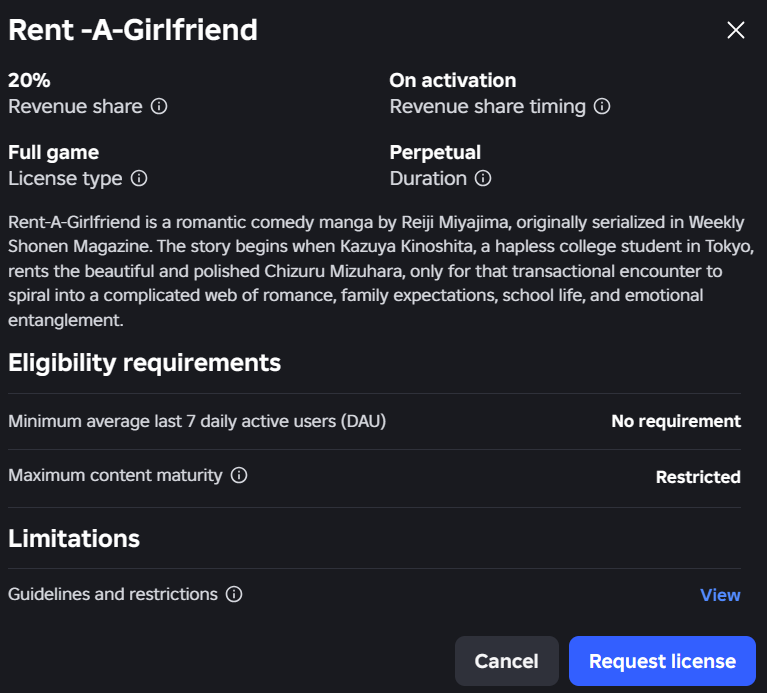
- Read the terms. Review revenue share, duration, eligibility requirements, content standards, brand guidelines, and resale conditions.
- Select Request License. Choose the account or group that will own or publish the licensed item.
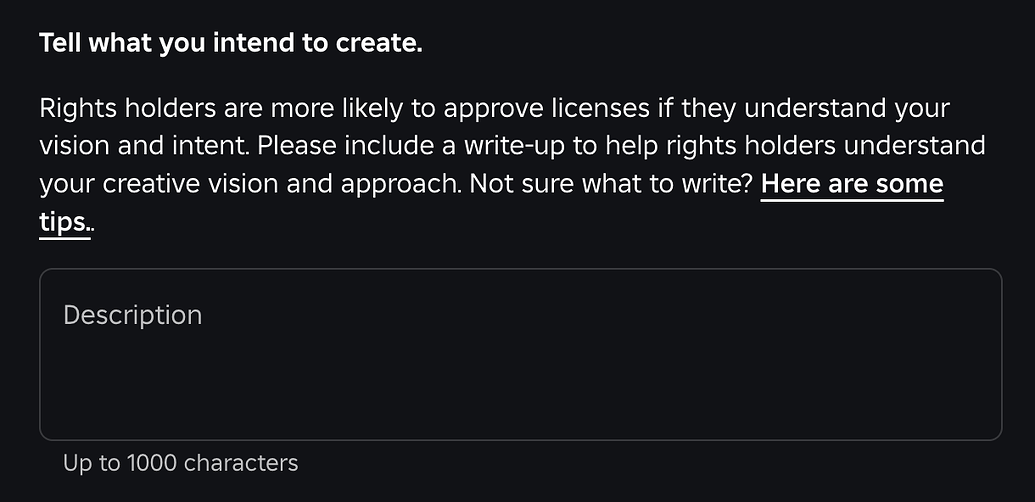
- Write a clear pitch. Explain the item concept and how it will represent the IP while following the rights holder’s guidelines.
- Submit the request. The rights holder reviews the proposal and can approve or reject it. Approval is not guaranteed.
- Publish with the approved license. After approval, select the applicable license from the dropdown in the item’s publishing settings.
Roblox’s documentation says image attachments are required for in-game sales and Marketplace license requests. Prepare relevant concept images or mockups that follow Roblox Community Standards and the IP owner’s guidelines.
How revenue sharing works
There is no single universal IP royalty rate for every Roblox Marketplace license. The rights holder chooses whether to offer the license and sets the revenue-share rate in its terms. Creators can review that rate before applying and should calculate likely earnings before investing in a large collection.
The IP revenue share applies alongside Roblox’s existing Marketplace fees and commissions. Roblox documents the standard Marketplace economics separately from the IP license share. For avatar items sold on the Marketplace, the creator’s standard share is 30% before the licensed-IP share is applied. In-game Marketplace purchases also include a share for the game owner. The exact licensed-IP amount depends on the agreement; do not assume every brand takes the same percentage.
Read the license details and the Sale Location and Revenue panel carefully. A percentage shown in another creator’s example is not a universal rate, and the calculation method should be understood from the specific agreement.
What creators should check before publishing
- Approved scope: A license for one franchise or use does not grant blanket rights to unrelated characters, logos, music, or artwork.
- Duration: Some licenses are time-limited; others are perpetual. Items covered by an expired or terminated license are taken off sale.
- Existing buyers: Roblox says users who already purchased an item can keep it unless the item is separately moderated.
- Item limit: The current documentation says each license allows up to 100 separate items.
- One license per item: Marketplace publishing currently supports only one IP license on an individual item.
- Proof of approval: Keep the agreement details and approved concept materials so the published item can be checked against the permitted scope.

What happens when a license expires?
Roblox says licensed Marketplace items are automatically taken off sale when their license expires or is terminated. Players who already bought them can keep them unless the item is separately moderated. Creators should track license end dates and stop selling licensed content when the agreement no longer covers it.
A Marketplace license does not make an unapproved fan item legitimate retroactively. Roblox warns that publishing content using another party’s intellectual property without permission can violate its Terms of Use and lead to content removal or account action. If a franchise is not listed, or its listing does not offer a Marketplace license, creators cannot assume a different license type is enough.
Why this could matter for Roblox’s avatar economy
For creators, official licensing can reduce uncertainty around recognizable brand-inspired avatar collections. For rights holders, it creates a defined route to approve designs, set usage rules, and receive a share of eligible sales. For players, it can make licensed collaborations easier to identify as badge visibility expands.
The system still depends on rights holders choosing to make licenses available and reviewing each request. It will not instantly turn every popular franchise into an open creator opportunity. The practical strategy is to treat licensing as a partnership: understand the brand rules, pitch a distinctive design, and create only after permission is granted.
Related Roblox creator coverage
- Roblox Collision Geometry Gets Tunable Precision: What Creators Need to Know
- Roblox Creator Hub: IP licensing for creators
- Roblox Creator Hub: Publish to Marketplace
Frequently asked questions
What is a Roblox Marketplace license?
It is permission from an IP rights holder to create and sell approved avatar items based on that intellectual property on the Roblox Marketplace.
Which avatar item categories are supported?
Roblox lists body items, clothing, accessories, animations, and makeup as supported categories for Marketplace licensing.
Does requesting a license guarantee approval?
No. The rights holder reviews the creator’s proposal against its content standards and brand guidelines and can approve or reject the request.
How many items can one Marketplace license cover?
Roblox’s current creator documentation says each license allows up to 100 separate items, subject to the terms of the agreement.
Does every Roblox IP license have the same revenue share?
No. The rights holder sets the revenue-share rate, which creators can review in the license terms before applying.
Can one avatar item use more than one IP license?
No. Roblox says Marketplace publishing currently supports up to one IP license associated with an item at a time.
What happens to licensed avatar items when a license ends?
The associated items are automatically taken off sale. Players who already purchased them can generally keep them unless the item is separately moderated.
Can creators use a popular character if it is not in the Licenses catalog?
Not through the License Manager. Creators need permission from the IP owner; a missing listing or missing Marketplace license does not grant permission to use the IP.
Official sources and further reading
- Roblox announcement: Create IP-Based Avatar Items With Marketplace Licenses (October 8, 2026)
- Roblox Creator Hub: IP licensing for creators
- Roblox Creator Hub: License Manager
- Roblox Creator Hub: Publish to Marketplace
- Roblox Creator Hub: Marketplace fees and commissions
Related X post
This earlier X post provides background on Roblox’s broader License Manager and how it connects rights holders with creators. It predates the October 2026 Marketplace-license announcement and is included as context, not as the announcement itself.
Author: Shivam Das