By Shivam Das
One of the most emotionally difficult questions raised by Natalee Holloway’s disappearance is also one of the easiest to ask from a distance: why did the people who had travelled to Aruba with her not all stay on the island and search when she failed to appear for the flight home?
The question has resurfaced as viewers revisit the case through Netflix’s Taken: Natalee Holloway. It is understandable. Natalee was 18, on a graduation trip with classmates, and last seen in the early hours of May 30, 2005, leaving a nightclub in a car with Joran van der Sloot and brothers Deepak and Satish Kalpoe. Later that morning, she did not meet the group for its scheduled return flight to the United States. The absence of someone who had been part of the trip only hours earlier is haunting to imagine.
But the phrase “the friends should have stayed and searched” compresses several different questions into one judgment. Who knew what, and when? Which friends were still in Aruba? What could teenagers realistically have done before they knew that Natalee was missing? Who was responsible for coordinating a search? And what did “searching” mean in the first hours, before investigators had established a reliable account of the night?
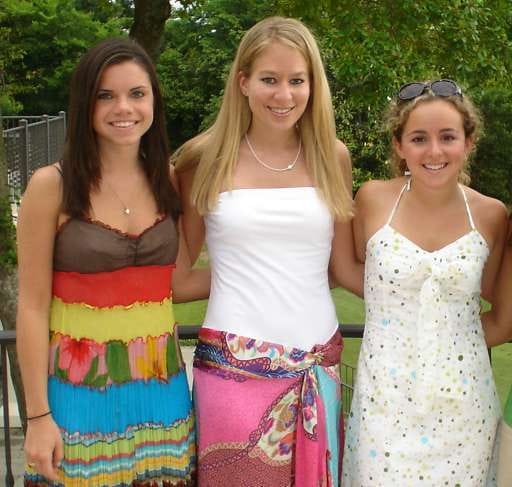
What is established about the return-flight morning?
Natalee travelled to Aruba with students from Mountain Brook High School in Alabama for a senior-class graduation trip. Court documents and contemporary reporting describe a group of roughly 120 to 124 students, with adult chaperones, arriving on May 26, 2005, and scheduled to return on May 30.
In the early hours of May 30, Natalee was last seen by classmates leaving Carlos’n Charlie’s in Oranjestad in a vehicle with van der Sloot and the Kalpoe brothers. She did not return to the Holiday Inn where the students were staying, and she did not appear for the group’s flight home. A federal affidavit later summarized those basic facts: she failed to return to Birmingham and was last seen by classmates entering the vehicle.
That sequence matters. The return flight was not an ordinary departure after a normal final night. It became the moment when the group’s expected routine collided with a missing-person emergency. The fact that Natalee was absent was immediately serious; the full significance of the absence, however, had to be established through calls, checks, interviews, and police involvement.

Did the friends simply leave without trying to find her?
That is the central assumption behind the criticism, and it should not be treated as a proven fact. The public record establishes that the class was scheduled to fly home and that Natalee missed the flight. It does not, by itself, establish that every friend left immediately, that no one tried to locate her, or that the classmates collectively made a decision to abandon a search.
Contemporary interviews show that some of Natalee’s friends were later speaking to reporters from Birmingham. In a June 2005 Fox News interview, two friends, Frances Ellen Byrd and Ruth McVay, discussed the trip and the night Natalee met van der Sloot. Their accounts are useful for understanding the social setting and what they remembered, but an interview conducted weeks later is not a complete minute-by-minute record of every student’s actions on the morning of May 30.
That distinction is important for responsible coverage. “The class was due to fly home” is a documented logistical fact. “All of her friends chose to fly home rather than help” is a much broader claim, and the sources cited here do not establish it. A viewer may feel that the group should have stayed together until Natalee was found, but that reaction should not be converted into an unsupported accusation against individual teenagers.

Why the criticism feels so powerful now
Hindsight changes how people interpret a moment. Viewers now know that Natalee never returned to her hotel, that the initial accounts given by van der Sloot changed over time, and that the case would become an international investigation lasting years. In 2023, van der Sloot admitted during proceedings connected to U.S. extortion and wire-fraud charges that he killed Natalee after she rejected his sexual advances and disposed of her body in the sea. Her remains have never been recovered.
Knowing that later history makes the morning of May 30 feel like a decisive fork in the road. People imagine that if more classmates had stayed, searched together, questioned people, or pressed authorities, something might have been discovered sooner. That is an emotionally understandable counterfactual. It is not proof that the friends possessed information that would have solved the case, or that their departure caused investigators to lose a specific piece of evidence.
There is also a basic problem with judging a group of teenagers as if they had the information and authority available to police. The classmates were young people on a school trip. They were not trained investigators, did not control the local police response, and could not compel witnesses to cooperate. Adult chaperones and authorities had responsibilities that were different from those of Natalee’s friends.
What could friends realistically have done?
There are reasonable steps that a close friend or fellow traveler might take when someone does not return to a hotel: check the room and belongings, contact the person’s phone or known companions, alert chaperones, notify hotel staff, and insist that local police be contacted. If a credible concern emerges, friends can share last-known movements, names, photographs, and any messages that may help establish a timeline.
But these actions are not the same as conducting a coordinated search of an island. Searching beaches, roads, buildings, water, and private property requires organization, local knowledge, permissions, and specialist resources. In Natalee’s case, searches later involved Aruban authorities, volunteers, Dutch personnel, and other teams. The scale and complexity of those efforts show why “the friends should have searched” is not a complete description of what a search required.
It is fair to ask whether the adults responsible for the trip had an effective emergency plan, how quickly the absence was escalated, and whether the available information was communicated efficiently. Those are questions about supervision and response systems. They are more precise than assigning blame to classmates whose individual decisions and circumstances are not fully documented in the public record.

What the early timeline tells us—and what it cannot tell us
According to the timeline reconstructed by ABC News, Natalee’s mother, Beth Holloway, and her husband, George “Jug” Twitty, travelled to Aruba after learning that Natalee had not returned. They identified van der Sloot to police as the person with whom Natalee had left the nightclub. The family’s arrival and immediate efforts became a major part of the first response.
The U.S. Department of Justice’s account of the later extortion case also records that Beth and family members went to Aruba and gave police van der Sloot’s name and address within hours of landing. That is a significant documented action by the family. It does not answer every question about what each classmate did before or after the flight, but it helps separate the family’s response from the students’ travel arrangements.
Early information was incomplete and, in important respects, misleading. Van der Sloot initially told people that he had brought Natalee back to her hotel. He later gave different accounts. The changing stories complicated the effort to establish what had happened and where investigators should look. A group of friends remaining on the island would not automatically have had access to the truth that was being withheld or distorted.
What friends said publicly about the night
In the June 21, 2005 Fox News interview, Ruth McVay said she was present when Natalee first met van der Sloot at the hotel casino and described that meeting as occurring during the final night of the trip. Frances Ellen Byrd also discussed going to Carlos’n Charlie’s with the group. Their comments provide a window into the social context of the evening and challenge some of the stories circulating at the time.
Those interviews should be read carefully. They are recollections, not sworn findings about every event after the nightclub closed. They do not establish that either friend knew where Natalee was after she left in the car, and they do not support treating the classmates as responsible for van der Sloot’s actions. The last confirmed sighting and the later admission point to the danger Natalee faced after leaving the venue—not to wrongdoing by the friends who had been with her earlier.

Does staying longer necessarily mean the outcome would have changed?
No one can responsibly know that. A larger group of students staying in Aruba might have helped preserve memories, answer questions, or provide additional support. It might also have created practical difficulties: accommodation, supervision, travel arrangements, parental consent, and the need to coordinate with local authorities. The public record does not demonstrate that the friends’ return travel prevented a particular search or caused a specific investigative failure.
Counterfactuals can be useful when they identify a real weakness in a response. They become unfair when they turn uncertainty into certainty. Saying “I wish more people had been able to stay and help” expresses grief and frustration. Saying “her friends could have saved her if they had stayed” makes a claim that the available evidence cannot prove.
There is a further point: Natalee had already disappeared before the class was due to leave. The most important unanswered questions concern what happened after she entered the car, the decisions made by the men who were with her, the accuracy of the accounts given to investigators, and the effectiveness of the official response. Those questions should not be displaced by a debate that places the emotional burden on other teenagers.
How Netflix’s documentary changes the conversation
Taken: Natalee Holloway, which premiered on Netflix on November 4, 2026, revisits the case through Beth Holloway and people connected to Natalee’s disappearance. Netflix describes the three-part series as including access to those who were with Natalee and previously unseen material. That wider access naturally encourages viewers to revisit the decisions made during the trip and the first hours after Natalee was missing.
A documentary can bring forgotten details into view, but viewers should distinguish newly presented testimony from facts independently established in court records or official statements. The series also arrives after van der Sloot’s 2023 admission. His U.S. guilty plea was for extortion and wire fraud connected to his attempt to obtain money from Beth in exchange for information about Natalee’s remains; it was not a U.S. conviction for Natalee’s murder. That legal distinction remains important when discussing what is known.
The most constructive way to watch the documentary is to ask what each person actually knew at the time, what they later learned, and what the evidence supports. That approach leaves room for hard questions about the trip’s supervision and the early response without turning classmates into convenient villains.
A fairer question than “Why did they fly home?”
The question deserves a more careful form: once Natalee failed to appear, how quickly did the adults and authorities understand that she was missing, what information was available to them, and how effectively did they organize the response? That inquiry is specific, answerable in part through records and testimony, and focused on the systems that had responsibility for a missing teenager.
It is also possible to acknowledge the emotional force of the viewers’ reaction. Friends are often imagined as the people who would never leave one another behind. In the aftermath of a disappearance, the thought of a group boarding a plane while one member is missing is almost unbearable. But an image that feels morally obvious in hindsight is not a complete account of what happened in real time.
Natalee’s friends deserve to be discussed through what they said and did, not through assumptions about motives. The responsibility for her killing rests with the person who admitted to it. The questions about the early response should be directed toward documented decisions, adult supervision, and investigative procedures—not transformed into a verdict against young people whose full actions are not established by the public record.
Frequently asked questions
Did Natalee Holloway’s classmates fly home from Aruba on May 30, 2005?
The group was scheduled to return to the United States on May 30. Natalee did not meet the classmates for the return flight. That fact does not, by itself, establish what every individual friend did or whether everyone left at the same time.
Did Natalee’s friends try to find her before the flight?
Public accounts say friends were unable to locate her at the hotel and that a chaperone relayed the concern to her mother. The available sources cited here do not provide a complete, minute-by-minute account of every classmate’s actions that morning.
Why do some viewers criticize the friends for leaving Aruba?
Viewers often judge the decision through hindsight: they know Natalee had disappeared and that the case remained unresolved for years. The criticism reflects a belief that more classmates should have stayed together to help, but it should not be treated as proof that the friends abandoned her or caused an investigative failure.
How many students were on the Aruba graduation trip?
Published accounts and court documents describe approximately 120 to 124 Mountain Brook High School students, with adult chaperones. Sources differ slightly in the figure, so it is more accurate to describe the group as roughly 120 students rather than claim one exact count without qualification.
Who was the last person seen with Natalee Holloway?
She was last seen leaving Carlos’n Charlie’s in the early hours of May 30, 2005, in a vehicle with Joran van der Sloot and brothers Deepak and Satish Kalpoe.
Did Joran van der Sloot confess to killing Natalee?
In October 2023, during proceedings for U.S. federal extortion and wire-fraud charges, van der Sloot gave investigators an account admitting that he killed Natalee. The U.S. guilty plea and conviction were for extortion and wire fraud, not a murder conviction in Natalee’s case.
Have Natalee Holloway’s remains been found?
No. Her remains have never been recovered.
Does the evidence prove that the friends could have prevented her death?
No. The available record does not establish that the classmates’ travel decisions caused her death or that staying on the island would have changed the outcome. Such claims are counterfactual speculation, not proven findings.
Sources and further reading
- U.S. federal affidavit: background on Natalee’s missed return flight and the family’s first actions in Aruba
- Fox News, June 22, 2005: Natalee’s Friends Go “On the Record”
- ABC News: Timeline of Natalee Holloway’s disappearance and the 2023 admission
- CBS News/AP: Natalee Holloway—Paradise Lost photo archive
- Netflix Tudum: Background on Taken: Natalee Holloway
- Netflix Tudum: Beth Holloway’s update following the documentary’s release
- U.S. Department of Justice: Van der Sloot’s guilty plea and sentence for extortion and wire fraud
Related reading: “I Finally Have a Conclusion”: Beth Holloway on Why She Did the Documentary Now
Editorial note: This article distinguishes documented events from viewers’ hindsight judgments and counterfactual theories. Image credits identify the publishers shown in the cited coverage; image availability on a publisher’s site does not itself grant republication rights. Confirm permissions before commercial reuse.