By Shivam Das
In April 2026, the Natalee Holloway investigation crossed an important legal boundary. After Beth Holloway filed a criminal complaint in the Netherlands against Joran van der Sloot, Aruba’s Public Prosecutor’s Office made its case file available to prosecutors in Amsterdam so they could assess whether Dutch law could support further action. The move did not mean that van der Sloot had been charged with Natalee’s killing. It meant that Dutch prosecutors could examine the evidence gathered in Aruba, together with material obtained from the United States, and consider the complaint.
The distinction is crucial. The April development was a transfer of investigative material for legal review, not an announcement of a new prosecution or a finding of guilt. The Aruban authorities had said their review of documents received from the United States had not, at that stage, produced sufficient evidence for a murder or qualified-manslaughter charge in Aruba. They also explained that the limitation period for ordinary manslaughter had expired there, while the Netherlands had a different legal position.

What happened in April 2026?
The key public announcement came on April 2, 2026. Aruba’s Public Prosecutor’s Office said it had offered the entire Aruban case file concerning Natalee’s disappearance to the Public Prosecutor’s Office in Amsterdam. Dutch prosecutors needed the material to assess the criminal complaint Beth had recently filed in the Netherlands, alleging murder and/or manslaughter by van der Sloot.
Contemporaneous Dutch news reporting by ANP described the file as transferred to the Amsterdam office on April 2. The official Aruban statement used more precise language: Aruba offered to make the full dossier available and said it would provide it to Amsterdam for the assessment. These accounts point to the same practical development—Dutch prosecutors were to receive the Aruban investigative record—but the distinction in wording matters when describing exactly what the official announcement confirmed.
The complaint had been filed in mid-March 2026. The April announcement therefore followed a request for Dutch authorities to examine whether a case could proceed in the Netherlands, rather than representing a new discovery about the night Natalee disappeared.

Why Beth Holloway filed a complaint in the Netherlands
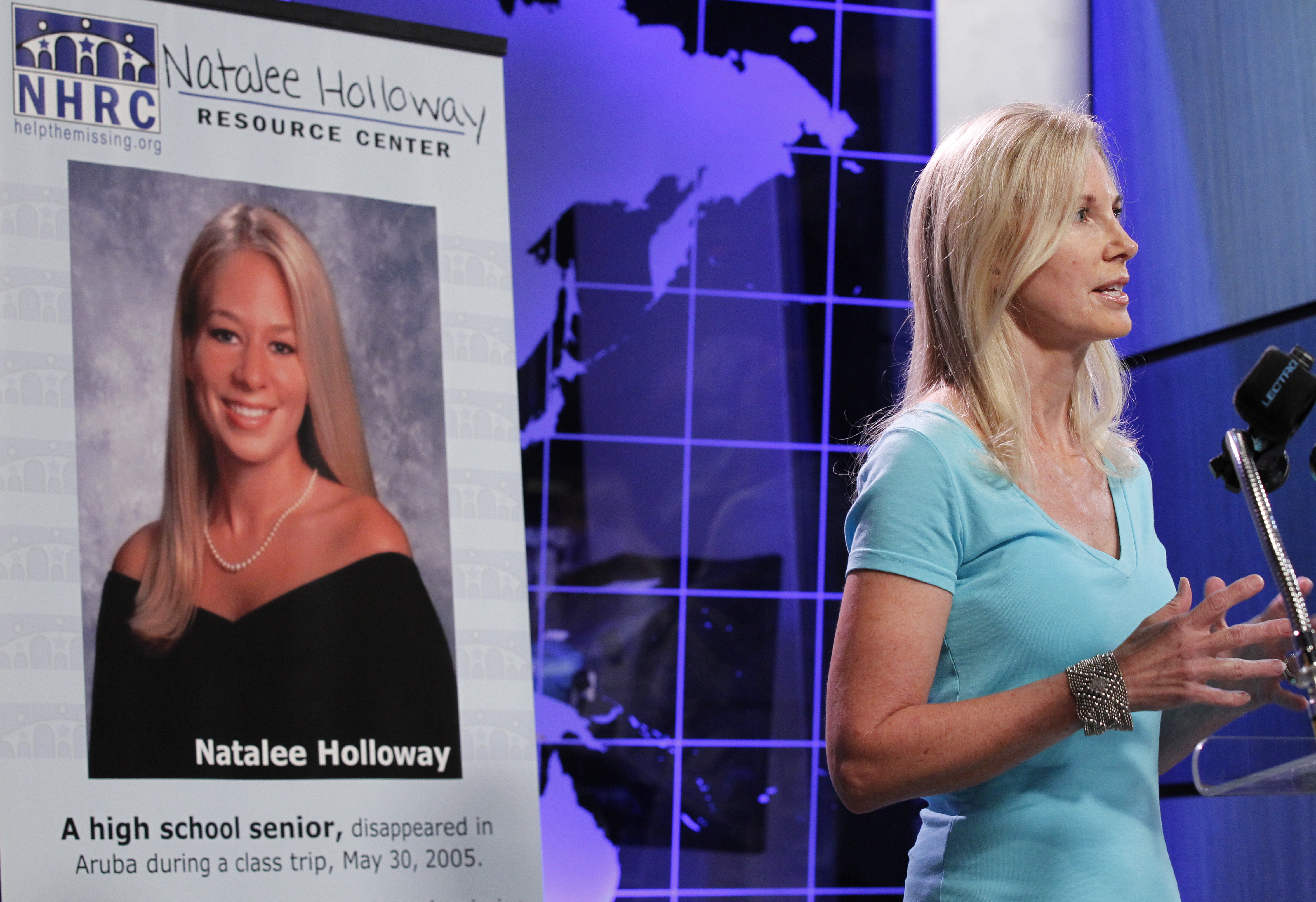
Natalee Holloway, an 18-year-old from Mountain Brook, Alabama, disappeared during a high-school graduation trip to Aruba on May 30, 2005. She was last seen in the company of van der Sloot and two other men after leaving a nightclub. Despite extensive searches and years of investigation, her remains have never been recovered.
Van der Sloot is a Dutch national. That fact became relevant to the legal question facing prosecutors: Aruba said that, although it could no longer prosecute him there for ordinary manslaughter because the limitation period had expired, the Netherlands had not reached the same time bar. The Aruban prosecutor’s statement also said that, because the suspect is Dutch, prosecution in the Netherlands was in principle possible. “In principle” is not a promise that charges will follow; it describes a possible legal route that still requires an assessment of evidence and applicable law.
Beth’s complaint asked Dutch authorities to examine whether van der Sloot could face criminal responsibility for Natalee’s death. The complaint did not itself establish that an offence had been proved. It gave prosecutors a formal basis to consider the allegations and the investigative material assembled across jurisdictions.

What was in the file Aruba had received from the United States?
The April announcement followed a long international evidence-gathering process. On October 19, 2023, Aruba’s Public Prosecutor’s Office sent a request for legal assistance to the U.S. Department of Justice. The request sought documents that could be relevant to the disappearance investigation, including statements made by van der Sloot.
According to the Aruban prosecutor’s April 2 statement, the United States cooperated and delivered a large quantity of the requested documents in January 2026. Aruba then reviewed those materials. The office said that, based on its further investigation of the documents, there was not yet sufficient evidence to support charges of murder or qualified manslaughter.
This is an important part of the story because it explains why the dossier was not simply a collection of old police reports. It included material sought from U.S. authorities after van der Sloot’s 2023 proceedings in Alabama. The Dutch review could therefore consider information gathered through the American legal process as well as the original Aruban investigation.
There is also a legal distinction that should not be lost. In October 2023, van der Sloot pleaded guilty in the United States to federal extortion and wire-fraud offences connected to his attempt to obtain money from Beth Holloway in exchange for information about Natalee’s remains. During the related proffer, he gave an account of killing Natalee. The U.S. convictions were for extortion and wire fraud, not a murder conviction in Natalee’s case.
Why Aruba said it could not pursue every possible charge itself
The Aruban prosecutor’s statement made a careful distinction between different offences. It said the documents reviewed so far did not provide sufficient evidence for murder or qualified manslaughter. It also said that prosecution for ordinary manslaughter in Aruba was no longer possible because the limitation period had expired.
That does not mean the Aruban authorities declared that nothing happened, nor does it mean a Dutch court had already accepted the complaint. It means the Aruban office identified a legal barrier to one type of prosecution under Aruban law and referred the material to the jurisdiction where it believed the limitation period had not expired.
Criminal limitation periods are jurisdiction-specific. They depend on the offence, the applicable law and the relevant dates. A time bar in Aruba does not automatically answer whether proceedings could be brought in the Netherlands. Conversely, the fact that a prosecution may be legally possible in the Netherlands does not establish that the evidence meets the threshold for charges or conviction.
What the 2023 admission did—and did not—settle
For Beth Holloway, van der Sloot’s 2023 account was a long-awaited answer to the question that had shaped her life since Natalee disappeared. The account described an attack on an Aruban beach and the disposal of Natalee’s body in the sea. The family’s experience of hearing it was deeply painful, but it brought an end to years of uncertainty about what van der Sloot said had happened.
Legally, however, the admission arose within a federal case about extortion and wire fraud. The U.S. court sentenced him for those crimes. It did not conduct a trial on a charge of murdering Natalee, and the guilty plea did not result in a murder conviction in her case. Natalee’s remains have not been found.
This is why the Dutch complaint mattered. It was a separate effort to have prosecutors consider criminal responsibility for Natalee’s death under Dutch law, rather than treating the 2023 U.S. proceedings as if they had already resolved that question in court.
What Dutch prosecutors needed to examine
The Amsterdam office needed to assess the complaint against the available record. That meant examining the Aruban investigative file, the documents obtained from the United States, the statements connected to the 2023 proceedings and the legal questions raised by jurisdiction and limitation periods.
Prosecutors would have to decide whether the material supports an offence that can be prosecuted in the Netherlands, whether Dutch jurisdiction applies, and whether the evidence is sufficient to justify further criminal proceedings. Those are distinct questions. A file can be transferred without charges being filed, and a complaint can be reviewed without a prosecution being opened.
As of the latest public update cited here, Netflix’s November 4, 2026 interview with Beth Holloway said Dutch prosecutors were obtaining the documents and Natalee’s case files. Beth described the process as being under way, while emphasizing that she was pursuing another step toward justice. That interview did not announce that van der Sloot had been charged with Natalee’s murder.
Why the April handover mattered beyond one case
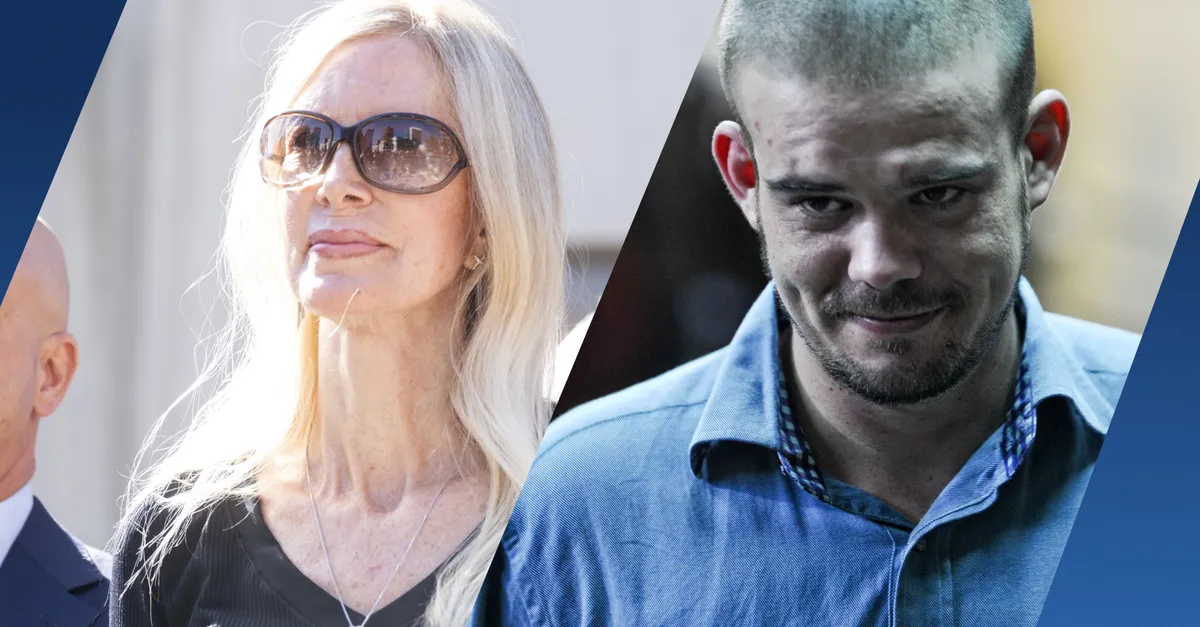
The file transfer showed how a long-running investigation can move between legal systems when a case involves a victim from one country, events in another and a suspect who is a national of a third. The original disappearance took place in Aruba. Natalee was American. Van der Sloot is Dutch. The 2023 federal case took place in the United States, while he is serving a sentence in Peru for the 2010 murder of Stephany Flores Ramírez.
Each jurisdiction dealt with a different part of the record and a different legal question. The U.S. case punished the extortion and wire fraud scheme. Peru convicted van der Sloot of Flores Ramírez’s murder. Aruba investigated Natalee’s disappearance and sought U.S. documents. The Netherlands was asked to evaluate Beth’s complaint in light of its own laws.
That complexity can make headlines sound more conclusive than the underlying facts. “Files handed over” does not mean “charges filed.” “A confession” in a plea process does not mean “convicted of murder” in a separate case. And “prosecution possible” does not mean “prosecution certain.” Keeping those distinctions clear is essential to reporting accurately on Natalee’s case and on the family’s continuing pursuit of justice.
What happened next?
The next meaningful development would be an official decision by the Dutch Public Prosecution Service about the complaint: whether it will seek further investigative steps, bring charges, or decline prosecution. The April 2026 transfer was an important procedural step, but it was not the final legal outcome.
Until prosecutors announce a decision, the most accurate account is that Aruba made its investigative dossier available to Amsterdam after Beth Holloway filed a complaint in the Netherlands; the file included documents obtained from U.S. authorities in January 2026; and Dutch prosecutors were reviewing the material. Van der Sloot remained in prison in Peru, and he had not been charged with Natalee’s murder in the Netherlands as of the November 2026 update cited in this article.
Frequently asked questions
When did Aruba send the Natalee Holloway case file to Dutch prosecutors?
The key public announcement was made on April 2, 2026. Aruba’s Public Prosecutor’s Office said it would make the entire Aruban dossier available to the Public Prosecutor’s Office in Amsterdam. Dutch ANP reporting that day described the file as transferred.
Why was the Natalee Holloway file sent to the Netherlands?
Beth Holloway filed a criminal complaint in Amsterdam in mid-March 2026 against Joran van der Sloot, alleging murder and/or manslaughter. Dutch prosecutors needed the Aruban investigative file to assess that complaint.
Did the April 2026 transfer mean Joran van der Sloot was charged?
No. The transfer made investigative material available for prosecutors to review. It was not an announcement of charges or a conviction.
What did Aruba say about the evidence?
Aruba’s Public Prosecutor’s Office said its review of documents received from the United States had not, at that stage, produced sufficient evidence for murder or qualified-manslaughter charges. It also said ordinary manslaughter could no longer be prosecuted in Aruba because the limitation period had expired.
Why could the Netherlands consider the complaint?
The Aruban prosecutor’s statement said the limitation period for manslaughter had not expired in the Netherlands and that prosecution there was in principle possible because van der Sloot is Dutch. Dutch prosecutors still had to assess jurisdiction, evidence and the applicable law.
What U.S. documents did Aruba receive in January 2026?
Aruba said the U.S. Department of Justice provided a large quantity of documents requested through a legal-assistance process, including material that could serve as evidence in the disappearance investigation and statements by van der Sloot.
Was van der Sloot convicted of Natalee Holloway’s murder in the United States?
No. He pleaded guilty to federal extortion and wire fraud offences connected to an attempt to obtain money from Beth Holloway. He gave an account of Natalee’s killing during the proceedings, but the U.S. convictions were not a murder conviction in her case.
Have Natalee Holloway’s remains been found?
No. Her remains have never been recovered.
Had Dutch prosecutors filed murder charges by November 2026?
The November 4, 2026 Netflix interview with Beth Holloway described prosecutors as obtaining the case documents. It did not report that van der Sloot had been charged with Natalee’s murder.
Sources and further reading
- Public Prosecutor’s Office of Aruba, April 2, 2026: official statement on making the Natalee Holloway dossier available to Amsterdam
- NL Times / ANP: Aruba hands Natalee Holloway disappearance case to Dutch authorities
- Netflix Tudum, November 4, 2026: Beth Holloway on the Dutch legal effort and what comes next
- U.S. Department of Justice: Federal indictment for extortion and wire fraud
- Netflix Tudum: Background on Natalee Holloway’s disappearance and the documentary
- Openbaar Ministerie Aruba: Public Prosecutor’s Office
Related reading: “I Finally Have a Conclusion”: Beth Holloway on Why She Did the Documentary Now · “Hard to Hear, Horrible to Hear”: Beth Holloway on Listening to the Full Confession · Unreported Details from Investigators in Taken: Natalee Holloway
By Shivam Das