For nearly two decades, Joran van der Sloot offered sharply different explanations of what happened to Natalee Holloway after she disappeared in Aruba on May 30, 2005. He first said he left her near her hotel, later described her dying on a beach, then claimed she had been sold into sexual slavery, and in 2010 supplied a story about a fatal fall and a body supposedly hidden in a house foundation. He later said some of those accounts were lies. In October 2023, while pleading guilty to federal extortion and wire-fraud charges in Alabama, he gave investigators a detailed account in which he admitted killing Holloway.
The 2023 account was the most consequential version because it was provided as part of a federal plea agreement and was heard by Natalee’s parents. But the history matters: earlier accounts repeatedly shifted, and some were explicitly recanted or contradicted by investigators. The public record is not a neat sequence of verified confessions. It is a chronology of claims, reversals, investigative findings, and finally a detailed admission made in a separate federal case.

May 2005: The first account was that he dropped her near the hotel
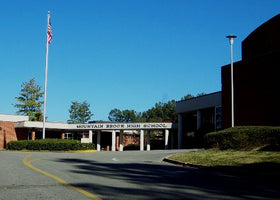
Holloway, an 18-year-old from Mountain Brook, Alabama, disappeared during a high-school graduation trip to Aruba. She was last seen leaving a nightlife venue in Oranjestad with van der Sloot and two other young men. In the first days of the investigation, van der Sloot told authorities that he and Holloway had gone toward the California Lighthouse area and that he dropped her near the Holiday Inn around 2 a.m.
That account did not resolve the central question: Holloway did not return to her hotel or board the flight home with her classmates. ABC News later reported that van der Sloot initially told Beth Holloway he had returned Natalee to the hotel, while surveillance footage showed she never came back to the property. The discrepancy became one of the earliest public reasons investigators and the family questioned his account.

2006: He said he left Natalee on the beach
In a February 2006 ABC News interview, van der Sloot said he had left Holloway sitting on the sand by the ocean and gone home. He denied harming or killing her. This was materially different from the earlier suggestion that he had dropped her at her hotel: in this account, she was still on the beach when he last saw her.
That interview did not provide an independently verified explanation for how Holloway disappeared. It was his account of the last time he said he saw her, not a finding by police or a court. The distinction is important when reconstructing the timeline: a statement made publicly by a suspect is evidence of what he claimed at that moment, not proof that the events happened as described.
February 2008: A hidden-camera account, followed by a denial
Dutch crime reporter Peter R. de Vries arranged for conversations with van der Sloot to be secretly recorded by a man van der Sloot believed was a friend. In the footage broadcast in the Netherlands in February 2008, van der Sloot said he had been with Holloway when she collapsed on a beach, believed she was dead, and asked the other man to help dispose of her body in the sea.
The footage prompted renewed attention from Aruban authorities. But van der Sloot then said he had been lying in the recorded conversations and denied involvement in Holloway’s disappearance. ABC’s later timeline notes that officials were unable to corroborate the statements in the tape. The recording is therefore a significant episode in the chronology, but it should not be described as a verified account of the death.
November 2008: The story about sexual slavery was also withdrawn
Later in 2008, during an interview with Greta Van Susteren, van der Sloot claimed that he had sold Holloway into sexual slavery for money. ABC News reported that he contacted Van Susteren after the interview and said the story was a lie. That claim was not established as fact, and the later retraction made it another example of how his public explanations shifted.
By this point, the public had heard incompatible narratives: that he left Holloway at her hotel, that he left her on the beach, that she died and a friend disposed of her body, and that he sold her. None of these accounts, at the time, provided investigators with a corroborated location for her remains.
2010: The false location story and the extortion case
In March 2010, van der Sloot contacted Beth Holloway’s lawyer, John Q. Kelly, and offered information about Natalee’s remains in exchange for money. According to the U.S. Department of Justice, he sought $250,000 and received a total of $25,100. During the recorded meeting, he described a different sequence: he said he had picked Natalee up, that she wanted to be put down, and that her head struck a rock. He then directed Kelly to a house and claimed his father had buried Natalee’s body in its foundation.
The location claim did not withstand investigation. The federal affidavit described checks of the property and construction records that contradicted the suggestion that a body could have been buried in the foundation at the time. The affidavit also records a later email in which van der Sloot admitted he had lied about the location of Natalee’s remains. The money-for-information scheme became the basis of the U.S. extortion and wire-fraud prosecution.
This episode is especially important when comparing the stories: the 2010 account was not simply another untested version. It was tied to a criminal scheme for which he later pleaded guilty, and the purported location information was shown to be false. The DOJ said he provided information he later described as “worthless.”

October 2023: The detailed confession in the federal plea case
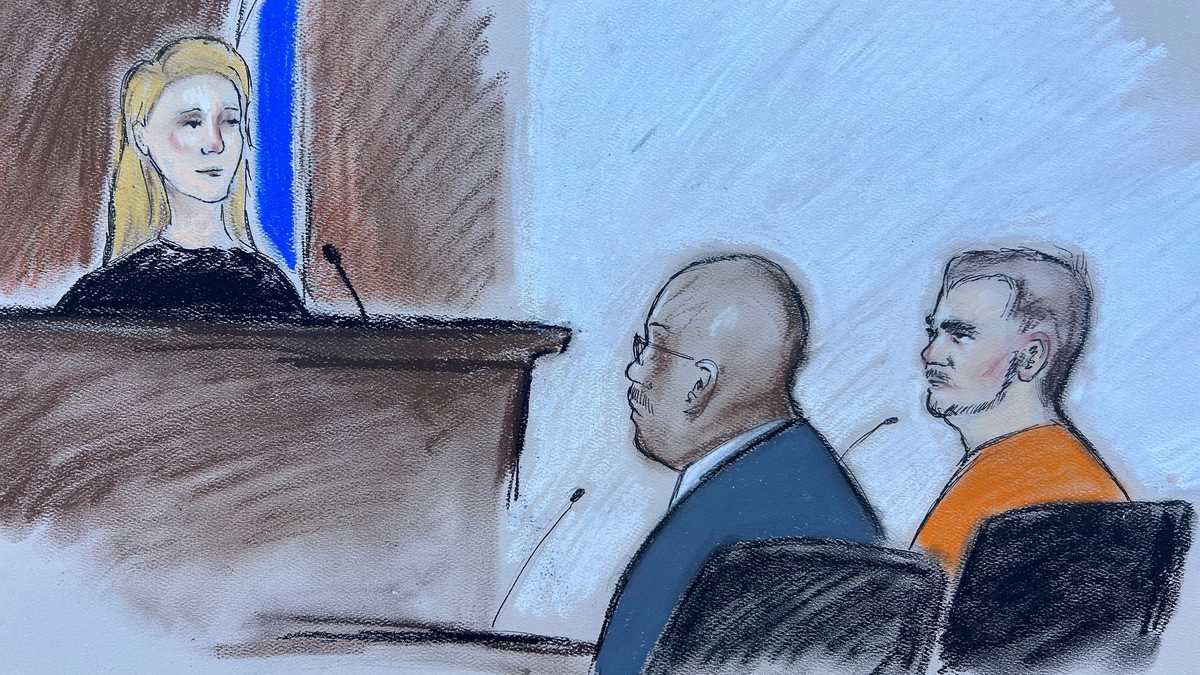
On October 18, 2023, van der Sloot pleaded guilty in federal court in Alabama to extortion and wire fraud. The DOJ said the scheme involved soliciting money from Beth Holloway by promising information about Natalee’s remains and the circumstances of her death. As part of the plea agreement, he agreed to provide full, complete, accurate, and truthful information about the disappearance.
In the account he gave to federal investigators, van der Sloot said Natalee rejected his sexual advances on the beach. He described striking her with a cinder block and pushing her body into the sea. The Associated Press reported that Natalee’s parents heard the account in real time and that Beth Holloway said the confession finally answered what happened to her daughter.
The confession was a major development, but its legal context should be stated accurately. The federal conviction was for extortion and wire fraud—not a U.S. murder conviction for Natalee’s death. The DOJ release explains the guilty plea and sentence in the financial-crime case. Van der Sloot received a 20-year federal sentence to run concurrently with his Peruvian sentence for the 2010 murder of Stephany Flores Ramírez.

How the versions compare
| Period | What van der Sloot said | What happened to the account |
|---|---|---|
| 2005 | He dropped Natalee near her hotel. | She did not return to the hotel; the account was questioned. |
| 2006 | He left her sitting on the beach and went home. | He denied harming her; the account did not explain her disappearance. |
| 2008 | In hidden-camera footage, he said she collapsed and a friend helped dispose of her body at sea. | He later said he had lied; officials could not corroborate the statement. |
| Late 2008 | He claimed he sold her into sexual slavery. | He later told the interviewer the story was fabricated. |
| 2010 | He described a fatal blow and claimed her body was buried in a house foundation. | The location story was contradicted by investigative checks; he admitted he had lied about the remains’ location. |
| 2023 | In the federal plea process, he described attacking Natalee with a cinder block and pushing her body into the sea. | The detailed admission was given under the federal agreement connected to his guilty plea for extortion and wire fraud. |
What the final confession changed—and what it did not
The 2023 admission changed the public record because it was more detailed than the earlier shifting stories and was made in a formal federal proceeding connected to a guilty plea. It gave Natalee’s parents an account of how van der Sloot said she died. It also clarified the central contradiction in the 2010 episode: the location he had offered to sell to her family was false.
But the confession did not produce Natalee’s remains. Her body has not been found. Nor should the confession be used to convert every earlier statement into a reliable detail. The 2008 and 2010 accounts were recanted or disproved in important respects. The most responsible reconstruction keeps each statement attached to its date, its context, and the evidence that did—or did not—support it.
For readers following the wider story, see our coverage of where van der Sloot is serving his sentence in Peru, the status of the Dutch murder complaint, and the details surrounding why Natalee’s remains have never been found.
Sources and documents
- ABC News: Natalee Holloway’s disappearance timeline — the early hotel account, 2006 interview, 2008 recording, and 2010 story.
- ABC News: Beth Holloway’s account of the changing stories — the 2006, 2008, and 2010 versions and the later retractions.
- U.S. Department of Justice: 2023 guilty plea and sentence — the federal charges, plea agreement, and $25,100 payment.
- Associated Press: 2023 confession and the Holloway family’s response.
- CBS News: What the 2023 confession revealed.
- Federal affidavit in the extortion investigation (PDF) — the 2010 account, property checks, and admission that the remains-location claim was a lie.
- Associated Press, republished by the Pittsburgh Post-Gazette: 2008 hidden-camera recording.
Editorial note: This article distinguishes van der Sloot’s statements from independently corroborated facts and legal findings. It does not treat the earlier recanted stories as established events.