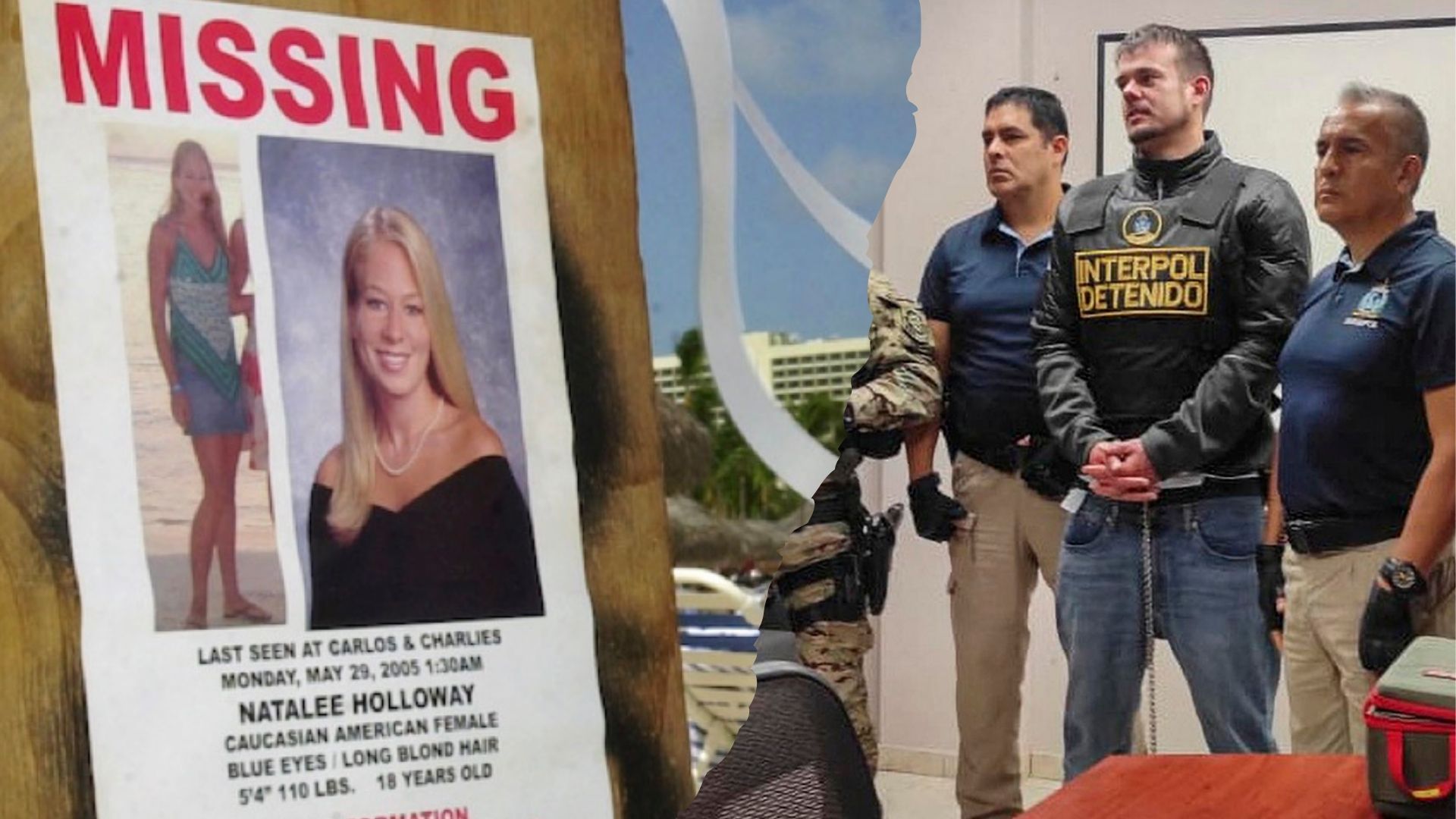
For years, the public knew that the FBI investigated Joran van der Sloot’s 2010 offer to sell information about Natalee Holloway’s disappearance. What the public had not seen was the surveillance recording of the hotel-room meeting at the center of that operation. Netflix’s three-part documentary Taken: Natalee Holloway brings that recording into public view. Netflix says the footage had remained in FBI custody and had never previously been publicly released.
The footage gives viewers a direct look at one encounter between van der Sloot and John Q. Kelly, the attorney for Natalee’s mother, Beth Holloway. It shows the proposed payment arrangement being discussed and van der Sloot presenting himself as ready to explain where Natalee’s remains could be found. But it is not the whole investigation, and it does not prove every claim made during the meeting. Its importance is that viewers can now see a moment previously described largely through court records and reporting.

What the newly released footage is
Netflix’s official companion coverage says Taken: Natalee Holloway includes footage from a 2010 FBI operation aimed at bringing van der Sloot to the United States to face charges. The three-part series premiered November 4, 2026. Reporting on the episode identifies the footage as a May 2010 meeting in an Aruba hotel room between van der Sloot and Kelly.
The meeting followed van der Sloot’s offer to provide information about Natalee’s remains in exchange for money. Beth Holloway had contacted the FBI, and the meeting was recorded as part of the investigation. The footage is a primary visual record of that encounter, but viewers should not assume it includes every camera angle, communication between agencies, or investigative decision made before and after the meeting.
The $250,000 offer and the money actually paid
The central allegation was that van der Sloot offered to tell Beth Holloway where her daughter’s remains were and explain what had happened to her in exchange for $250,000. A June 9, 2010 joint statement from the U.S. Attorney’s Office in Birmingham and the FBI confirmed that van der Sloot had offered information about the location of Natalee’s remains and the circumstances of her death for that amount. It also confirmed that the FBI-led investigation was conducted with Aruban authorities.
The proposed $250,000 should not be confused with the amount he received. Reporting on the footage describes an initial payment arrangement of $25,000: Kelly counted out $10,000 in cash, while Beth wired another $15,000 after the agreement was signed. The Justice Department later stated that van der Sloot received $25,100 in total and supplied information he subsequently described as worthless.
There is another important detail that is often lost in summaries. The FBI’s 2010 joint statement explicitly corrected reports suggesting that the FBI had supplied the $25,000. Officials said the money was private funds. That clarification is part of the contemporaneous government record and should be preserved when describing the operation.

What viewers can see in the hotel-room exchange
Coverage describing the documentary says the recording shows Kelly explaining the proposed contract and asking van der Sloot whether he was ready to be specific about Natalee’s location. Van der Sloot says he is ready. The two discuss the agreement and the money. The exchange captures the moment when the promise of information was being turned into a documented financial arrangement.
The difference between the proposed total and the initial payment is essential. Van der Sloot sought $250,000 for the promised information; the initial transfer was $25,000, and the Justice Department says the total he received was $25,100. It would be inaccurate to write that he received the full quarter-million dollars.
A recording can preserve what people said and did in a room. It cannot, by itself, establish that the promised information was true, show every off-camera event, or answer what investigators knew at every point in the operation.
The false story about a house foundation
After the hotel meeting, van der Sloot took Kelly to a nearby house and claimed Natalee’s body had been placed in the property’s foundation while it was under construction. The location gave the promise of information a physical lead that could be checked. But the story did not hold up: reporting on the documentary says investigators determined the house was not under construction at the relevant time in May 2005.
The Justice Department’s 2023 account of the plea agreement says that after receiving $25,100, van der Sloot provided information he later described as worthless. The foundation story should therefore be understood as part of the false information used in the extortion scheme, not as a reliable account of where Natalee’s remains were located.
In 2023, van der Sloot pleaded guilty to federal extortion and wire-fraud charges and gave an account of Natalee’s death as part of the plea process. Her remains have never been recovered. The false 2010 house-foundation claim should not be confused with the later statements in the federal proceedings.
Why the FBI did not arrest him immediately
The footage has revived questions about the timing of the investigation. In April 2024, members of the House Judiciary Committee wrote to the FBI’s Birmingham field office seeking information about whether investigators missed an opportunity to apprehend van der Sloot in 2010. The letter said that, after the money transfer, Kelly had been told van der Sloot was under round-the-clock surveillance. It asked the FBI to explain what happened next.
The committee letter was an oversight request, not a finding that the FBI committed misconduct. In its June 2010 statement, the FBI and U.S. Attorney’s Office said the case was complex and that the evidence, charges, and procedures needed to obtain custody were still being developed. Officials said the investigation was not sufficiently developed to bring charges before van der Sloot left Aruba. They also said the investigation was not related to the murder of Stephany Flores in Peru.
That context matters when watching the documentary. The hotel-room recording shows a meeting and payment; it does not answer every question about surveillance, arrest timing, or charging decisions. A balanced account should include both the FBI’s contemporaneous explanation and the later congressional questions without treating the oversight inquiry as a final verdict.
How the operation led to federal charges
Van der Sloot left Aruba for Peru in May 2010. Federal prosecutors filed a criminal complaint charging him with extortion and wire fraud on June 3, 2010. The U.S. Attorney and FBI confirmed the investigation in their June 9 statement. The case remained unresolved for more than a decade while van der Sloot served a Peruvian sentence for the murder of Stephany Flores Ramírez.
Peru temporarily extradited him to the United States in June 2023. On October 18, 2023, he pleaded guilty to extortion and wire fraud and was sentenced to 20 years in federal prison. The Justice Department said the sentence would run concurrently with his Peruvian sentence. The plea agreement required him to provide truthful information about Natalee’s disappearance.
The guilty plea resolved the federal extortion and wire-fraud case. It should not be described as a separate U.S. murder conviction for Natalee’s death. The documentary traces how the 2010 operation became part of the long route to the federal case’s resolution.

What the series adds—and what it cannot establish
The documentary makes a previously unseen primary-source recording available to a broad audience. It allows viewers to observe the hotel-room exchange rather than relying only on later descriptions. That can deepen understanding of how the proposed deal was presented and why the meeting mattered.
But archival footage has limits. The public should not infer that a short excerpt is the entire surveillance operation, all FBI deliberations, or the complete evidence file. Nor does the recording make van der Sloot’s claims about Natalee’s remains true. The house-foundation story was false, and the Justice Department later described the information he provided as worthless.
The most reliable way to assess the footage is alongside the official record: the 2010 FBI and U.S. Attorney statement, the 2023 Justice Department announcement, and the 2024 congressional oversight letter. Together, they show what agencies publicly confirmed, what prosecutors later established through the guilty plea, and which questions about the operation continued to be raised.
For related coverage, read our report on the reported prison threats involving Joran van der Sloot. That separate story concerns allegations made years after the FBI operation and should not be conflated with the 2010 extortion investigation.
Frequently asked questions
Was the FBI footage ever shown publicly before Taken: Natalee Holloway?
Netflix’s official coverage says the series includes footage from the 2010 FBI operation that had never been publicly released before. The documentary premiered November 4, 2026.
What does the footage show?
Reports describing the episode say it shows van der Sloot meeting Beth Holloway’s attorney, John Q. Kelly, in an Aruba hotel room. They discuss an agreement under which van der Sloot promised information about Natalee’s remains in exchange for money.
Did van der Sloot receive $250,000?
No. That was the amount he sought. The Justice Department says he received $25,100 and provided information he later described as worthless.
Did the FBI provide the money?
No. The FBI and U.S. Attorney’s Office said in their June 9, 2010 joint statement that the funds involved were private funds.
Why was he not arrested immediately?
In 2010, the FBI and U.S. Attorney’s Office said the investigation was not sufficiently developed to bring charges before van der Sloot left Aruba. A 2024 House Judiciary Committee letter later raised questions about surveillance and the opportunity to apprehend him. That letter was an oversight inquiry, not a final finding of wrongdoing.
What happened to the federal case?
Van der Sloot pleaded guilty to extortion and wire fraud on October 18, 2023, and received a 20-year federal sentence to run concurrently with his Peruvian sentence.
Sources and documents
- Netflix Tudum: official background on the series and the previously unreleased FBI footage.
- U.S. Attorney and FBI joint statement, June 9, 2010.
- U.S. Department of Justice: 2023 guilty plea, sentence, and payment amount.
- House Judiciary Committee letter to the FBI, April 5, 2024.
- ABC News: 2023 plea proceedings and the 2010 payment arrangement.
- TV Insider: episode details describing the hotel-room footage.
Editorial note: This article distinguishes what the recording reportedly shows, what government agencies officially stated, and what later oversight correspondence questioned. It does not treat the 2024 inquiry as proof of misconduct or repeat van der Sloot’s false house-foundation claim as fact.