By Shivam Das
The renewed attention surrounding Taken: Natalee Holloway has brought one question back into focus: could a review by Dutch authorities finally lead to criminal charges over Natalee Holloway’s 2005 death? The short answer is that a Dutch prosecution remains legally possible in principle, but the public record does not yet show that prosecutors have decided to charge Joran van der Sloot.
The distinction matters. A confession made during a U.S. federal case, a complaint submitted in the Netherlands, the transfer of investigative files from Aruba, and a formal decision to prosecute are four different legal events. They should not be treated as if they were interchangeable. As of November 10, 2026, the clearest official public update located for this article is the Aruban Public Prosecution Service’s April 2 announcement that it would make the case file available to the Public Prosecution Service in Amsterdam for its assessment of Beth Holloway’s complaint.
That review could matter. It could also end without charges. The evidence, the applicable Dutch law, the jurisdictional questions, and the prosecutor’s independent assessment will determine what happens next—not the volume of public interest generated by a documentary.

What exactly is being reviewed in the Netherlands?
On April 2, 2026, Aruba’s Public Prosecution Service announced that it had offered to provide the complete Aruban case file concerning Natalee’s disappearance to the Dutch Public Prosecution Service in Amsterdam. The Dutch authorities needed the material to assess a criminal complaint Beth Holloway had filed in mid-March against van der Sloot, alleging murder and/or manslaughter.
The announcement supplied an important chronology. After van der Sloot’s 2023 statements became public, Aruba requested assistance from the U.S. Department of Justice to obtain documents that could serve as evidence, including his statements. The U.S. supplied a substantial set of requested documents in January 2026. Aruba then reviewed those materials and said it did not, at that stage, consider the evidence sufficient for a murder or qualified-manslaughter charge under Aruban law.
Aruba also explained why the Netherlands became relevant. It said the limitation period for manslaughter had expired in Aruba, while the relevant period had not expired in the Netherlands. Because van der Sloot is a Dutch national, prosecution in the Netherlands was described as possible in principle. The file was therefore being made available to Amsterdam so Dutch prosecutors could assess the complaint.
This is more than a speculative online theory: the official Aruban announcement confirms the complaint and the proposed file transfer. But it is not an announcement that Dutch prosecutors have accepted the case for trial, filed charges, or found the evidence sufficient. Those are separate decisions.
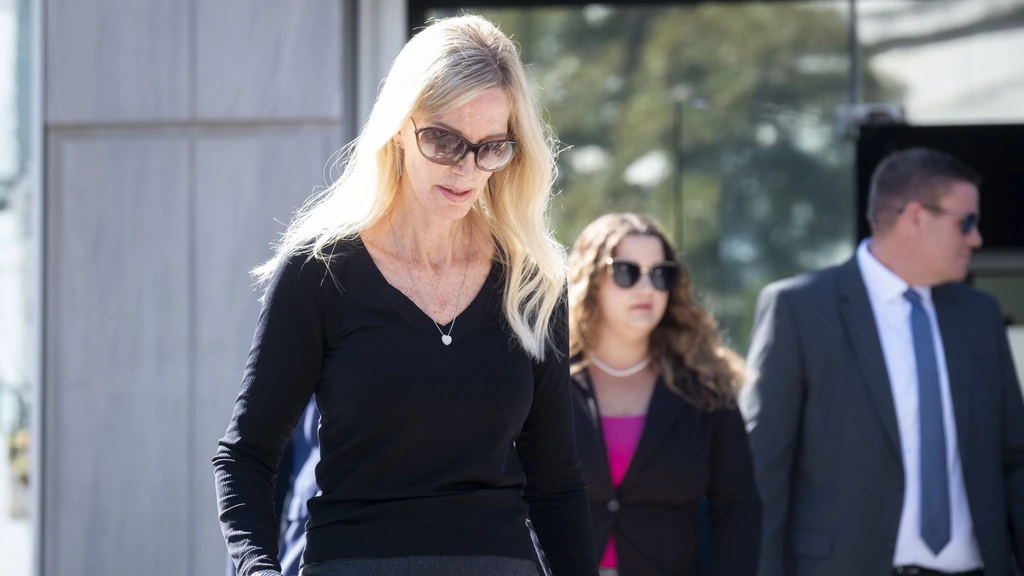
Why the 2023 confession does not automatically produce a Dutch murder case
In October 2023, van der Sloot pleaded guilty in federal court in Alabama to extortion and wire fraud. Those U.S. charges arose from his attempt to obtain money from Beth Holloway in exchange for information about Natalee’s remains and the circumstances of her death. During the plea proceedings, he provided an account admitting that he killed Natalee in Aruba in 2005.
That admission was significant to Beth and to the public understanding of the case. It did not, however, amount to a U.S. conviction for Natalee’s murder. The U.S. Department of Justice’s announcement identifies the offenses of conviction as extortion and wire fraud. A Dutch prosecutor considering a separate complaint must assess the material under the relevant Dutch criminal law and evidentiary standards.
Nor does a confession remove every evidentiary question. Prosecutors may need to examine the precise wording and context of the statement, whether it is supported by independent evidence, the circumstances in which it was made, the reliability of corroborating material, and whether the available evidence can be used in a Dutch criminal proceeding. The fact that a statement exists is not the same as a court finding that every element of a criminal charge has been proved.
There is another unresolved fact that remains central to the case: Natalee’s remains have never been recovered. That does not by itself make a homicide prosecution impossible, but it underscores why investigators and prosecutors must carefully evaluate all available evidence rather than treating the confession as the only question.

What Aruba’s evidence assessment actually said
The April 2 statement from Aruba deserves close reading because it is easy to overstate what it means. The Aruban prosecutor said that, after examining the documents received from the United States, there was “for the time being” insufficient evidence for murder or qualified manslaughter. That is an assessment of the evidence available to Aruba under its own legal framework at that point in time.
It should not be rewritten as a finding that no crime occurred, nor as proof that Dutch prosecutors must reach the same conclusion. The same official statement explained that the Netherlands had a different limitation-period position and that Dutch prosecution was, in principle, possible because van der Sloot is Dutch. The legal question being assessed in Amsterdam is therefore not simply a repeat of the Aruban decision.
At the same time, the Dutch route is not a guaranteed workaround. Prosecutors still need a legally sustainable case. Jurisdiction, admissibility, the available evidence, the precise offense under consideration, and procedural requirements all matter. The public announcement does not disclose the full evidentiary file, so outsiders cannot responsibly predict the prosecutor’s conclusion.
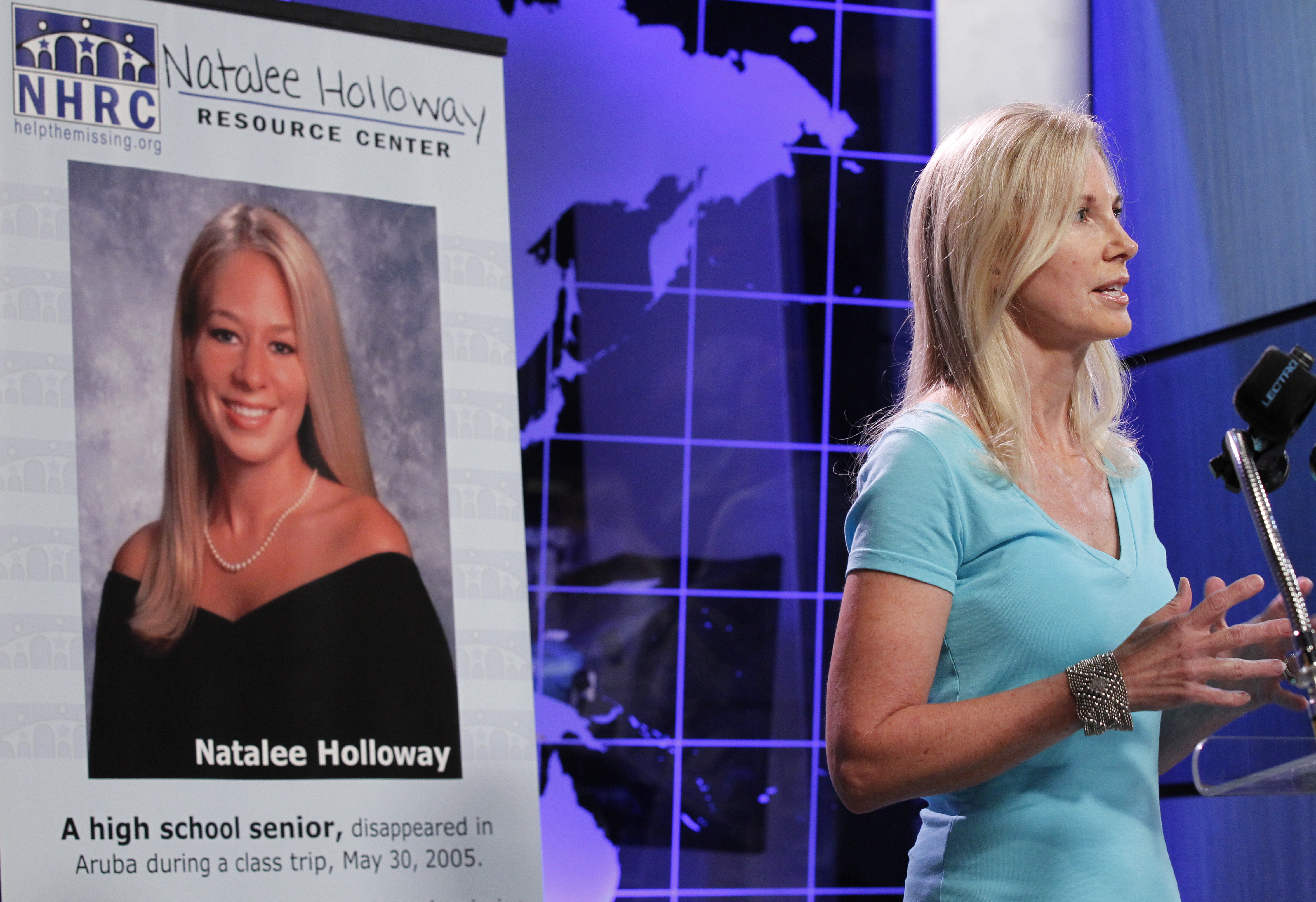
What has Beth Holloway said about the next step?
In a November 4, 2026 interview with Netflix Tudum, Beth said she had been working with Netherlands-based attorneys Royce de Vries and Annemiek van Spanje on a murder complaint. She described the Dutch process as being underway and said prosecutors were obtaining documents and Natalee’s case files. Beth also described the pursuit of further accountability as a new mission, separate from the answers she received through the 2023 admission.
Her comments explain why the Netherlands review has attracted attention again. They are an important account of the family’s efforts, but they should be distinguished from an official prosecutorial decision. The public statements cited here do not establish that van der Sloot has been charged in the Netherlands or that a trial date exists.
The documentary Taken: Natalee Holloway, which premiered on Netflix on November 4, 2026, has brought the case to a new audience. Netflix’s interview with Beth is useful for understanding her present position, while the April statement from Aruba remains the key official public document identified here about the cross-border file review.

Could the review lead to charges in 2026–2027?
It is possible, but there is not enough public information to say that charges are likely or imminent. The next meaningful development would be an official statement from Dutch prosecutors explaining whether their assessment has progressed and whether they consider further investigation or prosecution justified.
Several outcomes remain possible:
- Further evidence review: Prosecutors may continue examining the Aruban file, U.S. documents, the 2023 statements, and other corroborating material before deciding what to do.
- Requests for additional information: Dutch authorities may seek clarification, supplementary records, or assistance from authorities in Aruba or the United States.
- A decision not to prosecute: If prosecutors conclude that the evidence or legal requirements are insufficient, the complaint may not result in charges.
- A formal prosecution decision: If prosecutors determine that jurisdiction and evidence requirements are satisfied, they could take further legal steps. That would still not be a conviction; guilt would have to be established through the judicial process.
These are possible procedural paths, not a prediction of what the Dutch Public Prosecution Service will choose. No reliable public timetable for a final decision in 2026 or 2027 is established by the official statement cited here.
What would a Dutch prosecution mean for van der Sloot’s prison sentence?
Van der Sloot is imprisoned in Peru for the 2010 murder of Stephany Flores Ramírez. He also received a 20-year U.S. sentence for extortion and wire fraud, which was arranged to run concurrently with his Peruvian sentence. A separate Dutch case, if one were brought, would raise additional questions about jurisdiction, custody, extradition or transfer, and the practical enforcement of any sentence.
It would be premature to claim that he will automatically be extradited to the Netherlands, that a Dutch trial would take place immediately, or that any sentence would simply be added to the time he is already serving. Those questions depend on decisions and legal arrangements that have not been confirmed in the public materials reviewed for this article.
For background on the separate U.S. conviction and the possible route from Peru to a Dutch proceeding, readers can also see our related coverage: the potential extradition path from Peru to a Dutch trial and the timeline of the Dutch complaint and Aruba case files.
What true-crime fans should watch for next
The most useful updates will come from primary sources: the Dutch Public Prosecution Service, Aruba’s Public Prosecution Service, court records, and direct statements from the legal representatives involved. A headline saying that a file has been transferred or that lawyers are seeking charges should not be mistaken for confirmation that prosecutors have filed a charge sheet.
Readers should also watch the wording of any future announcement. “Reviewing a complaint,” “investigating,” “deciding whether to prosecute,” “filing charges,” and “going to trial” describe different stages. Clear reporting should identify which stage has actually been reached and when the information was confirmed.
For Beth, the 2023 admission answered the question that had shaped nearly two decades of her life: what happened to Natalee. The Dutch review concerns a different question—whether the available evidence and law can support further criminal proceedings. The two questions are connected, but they are not the same. A legal process may offer another route to accountability; it cannot undo the loss or guarantee that every unanswered question will be resolved.
Frequently asked questions
Has the Netherlands officially received Natalee Holloway’s full case file?
On April 2, 2026, Aruba’s Public Prosecution Service said it had offered to make the complete Aruban case file available to the Public Prosecution Service in Amsterdam for its assessment of Beth Holloway’s complaint. The announcement is evidence of the proposed transfer, but it does not itself provide a later confirmation of the exact date the full file was received.
Did Beth Holloway file a complaint in the Netherlands?
Yes. Aruba’s Public Prosecution Service said Beth filed a complaint in mid-March 2026 in Amsterdam, alleging murder and/or manslaughter against Joran van der Sloot.
Has Joran van der Sloot been charged with Natalee Holloway’s murder in the Netherlands?
The official public materials cited in this article do not confirm a Dutch murder charge. Beth discussed the complaint and ongoing work with Dutch lawyers in a November 4, 2026 Netflix Tudum interview, but that is not the same as a prosecutorial charging decision.
Why can the Netherlands consider the case if Aruba cannot prosecute manslaughter?
Aruba’s April 2, 2026 statement said the limitation period for manslaughter had expired in Aruba but not in the Netherlands. It also said prosecution in the Netherlands was possible in principle because van der Sloot is a Dutch national. Whether a particular charge can actually proceed remains a matter for Dutch authorities.
Was van der Sloot convicted of Natalee’s murder in the United States?
No. He pleaded guilty in the U.S. to extortion and wire fraud connected to an attempt to obtain money from Beth Holloway. His 2023 statements about Natalee’s death were made in connection with that case, but the U.S. conviction was not for Natalee’s murder.
Could a Dutch trial happen in 2027?
It is possible in principle that the Dutch process could advance, but no trial date or confirmed prosecution timetable is established by the official materials cited here. Any estimate would be speculation.
Has Natalee Holloway’s body been found?
No. Her remains have not been recovered, according to Netflix’s documentary background reporting and other published accounts of the case.
Where can readers follow reliable updates?
Start with official announcements from the Netherlands Public Prosecution Service and the Aruba Public Prosecution Service. Netflix Tudum’s interview with Beth provides her account of the family’s current efforts, while the U.S. Department of Justice provides the official record of the 2023 federal conviction.
Sources and further reading
- Aruba Public Prosecution Service, April 2, 2026: case file offered to the Public Prosecution Service in Amsterdam
- Netflix Tudum, November 4, 2026: Beth Holloway on her current legal efforts
- U.S. Department of Justice, October 18, 2023: van der Sloot’s guilty plea and sentence for extortion and wire fraud
- NL Times, April 3, 2026: reporting on the transfer of the Aruba case file to Dutch authorities
- Netflix Tudum: background and release information for Taken: Natalee Holloway
Editorial note: This article distinguishes the official April 2026 statement about the complaint and file-sharing process from Beth Holloway’s November 2026 comments and from any future prosecutorial decision. It does not describe the 2023 U.S. plea as a murder conviction, and it does not predict that Dutch charges or a trial are inevitable. Image credits are identified with each photograph; publication of an image URL does not itself establish a reuse license.