Could Joran van der Sloot be transferred from Peru to the Netherlands?
A Dutch trial over Natalee Holloway’s killing is a possibility Beth Holloway is actively pursuing, but it is not an extradition that has been approved or scheduled. As of November 10, 2026, Joran van der Sloot remains imprisoned in Peru. Dutch prosecutors are assessing the complaint filed by Natalee’s mother and have received the Aruban case file; no Dutch murder charge or court date has been announced.
The potential route is complicated by the fact that van der Sloot is already serving prison sentences in Peru and the United States. His 2023 transfer to Alabama shows that Peru has previously permitted a temporary surrender for a separate prosecution. It does not, by itself, guarantee that Peru will send him to the Netherlands, or establish when such a transfer could happen.

Why the Netherlands is examining the case
Natalee Holloway, an 18-year-old from Alabama, disappeared in Aruba during a graduation trip in May 2005. Van der Sloot later admitted in a 2023 proffer agreement that he killed her. That admission came during a U.S. federal case involving extortion and wire fraud, not a Dutch prosecution for Natalee’s death.
Aruba’s Public Prosecution Service said in April 2026 that it had reviewed material obtained from the United States, including van der Sloot’s statements, and concluded there was not enough evidence at that stage to prosecute for murder or qualified manslaughter in Aruba. The service also said the limitation period for manslaughter had expired there. It transferred the Aruban case file to the Public Prosecution Service in Amsterdam so Dutch authorities could assess Beth’s complaint.
The Dutch prosecution service stated that the limitation period had not expired in the Netherlands and that, because van der Sloot is a Dutch national, prosecution there was possible in principle. That wording matters. “Possible in principle” is not the same as a decision to charge. Prosecutors must independently assess jurisdiction, evidence, the applicable criminal law, and whether the material supports a case that can be brought in court.
The first legal step is a Dutch charging decision, not an extradition order
Public discussion can make the sequence sound simple: Dutch prosecutors charge van der Sloot, Peru hands him over, and a trial begins in the Netherlands. In reality, several separate decisions would have to be made.
First, Dutch prosecutors must decide whether the complaint and the transferred evidence justify a criminal prosecution. They may need to examine the Aruba investigative file, the U.S. proffer materials, witness accounts, forensic evidence, and the legal effect of statements made as part of the American plea process. The Aruban authorities’ conclusion that the evidence was insufficient for a local murder prosecution is an important part of the record, even though the Dutch legal assessment is separate.
Second, if prosecutors bring charges, Dutch authorities would have to determine how to secure van der Sloot’s presence for proceedings. That could involve a request to Peru under the relevant international and domestic legal procedures. Whether the request would be treated as extradition, temporary surrender, or another form of transfer would depend on the legal basis and the circumstances at the time. No public decision currently confirms that Peru has agreed to a Dutch transfer for this case.
Third, the Peruvian authorities and courts would have to consider the request alongside the sentence van der Sloot is already serving. A Dutch prosecution cannot simply cancel or displace Peru’s sentence. Any transfer would have to address custody, the order in which sentences are served, the conditions of return if the transfer were temporary, and the effect of any judgment in the Netherlands.
What the 2023 U.S. transfer does — and does not — prove
There is a concrete precedent for international cooperation in van der Sloot’s case. In 2023, Peru temporarily surrendered him to the United States so he could face federal charges connected to an attempt to extort Beth Holloway. The U.S. Department of Justice said the transfer was arranged with the cooperation of Peru and that he would be returned after the American case concluded.
Van der Sloot pleaded guilty to extortion and wire fraud in October 2023 and received a 20-year U.S. sentence. The plea agreement required him to provide truthful information about Natalee’s disappearance. The Department of Justice described the case as an extortion scheme; it did not prosecute him in the United States for Natalee’s murder.
The U.S. transfer is relevant because it demonstrates that Peru has previously cooperated with a foreign prosecution while retaining its own sentence and custody interests. But the legal arrangements for the United States cannot automatically be copied for the Netherlands. A new request would need its own legal basis, diplomatic handling, and approval. It would also have to account for the fact that the earlier U.S. proceeding is complete and van der Sloot has returned to Peru.

How long could Peru keep him?
Van der Sloot is serving a 28-year Peruvian sentence for the 2010 murder of Stephany Flores Ramírez. He also received a 20-year U.S. sentence for extortion and wire fraud, which is being served concurrently with the Peruvian term. The exact timing of release, parole eligibility, and any additional sentence calculations should not be treated as a settled date for a hypothetical Dutch transfer.
Some recent coverage has discussed 2045 as a possible parole milestone in Peru. That is not a Dutch court date, an agreed handover date, or a guarantee that he will remain in the same custody arrangement until then. Prison administration, sentence-credit rules, parole decisions, and any new proceedings can affect the practical timeline. The responsible conclusion is that he remains in Peruvian custody and that no public timetable for a Netherlands transfer has been announced.
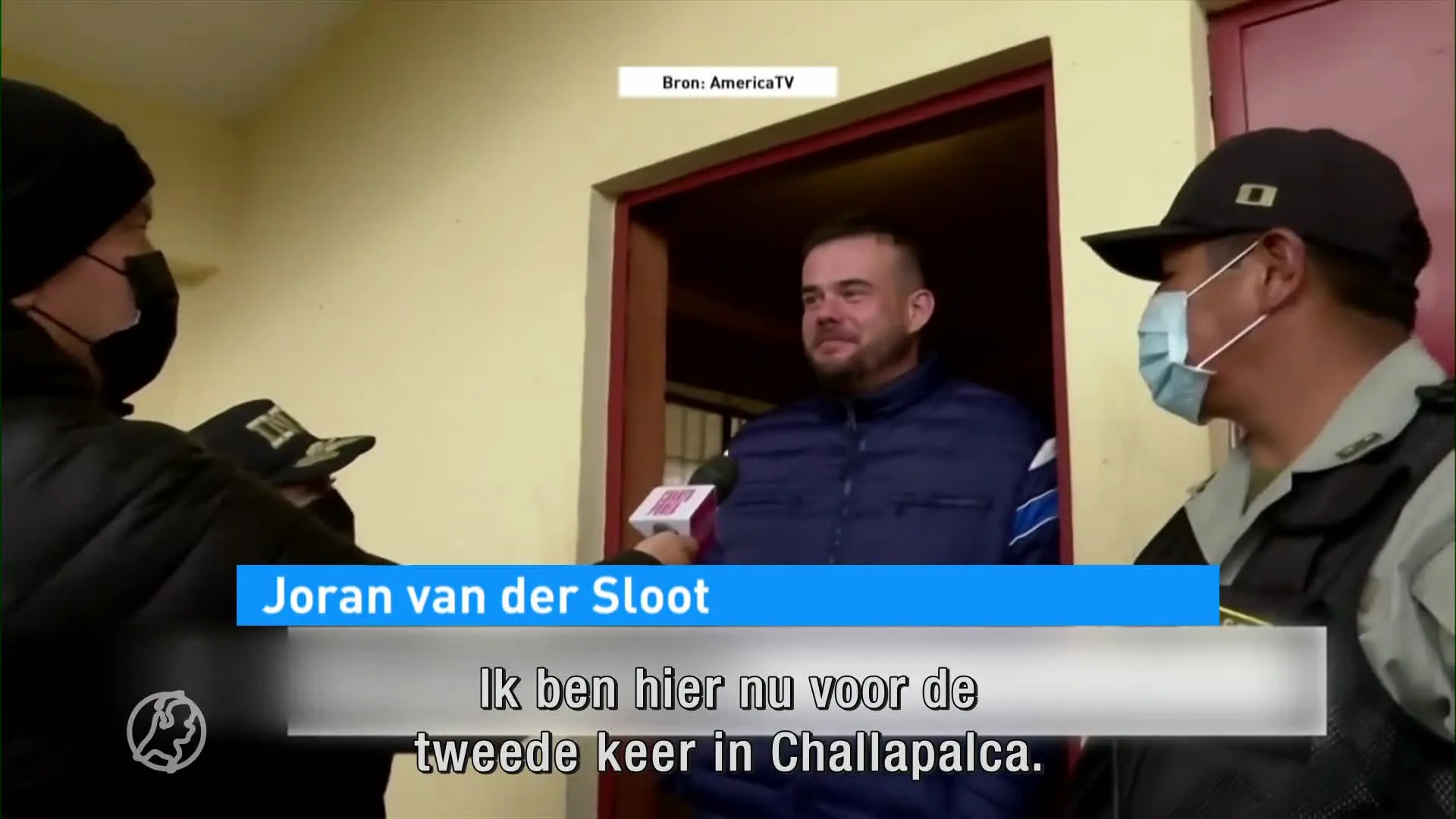
What a Dutch trial could mean for Natalee’s case
A Dutch prosecution would address a question left unresolved by the U.S. extortion case: whether van der Sloot can be tried and convicted under Dutch law for Natalee’s killing. The 2023 admission is significant evidence, but a confession made in another proceeding does not eliminate the need for a prosecutor to establish a legally sufficient case. The defense would also have the right to challenge evidence and legal arguments in court.
There is another important distinction. The Aruban Public Prosecution Service said it did not then have sufficient evidence for murder or qualified manslaughter, while explaining that manslaughter was time-barred in Aruba. Dutch authorities are evaluating the matter under Dutch law. Those positions should not be collapsed into a claim that a Dutch trial is certain, or that a murder charge has already been filed.
For Beth Holloway, the Dutch complaint is a further step after the 2023 admission. In her November 4, 2026 interview with Netflix Tudum, she said Dutch lawyers Royce de Vries and Annemiek van Spanje had been working on the complaint and that a prosecutor was obtaining case documents. She described the process as underway, but not finished. Her pursuit of accountability is therefore real; the outcome remains for prosecutors and, if charges are filed, the courts to decide.
The realistic path from Peru to a Dutch courtroom
- Evidence review: Dutch prosecutors assess Beth’s complaint and the Aruban file, including evidence obtained from U.S. authorities.
- Charging decision: Prosecutors decide whether Dutch law permits a case and whether the evidence is sufficient to bring charges.
- Custody and transfer request: If a prosecution proceeds, Dutch and Peruvian authorities would need to resolve the legal mechanism for bringing van der Sloot before a Dutch court.
- Peruvian decision: Peru would consider the request in light of its own sentence, applicable agreements, and custody requirements.
- Dutch proceedings: Only after the necessary legal and custody steps could a trial take place; a transfer alone would not establish guilt.
This is a possible sequence, not an announced government plan. As of November 10, 2026, the verified position is that the Dutch authorities have the Aruba case file for review, Beth has filed a complaint, van der Sloot remains in Peru, and no Dutch charge or extradition decision has been publicly confirmed.
Frequently asked questions
Can Joran van der Sloot be extradited from Peru to the Netherlands?
A transfer may be legally possible, but no Dutch extradition or surrender has been publicly approved. Any request would require a legal basis and decisions by the relevant authorities in Peru and the Netherlands.
Has the Netherlands charged van der Sloot with Natalee Holloway’s murder?
As of November 10, 2026, no Dutch murder charge has been publicly announced. Dutch prosecutors are assessing Beth Holloway’s complaint and the case materials transferred from Aruba.
Why did Aruba send the case file to the Netherlands?
Aruba’s Public Prosecution Service said it transferred the file so the Amsterdam prosecution service could assess Beth Holloway’s complaint. Aruba said the manslaughter limitation period had expired there, while the Netherlands’ limitation period had not.
Was van der Sloot already extradited to the United States?
Yes. Peru temporarily surrendered him to the United States in 2023 for federal extortion and wire-fraud proceedings. He pleaded guilty, was sentenced to 20 years, and returned to Peru under the transfer arrangement.
When could a Dutch trial happen?
No date has been announced. A trial would depend first on the Dutch charging decision and then on resolving how van der Sloot could be brought before a Dutch court while serving his Peruvian sentence.
Does his 2023 confession mean he has been convicted of Natalee’s murder?
No. He admitted killing Natalee in a proffer agreement connected to the U.S. extortion case, but he was convicted in that case of extortion and wire fraud, not murder. A Dutch murder conviction would require a separate prosecution and court judgment.
Sources and further reading
- Aruba Public Prosecution Service: transfer of the Natalee Holloway case file to Amsterdam, April 2, 2026
- U.S. Department of Justice: van der Sloot’s guilty plea and sentence, October 18, 2023
- U.S. Department of Justice: temporary transfer from Peru for the U.S. prosecution, June 9, 2023
- Netflix Tudum: Beth Holloway’s November 4, 2026 interview and the Dutch complaint
- NOS: Beth Holloway files a complaint in the Netherlands, March 16, 2026
Reporting note: This article separates confirmed legal actions from possible future steps. It does not describe a Dutch charge, extradition approval, or trial date as having occurred. Photo captions identify the publishers or broadcasters associated with the images; source availability does not by itself establish a reuse license.