Netflix’s Taken: Natalee Holloway opened at No. 1 on the platform’s U.S. English-language TV chart for the week of November 2–8, 2026, drawing 12.9 million views. That is a substantial debut for a three-part documentary about a case that has remained in the American public consciousness for more than two decades. It also offers a useful snapshot of why a carefully told true-crime story can compete with major scripted releases: the series arrives with an instantly recognizable case, a deeply personal point of view, a long investigative timeline, and a major unresolved legal distinction that viewers still want to understand.
The chart result is real, but it needs to be described precisely. No. 1 refers to Netflix’s weekly U.S. English TV list for November 2–8—not every Netflix category, every country, or a permanent all-time ranking. Netflix reported 12.9 million views for the series in that week. The figure is a measure of viewing, not a count of unique households or individual people.

What the No. 1 Netflix ranking actually tells us
Netflix’s official weekly Top 10 report for November 2–8 lists Taken: Natalee Holloway in first place among English-language TV titles in the United States. The series recorded 25.4 million viewing hours and 12.9 million views. The platform’s “views” metric is calculated by dividing total hours viewed by the title’s runtime; it is not the same thing as a count of separate subscribers or completed watches.
The result is especially notable because the list included established entertainment brands and returning scripted series. Black Doves Season 2, for example, debuted at No. 4 on the same weekly English TV list with 3.8 million views. The One About Matthew Perry placed second with 4.4 million views, while Nobody Wants This Season 3 placed third with 4 million. Those comparisons do not prove that audiences have abandoned scripted television. They show that, in this particular week and on this particular U.S. chart, the Natalee Holloway documentary attracted a much larger opening-week audience than several high-profile competitors.
There is another important distinction: Netflix’s weekly global Top 10 and its U.S. list are separate measurements. A title can lead the U.S. English TV ranking without being the most-watched program in every country or across every Netflix category. Headlines that shorten the result to “No. 1 on Netflix” should make the market, category, and reporting week clear.

Why this case still commands attention after more than 20 years
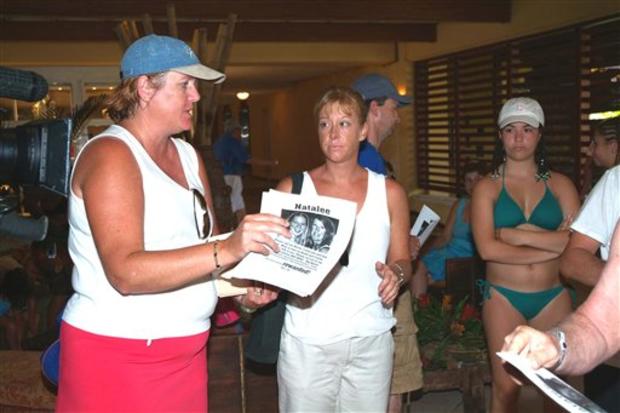
Natalee Holloway disappeared during a high-school graduation trip to Aruba in May 2005. She was 18, had just graduated from Mountain Brook High School in Alabama, and was expected to return home with her classmates. Her disappearance prompted a large search, international news coverage, and years of questions for her family.
The case did not remain in the public conversation simply because it was mysterious. It became a story about a family trying to obtain answers while investigators, journalists, and the public struggled to separate verified information from rumor. The passage of time added layers: changing accounts, investigative setbacks, a federal extortion case, a confession in 2023, and continuing questions about legal accountability.
That history gives the documentary a built-in narrative arc, but it also creates a responsibility. A true-crime series about a real missing teenager cannot treat the case as a puzzle designed only for suspense. The people involved are not fictional characters, and the family’s experience is not a plot device. The strongest reason to revisit the story is to clarify what is known, how the evidence developed, and what remains unresolved.

The emotional center: Beth Holloway’s account
Netflix describes Taken: Natalee Holloway as a three-part documentary built around Beth Holloway’s account and interviews with people connected to Natalee and the investigation. The series includes friends, journalists, investigators, and former law-enforcement officials. That structure gives the story more than one point of view while keeping the mother-daughter relationship at its center.
In a Netflix Tudum interview published around the premiere, Beth explained why she felt the time had come to tell the story in a comprehensive, chronological way. The 2023 admission had given her an answer to the central question she had pursued for years. It did not undo the loss, recover Natalee’s remains, or settle every possible legal question. But it changed the information available to her and the shape of the story she could tell.
The distinction matters to viewers. A documentary can present Beth’s perspective with empathy while still making clear which claims are established by records, which are recollections, and which remain a matter for prosecutors or courts. The series’ popularity does not itself validate every detail discussed in it; audiences should look to primary records and careful reporting when evaluating disputed points.
Why true crime can outperform scripted releases in a given week
The chart result invites a broader question: why did a documentary about a 2005 disappearance open above new and returning scripted shows? There is no single explanation in Netflix’s public viewing data. The weekly chart establishes what people watched, not why they chose it. Still, several factors help explain the appeal without pretending to have access to Netflix’s private recommendation or audience research.
1. A story many viewers already recognize
Natalee’s disappearance became a major American news story in 2005. People who followed the case at the time may return because they remember the early coverage and want to understand what happened in the years since. Younger viewers may encounter the story for the first time through Netflix. The same documentary can therefore serve two audiences: those seeking an update and those seeking a complete introduction.
2. A real-world timeline with a consequential new chapter
Scripted dramas often ask viewers to learn a new fictional world, characters, and rules. A documentary about a widely covered case starts with an existing public record and a familiar central question. In this instance, the 2023 admission provides a later chapter that many viewers may not have followed closely when it happened. That creates a strong reason to watch now rather than rely on old headlines or fragmented clips.
3. The promise of a fuller account
Netflix has promoted the series as a comprehensive telling that includes people close to Natalee, investigators, and material not previously shown publicly. That promise matters in a case where the public record accumulated over many years and was often reported in disconnected bursts. A three-part structure gives the filmmakers room to revisit chronology and explain how one development led to another.
4. Conversation and shared discovery
True-crime documentaries often generate discussion because viewers compare what they remember with what the new program presents. A familiar case can quickly become a topic for family conversations, online posts, podcasts, and follow-up reporting. This is a plausible mechanism for word of mouth, not proof that social sharing caused the chart result. Netflix has not published a causal breakdown of the series’ audience growth.
5. A short, finite viewing commitment
Taken: Natalee Holloway is a three-episode series. For viewers deciding what to watch over a weekend, a limited series offers a clear endpoint. That can make it easier to start than a long-running show with multiple seasons. Runtime and completion behavior are not disclosed in enough detail to quantify how much this factor contributed to the ranking, but the format is part of the viewing proposition.
How the documentary’s debut compares with scripted competition
The most useful comparison is the same weekly chart, rather than a loose comparison with unrelated films, global rankings, or daily snapshots. Netflix’s November 2–8 U.S. English TV list placed Taken: Natalee Holloway first with 12.9 million views. The next entries were The One About Matthew Perry with 4.4 million, Nobody Wants This Season 3 with 4 million, and Black Doves Season 2 with 3.8 million.
That gap is striking. The documentary’s reported opening-week views were roughly three times the 4 million recorded for Nobody Wants This Season 3, and more than three times the 3.8 million for Black Doves Season 2. These are comparisons of reported weekly views, not a judgment about artistic quality, audience satisfaction, or long-term popularity. The titles also differ in release timing, episode length, and the number of weeks they had been available.
It would be misleading to conclude from one chart that true crime is now beating scripted television as a whole. One week is a snapshot. Different genres attract different viewing patterns, and a new documentary based on a heavily publicized case has a distinct awareness advantage. The more defensible conclusion is narrower: a true-crime documentary can open at the top of a major U.S. streaming chart when a timely release meets strong existing public interest.

The legal distinction viewers should not miss
One reason the story continues to generate questions is the difference between a confession and a murder conviction. In October 2023, Joran van der Sloot pleaded guilty in a U.S. federal case to extortion and wire fraud connected to his attempt to obtain money from Beth Holloway in exchange for information about Natalee. During those proceedings, he admitted to killing Natalee in Aruba in 2005.
The U.S. federal conviction was for extortion and wire fraud. It was not a U.S. conviction for Natalee’s murder. Van der Sloot is separately serving a sentence in Peru for the 2010 murder of Stephany Flores Ramírez. Natalee’s remains have not been recovered. Any further prosecution connected to Natalee’s death would need to proceed under the relevant jurisdiction’s law and evidence rules.
Beth has discussed pursuing a complaint in the Netherlands. As of the public information reviewed for this article, the existence of a complaint and a review of materials should not be described as a formal Dutch murder charge or a scheduled trial. A documentary’s release and a chart position do not change that legal status.
What the No. 1 debut means for Netflix—and what it does not
For Netflix, a first-place weekly debut is evidence that the series attracted a large audience in the U.S. English TV category during its opening reporting week. It gives the platform a clear success story to promote and signals that true-crime documentaries remain capable of drawing broad attention. It may also encourage other producers to examine the ingredients of a high-interest nonfiction release: access, a clear chronology, strong interviews, and a subject with continuing public relevance.
But the ranking alone cannot tell us the documentary’s production cost, profitability, subscriber acquisition impact, completion rate, or how many viewers watched because of the recommendation system. Netflix does not disclose all of those figures in its weekly Top 10 report. Nor does the result establish that every future Natalee-related documentary or every true-crime title will perform similarly.
It also does not mean scripted entertainment is in decline. Black Doves Season 2, Nobody Wants This Season 3, and other scripted titles remained on the same chart. Their positions reflect one week of viewing under a particular measurement system. Genre competition is not a zero-sum verdict on the creative value of either form.
Why the series may keep drawing viewers after its opening week
Several factors could sustain interest beyond the initial debut: viewers recommending the three-part series to people who missed it, new audiences discovering the case through the documentary, and follow-up interviews or reporting that clarify the legal and investigative record. Those are possibilities, not confirmed forecasts. The next Netflix weekly report will show whether the series holds its position, falls, or exits the Top 10.
For viewers who want to go beyond the ranking, the most useful next step is to separate the documentary’s narrative from the underlying reporting. Our coverage of why Beth Holloway chose this moment to tell the story examines the timing of the series. Our article on early reactions to Taken: Natalee Holloway looks at the viewing conversation, while our report on the Dutch review of the Aruba case files tracks the separate legal questions.
How Netflix calculates “views”
Netflix’s weekly Top 10 methodology uses total hours viewed divided by the title’s runtime to calculate views. This helps compare titles with different episode lengths, but it should not be read as a count of unique subscribers, households, or people. A viewer who watches more than once can contribute additional hours, and a person may watch on more than one device. The metric is a standardized estimate of viewing volume, not a census of audience members.
For a three-part documentary, this matters because a reported 12.9 million views does not mean 12.9 million people watched every episode from beginning to end. The public chart does not provide a full episode-by-episode completion breakdown. It is best to use the figure as Netflix’s published comparison metric and avoid converting it into a claim about completed series watches.
What to watch in the next chart update
- Week-two retention: Does the series remain near the top after its premiere-week audience?
- U.S. versus global performance: Does it maintain a strong U.S. position while appearing in more countries’ Top 10 lists?
- Genre competition: Do other documentaries or scripted releases overtake it in the next reporting period?
- Audience conversation: Do interviews and follow-up reporting produce sustained interest after the initial release?
These are the indicators that can turn a striking debut into a longer performance story. Until the next weekly figures are published, it is too early to call the No. 1 position a long-running hit or to predict how many weeks the series will chart.
Frequently asked questions
Did Taken: Natalee Holloway reach No. 1 on Netflix in the United States?
Yes. Netflix’s weekly Top 10 report for November 2–8, 2026, placed the three-part documentary at No. 1 on the U.S. English-language TV list.
How many views did Taken: Natalee Holloway get in its first Netflix chart week?
Netflix reported 12.9 million views and 25.4 million viewing hours for the week of November 2–8, 2026.
Does No. 1 mean it was the most-watched title on all of Netflix worldwide?
No. The ranking discussed here is the U.S. weekly English-language TV chart. It does not mean the documentary led every Netflix category or every country’s list.
Which scripted shows did it beat on the U.S. weekly chart?
In the same reporting week, Nobody Wants This Season 3 ranked third with 4 million views and Black Doves Season 2 ranked fourth with 3.8 million. Those comparisons apply only to that weekly chart.
Why are true-crime documentaries popular on streaming services?
They can combine real-world stakes, an investigative timeline, familiar public events, and new interviews or evidence. In this case, the long history of Natalee Holloway’s disappearance and the 2023 admission gave viewers a reason to revisit a story many already knew. Netflix has not published data proving one single cause for the series’ chart performance.
When did Taken: Natalee Holloway premiere?
The three-part documentary premiered on Netflix on November 4, 2026.
Was Joran van der Sloot convicted of Natalee Holloway’s murder in the United States?
No. His 2023 U.S. guilty plea and federal conviction concerned extortion and wire fraud. During those proceedings, he admitted to killing Natalee, but the federal case was not a U.S. murder conviction for her death.
Will the documentary stay No. 1?
That cannot be known from the opening-week chart. The next weekly Netflix Top 10 report will show whether it retains the top position or moves down the list.
Sources and reporting notes
- Netflix Tudum: Top 10 Movies and Shows on Netflix, week of November 2, 2026 — primary source for the U.S. weekly ranking, viewing hours, and views.
- Netflix Tudum: Beth Holloway tells the full story in Taken: Natalee Holloway — series overview and premiere details.
- Netflix Media Center: Taken: Natalee Holloway — official series description and release information.
- Netflix Tudum: Beth Holloway on the story’s conclusion and her next steps — interview published November 4, 2026.
- CBS News: “Natalee Holloway: Paradise Lost” — archival Associated Press photographs and original captions.
- The National: Review of Taken: Natalee Holloway — independent review and context on the documentary.
Editorial note: Chart statements in this article are limited to Netflix’s published U.S. weekly English TV list for November 2–8, 2026. The article distinguishes viewing metrics from unique viewers, a confession from a murder conviction, and public interest from legal outcomes. Archival photographs are credited to the Associated Press and CBS News; image display does not itself establish a reuse license.
By Shivam Das