When 18-year-old Natalee Holloway disappeared during a high-school graduation trip to Aruba in May 2005, the case became one of the most heavily televised missing-person stories in American news. Cameras followed the search, reporters pursued each new lead and cable programs returned to the case night after night. Twenty-one years later, Netflix’s three-part documentary Taken: Natalee Holloway has brought the case back into public conversation—with a longer historical view, later evidence and Beth Holloway’s account at its center.
The contrast is not simply old television versus a new streaming series. It is a live news cycle built around fragments and daily developments compared with a retrospective documentary able to select interviews, archival footage and chronology after years of investigation. “Controlled narrative” here describes the format and editorial framing; it is not evidence that Netflix fabricated or concealed facts.
2005: a missing-person case became a television event
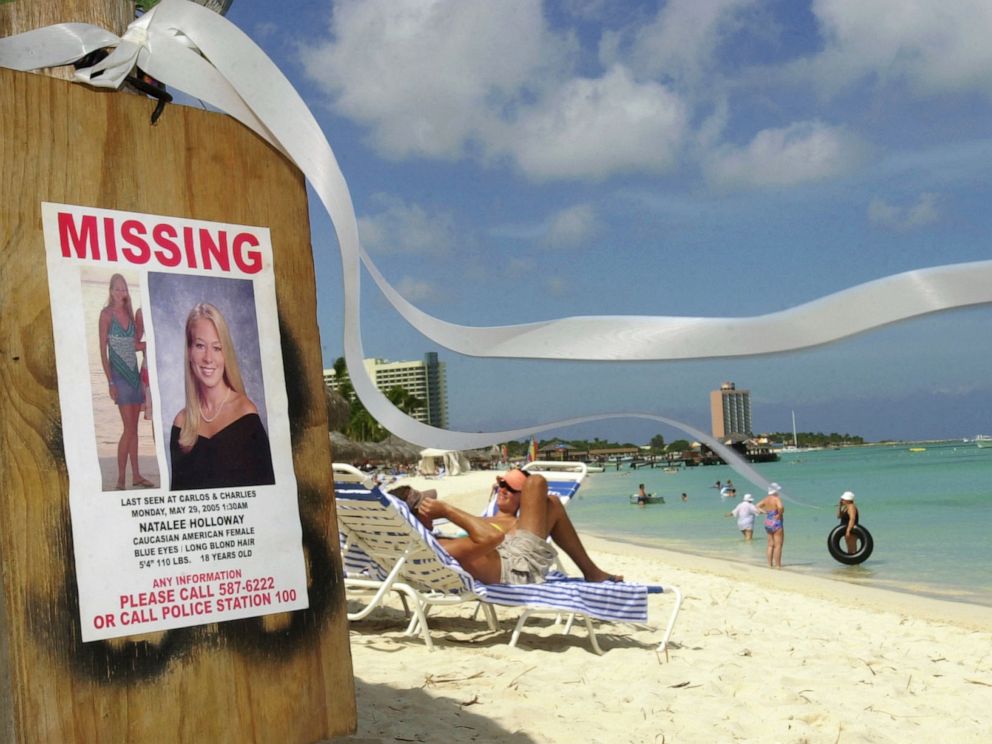
Natalee disappeared after a night out in Aruba on May 30, 2005. She did not return to her hotel or board the flight home with classmates. Her mother, Beth Holloway, travelled to the island as a search involving Aruban authorities, volunteers and investigators from outside the country developed. The case quickly moved beyond local reporting and became a fixture on American television.
The scale of the attention was questioned even while the investigation was unfolding. In an August/September 2005 American Journalism Review article titled “A Media Circus in Paradise,” reporter Hannah Wolfson described the intense presence of American television crews in Aruba and the pressure surrounding the investigation. The title captured a central tension: the island was not only the location of a missing-person search; it had become a stage for a major American news story.
On August 11, CNN anchor Anderson Cooper criticized the repetition of coverage when there was little substantive new information to report. The Washington Post later revisited that moment, noting how the case dominated television and how saturation itself became a subject of criticism. The concern was not that Natalee’s disappearance was unimportant. It was whether viewers were receiving verified developments—or another cycle of speculation and reaction.
When urgency blurred the line between fact and theory
Live coverage has value. It can distribute information, prompt witnesses to come forward and keep pressure on authorities. But a rolling news cycle creates a structural problem: a newsroom may need a fresh segment even when the underlying evidence has not changed.
In the Holloway case, arrests, changing accounts, public accusations and repeated searches generated a steady stream of developments. Not every lead became evidence, and not every statement made on television was established fact. When allegations are repeated often enough, audiences can begin to remember repetition itself as confirmation. That is one of the lasting risks of the 2005 media circus.
The coverage also exposed a wider imbalance in whose disappearances receive national attention. A 2023 Washington Post analysis connected the Holloway case to the debate commonly called “missing White woman syndrome.” It cited research comparing missing-person news coverage with FBI data, finding that missing White women were more likely to receive coverage than other groups. The point is not to diminish the attention given to Natalee or her family. It is to ask why comparable urgency is not consistently extended to missing Black, Indigenous and other marginalized people.

2026: a documentary can tell the story in retrospect
Netflix premiered Taken: Natalee Holloway on November 4, 2026, as a three-part documentary. Netflix’s Tudum description says the series revisits the case through people close to Natalee, with access to investigators, previously unseen footage and previously unreleased audio involving family, friends and the FBI. Beth Holloway is its central voice, and Netflix presents it as a comprehensive, chronologically ordered account after the 2023 confession.
The format changes the storytelling conditions. Producers can arrange material into a beginning, middle and end, interview people with hindsight, compare accounts and explain which leads mattered. Viewers are not waiting for another press conference; they are being guided through selected material.
The 2026 series also has an endpoint that reporters in 2005 did not. In October 2023, Joran van der Sloot pleaded guilty in the United States to federal extortion and wire-fraud charges connected to his attempt to obtain money from Beth Holloway in exchange for information about Natalee. During the proceedings, he gave an account of killing her. That is a major later development, but it does not resolve every question: Natalee’s remains have never been recovered, and a federal plea to extortion and wire fraud is not the same as a murder conviction in Aruba.
A retrospective has an editorial advantage and responsibility. It can include later material and explain chronology, but it also chooses whose memories are included, which clips are shown and where each episode ends. A family-centered account can provide intimacy that breaking news rarely offers. It remains a perspective, not an all-seeing record of every voice or unresolved question.

What “controlled narrative” should—and should not—mean
The phrase can sound like an accusation of manipulation. The sources reviewed here do not establish that. A more precise description is an edited retrospective: a series with a defined scope, a central perspective, selected interviews and a chronology shaped for three episodes.
That control is not inherently suspicious. Every documentary makes editorial decisions. The important questions are whether it distinguishes documented facts from recollections, gives context to disputed claims, and makes clear when a statement is an allegation rather than an established finding. It should also show what remains unknown.
There is a difference between correcting the record and closing the debate. The series can contextualize footage and testimony, but it cannot produce missing physical evidence or resolve every criticism of the original investigation. A strong retrospective should show the limits of what can be known.
Two eras of coverage compared
| Dimension | 2005 news cycle | 2026 documentary |
|---|---|---|
| Timing | Live coverage as searches unfolded | Retrospective after years of investigation and the 2023 confession |
| Structure | Daily updates, studio debates and developing leads | Three episodes, selected chronology and interviews |
| Perspective | Competing voices across outlets | Beth Holloway’s experience is the stated emotional center |
| Evidence | Incomplete information and unverified tips | More hindsight, but important gaps remain |
| Main risk | Speculation repeated as progress | One coherent edit feeling more complete than the record |
The 2026 coverage is a second media wave, not a reset
The premiere triggered another round of coverage. A November 5, 2026 report from Aruba-based outlet NoticiaCla identified at least 15 articles across 10 American media outlets in its preliminary survey of the first two days after release. The outlet cautioned that this was not a complete measure of total coverage or audience reach. It also noted that some stories revived criticism of Aruban authorities, while others highlighted how residents felt the island had been portrayed by American media in 2005.
The 2026 narrative does not replace the 2005 media circus; it adds another layer. The old coverage is now part of the story being reviewed and debated. For Aruba, criticism of an investigation should not turn an entire island or its residents into a single character in a crime story.
What viewers should keep in mind
- Separate evidence from commentary. A clip proves a statement was made, not automatically that it is true.
- Remember hindsight. People interviewed years later may recall events differently.
- Notice missing voices. A family-centered documentary can leave out other perspectives.
- Describe legal outcomes accurately. Van der Sloot’s 2023 U.S. guilty plea was to federal extortion and wire fraud.
- Keep Natalee at the center. Media criticism should not eclipse the young woman whose disappearance began the story.
Why the contrast still matters
The 2005 coverage showed how quickly a missing-person investigation can become a television spectacle. The 2026 documentary shows how the same case can be reshaped into a retrospective with a central narrator and selected archival material. Both formats can inform the public; both can influence what audiences remember.
The responsible way to watch Taken: Natalee Holloway is neither to dismiss it as manufactured nor to treat it as the final word. Compare it with contemporaneous reporting, ask what each source could know at the time, and keep unresolved questions visible. For a related update, read our coverage of the reported prison threats and transfer claims involving Joran van der Sloot.
Frequently asked questions
Why was the case called a media circus?
Major American networks devoted sustained coverage to the search, sometimes repeating the story when there were few substantive developments. The phrase also appeared in a 2005 American Journalism Review article about the presence of news crews in Aruba.
What is different about the 2026 Netflix documentary?
Taken: Natalee Holloway is a three-part retrospective released November 4, 2026. Netflix says it includes interviews with people close to Natalee, investigators, previously unseen footage and unreleased audio.
Does the series answer every question?
No. It includes the 2023 confession, but Natalee’s remains have never been recovered and important evidentiary and legal questions remain.
Does “controlled narrative” mean Netflix manipulated facts?
No such conclusion is established by the sources cited here. The phrase refers to the editorial structure of a retrospective documentary, which viewers should assess against independent reporting.
Sources and further reading
- Netflix Tudum — official series description and production details.
- American Journalism Review — “A Media Circus in Paradise” (2005).
- The Washington Post — analysis of the case and unequal missing-person coverage (2023).
- The National — review of the Netflix series (November 6, 2026).
- NoticiaCla — renewed international coverage after the premiere (November 5, 2026).
- U.S. Department of Justice — 2023 guilty plea and federal sentence.
- ABC News — case timeline and archival reporting.
Editorial note: This article distinguishes documented events, reported statements and interpretation. “Controlled narrative” describes documentary structure, not deliberate factual manipulation. Image credits appear in captions.