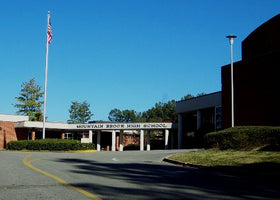
How do you tell a story that has already been told for two decades without simply repeating the headlines? That is the central challenge facing documentary directors Matthew Galkin and Dani Sloane in Taken: Natalee Holloway, Netflix’s three-part series about the 2005 disappearance of 18-year-old Natalee Holloway in Aruba and her mother Beth Holloway’s long search for answers.
Their assignment was not just to revisit a notorious case. It was to organize twenty years of public reporting, private family history, investigative turns, interviews and newly presented material into a coherent account that could still make room for Natalee as a person—not only as the subject of a headline. Netflix identifies Galkin and Sloane as the series’ directors and describes the project as a three-part documentary built around unprecedented access to Beth and people who were with Natalee when she vanished.
Quick answer: The series’ storytelling approach is best understood through four visible choices: it gives Beth’s long search a chronological spine, places personal testimony alongside investigative material, uses archival reporting and previously unseen footage to revisit turning points, and keeps Natalee’s life and relationships in view rather than treating the case as a puzzle alone. Those are observable features of the finished series and its official descriptions—not a claim that the directors have publicly explained every editorial decision.

Why a 20-year story needs more than a simple timeline
Natalee disappeared on May 30, 2005, during a high-school graduation trip to Aruba. The first wave of coverage focused on the missing teenager, the island-wide search, the people last seen with her and the rapidly changing accounts surrounding the investigation. In the years that followed, the case moved through arrests, releases, disputed leads, media appearances and an extortion attempt. In October 2023, Joran van der Sloot pleaded guilty to federal extortion and wire-fraud charges and gave an account of killing Natalee as part of the plea proceedings. He has not been convicted of Natalee’s murder in a separate criminal trial.
A documentary made after that development faces a different narrative problem from one made while the case is unresolved. The audience may already know the broad outcome, so suspense cannot honestly depend on pretending the central question is still unanswered. The more meaningful questions become: how did the family live through the years of uncertainty, what information was available at different moments, why did the search continue for so long, and what did the eventual admission change?
That shift—from “who did it?” to “what did twenty years of not knowing do to the people involved?”—is one of the strongest ways to understand the series’ structure. Netflix’s own description emphasizes Beth’s relentless search, the investigation across countries and the daughter whose memory endured. It frames the story as a family journey as well as a criminal investigation.

Chronology gives the audience a way through two decades of information
Netflix’s Tudum coverage says Beth wanted the most comprehensive, conclusive and chronologically ordered account, and notes that she felt the time was right after the 2023 confession. That is an important clue to the series’ organizing principle. A chronology can help viewers distinguish what the family knew in 2005 from what emerged in later years, rather than allowing later revelations to blur the uncertainty people experienced at the time.
For a case that generated years of news cycles, this distinction is essential. A detail that seems obvious after a confession may not have been established when the first search was underway. A responsible documentary has to show what was known, what was alleged, what was disputed and what only became clear later. It should not edit hindsight into the past as though every participant had access to the same information.
The three-episode format also creates a natural structure for this long timeline. Netflix lists the episodes as “Natalee Is Missing,” “Tangle with the Devil” and “I Knew He Would Kill Again.” Their official summaries move from the last night of the senior trip and the immediate search, through the investigation and the FBI connection, to the later murder in Peru and Beth’s opportunity to confront the man she believed was responsible. The titles themselves signal a progression from disappearance to investigation to the consequences of a later crime.
Putting Beth’s testimony at the center without making her the only source
Beth Holloway is the emotional and narrative center of the project, but a documentary about a complex investigation cannot rest on one person’s recollection alone. Netflix’s published list of participants includes Natalee’s friends Madison Greer and Claire Fierman, Beth’s attorney John Kelly, her friend Sue Remick, Aruban businessman Charles Croes, journalist Dilma Arends Geerman, cameraman Tony Zumbado, former deputy police chief Gerold Dompig and retired FBI agents Alexandra Montilla and Michael Leverock.
That range matters because each participant occupies a different position in the story. A parent can describe the experience of searching for a child; a friend can recall the person Natalee was before the trip; an investigator can explain procedural decisions; a journalist can place the case in the island’s media environment; and an FBI agent can speak to the federal operation. These accounts are not interchangeable, and they should not be treated as if they carry identical authority on every question.
The editorial challenge for Galkin and Sloane is therefore one of balance. The viewer needs to understand Beth’s determination without losing the perspectives of the people who witnessed different parts of the case. The series’ public description indicates that it draws on this broader group, while the final program lets viewers hear those voices in the context of the chronology.

Archive is evidence, atmosphere and a record of how the story was covered
Archival material has a special role in a story that unfolded in public for so long. News footage, photographs, recorded interviews and official material can show how the case was presented at a particular moment. They also let a documentary compare what people said then with what became known later.
But archive is not automatically proof. A television clip may establish that a claim was made on a particular date; it does not, by itself, establish that the claim was true. A photograph can show a person or place; it cannot answer every question about what happened before or after the camera captured it. The strongest documentary storytelling makes those distinctions visible and gives viewers enough context to understand why a piece of material matters.
Netflix’s Tudum reporting says the series includes never-before-seen footage and material from a 2010 FBI operation aimed at bringing van der Sloot to the United States to face charges. The use of such material gives the audience a chance to see parts of the case that were not available in the same way during the original news cycle. Its value lies not in shock alone, but in how it helps explain the sequence of events and the decisions that followed.

The central ethical choice: remember Natalee as a person
There is a risk in every high-profile true-crime production: the victim can become a symbol, a plot device or a face repeatedly shown while the surrounding investigation takes over the story. Netflix’s own synopsis says the series is intended to keep Natalee’s memory at its center. Its Tudum feature also describes her as a student with plans and ambitions beyond the trip, including a full academic scholarship to the University of Alabama and a dream of becoming a doctor.
That biographical detail is not incidental. It reminds the audience that Natalee had a life that was not defined by the circumstances of her disappearance. Her friendships, family, education and future plans are part of the story, not background decoration. The series’ inclusion of people who knew her helps move the narrative beyond the familiar loop of suspect theories and television speculation.
Matthew Holloway’s account of the family’s experience is one example of how a relative’s perspective can broaden the story beyond the public investigation. A documentary can include such testimony without suggesting that any one interviewee speaks for every member of the family or resolves every unanswered question.

Why the directors’ previous work is relevant—but not a substitute for evidence
Matthew Galkin’s professional background includes documentary and nonfiction projects such as Murder in Big Horn, Murder in the Bayou, Inside Man and One Night in Idaho: The College Murders. His production company, Fairhaven Films, describes its focus as nonfiction storytelling that looks beyond the obvious headline to the people, systems and ideas underneath it. Dani Sloane’s credits include The Menendez Brothers, Girl in the Picture, Trial by Media, Dirty Money and Chef’s Table; her official biography identifies her as an Emmy-nominated director and showrunner.
Those credits provide context for the experience the two filmmakers brought to a difficult subject. They do not, on their own, prove what either director intended in a particular scene. It is more accurate to assess the finished series: its episode structure, its use of interviews and archive, the order in which it reveals information, and the way it treats the people at the center of the case.
There is also a useful distinction between the two directors’ shared credit and the individual comments publicly attributed to one of them. In a November 2026 interview about the series, Dani Sloane discussed why Beth chose to revisit the story, the experience of hearing the confession audio and the inclusion of footage and material gathered over the years. The available public reporting gives a direct window into Sloane’s perspective; it should not be presented as a verbatim statement from Galkin unless he is separately quoted.
What the series gains—and what it cannot resolve
The greatest strength of a twenty-year retrospective is the ability to connect moments that were separated by years. It can show how an early search, a later lead, a federal investigation and a confession belong to the same long sequence. It can also restore context that may have been lost when the case was reduced to daily headlines.
There are limits, too. Natalee’s remains have not been recovered. A confession made as part of a federal plea agreement is an important part of the record, but it does not mean every question about the case has been answered in court. A documentary can present testimony and available evidence, but it cannot replace a criminal trial or turn every disputed detail into an established fact.
The series is most persuasive when it respects those boundaries: distinguishing recollection from documentation, allegations from findings, and emotional truth from legal conclusions. That discipline is especially important in true crime, where a dramatic edit can make an uncertain detail feel more settled than the record supports.
Listen to Dani Sloane discuss the documentary
In the Criminally Obsessed podcast, investigative reporter Anne Emerson speaks with director Dani Sloane about the Natalee Holloway case, Beth’s decision to revisit it, the confession audio and the documentary’s use of previously unseen material. It is a useful companion to the series because it provides Sloane’s own comments rather than relying only on outside interpretation.
Listen to “The Natalee Holloway Story You Didn’t See on the News” on Apple Podcasts.
View the official Netflix page for Taken: Natalee Holloway and its trailer.
How this documentary fits into the wider Natalee Holloway coverage
The series is part of a much longer media history. Earlier reporting often followed breaking developments as they happened; a later documentary can assemble those events into a single chronology and revisit how the case was covered. Our related article, Why the Documentary Feels Different From Earlier Natalee Coverage, examines that change in perspective. For the accounts from people who knew Natalee, see Friends’ Interviews in the Series: Relief Claims vs Viewer Criticism.
Frequently asked questions
Who directed Taken: Natalee Holloway?
The three-part Netflix documentary was directed by Dani Sloane and Matthew Galkin. Netflix identifies Story Syndicate as the production company.
What is the documentary’s main storytelling approach?
The finished series uses Beth Holloway’s search as a central narrative thread, moves through the case chronologically, and combines interviews with people connected to Natalee and the investigation with archival and previously unseen material.
Why did Beth Holloway decide to tell the story now?
In Netflix Tudum’s November 2026 coverage, Beth said the 2023 confession meant there was finally a conclusion and that she wanted a comprehensive, conclusive and chronological account. The interview describes that timing as important to her decision.
Does the documentary include new footage?
Netflix says the series includes never-before-seen footage, including material from a 2010 FBI operation. The precise meaning and evidentiary value of each clip depend on the context provided in the series.
How many episodes are in Taken: Natalee Holloway?
It is a three-part documentary. Netflix lists the episodes as “Natalee Is Missing,” “Tangle with the Devil” and “I Knew He Would Kill Again.”
Has Natalee Holloway’s body been found?
No. Natalee’s remains have not been recovered. The documentary revisits the confession and the family’s long search, but it does not change that fact.
Sources and further reading
- Netflix Media Center: Taken: Natalee Holloway — official series synopsis and director credits.
- Netflix Tudum: Beth Holloway Tells the Full Story of Natalee’s Disappearance — episode details, interview participants and Beth’s explanation of the timing.
- NL Times: Netflix releases trailer for documentary series on Natalee Holloway — director Dani Sloane’s comments on the project.
- Criminally Obsessed: The Natalee Holloway Story You Didn’t See on the News — interview with Dani Sloane.
- Forbes: Taken Director Goes Inside the Biggest Bombshells Revealed in the Series — video conversation with Dani Sloane.
- Fairhaven Films: Matthew Galkin — professional biography and documentary credits.
- Dani Sloane: Official Biography — directing and showrunning credits.
- Story Syndicate — production company background.
Editorial note: This article separates information confirmed by Netflix and other cited sources from analysis of the finished series. It does not attribute private creative decisions to either director without a published statement.
Author: Shivam Das