By Shivam Das
Netflix’s Taken: Natalee Holloway revisits the 2005 disappearance of 18-year-old Natalee Holloway through the people who searched for her, investigated the case and lived with its consequences. One question naturally follows the story: what did Joran van der Sloot’s parents know, what did they say, and how much of their perspective does the documentary actually provide?
The careful answer is more limited than the question might suggest. The public record contains Beth Holloway’s account of a private meeting with Joran’s parents, Paulus and Anita van der Sloot, in the weeks after Natalee disappeared. But Netflix’s official overview of the series lists Beth, Natalee’s friends, her attorney, people who assisted the search, Aruban journalists and former investigators among its interview participants; it does not list either parent as an interviewee. That distinction matters. A documentary can revisit a family’s role through other people’s testimony or archival material without giving that family a direct, present-day interview.

What Netflix confirms about the documentary’s interviewees
Netflix’s own official guide to Taken: Natalee Holloway describes a three-part series that premiered on November 4, 2026. It identifies Beth Holloway, Natalee’s friends Madison Greer and Claire Fierman, attorney John Kelly, friend Sue Remick, Aruban businessman Charles Croes, journalist Dilma Arends Geerman, cameraman Tony Zumbado, former deputy police chief Gerold Dompig and retired FBI agents Alexandra Montilla and Michael Leverock among those featured.
Paulus and Anita van der Sloot are not named in that published list. That is a verifiable point about Netflix’s public participant description—not proof that no photograph, archival clip or reference to them appears anywhere in the episodes. Without a clearly identified on-camera interview or a direct statement from either parent, it would be misleading to write as though the series gives viewers their full account.

The private meeting Beth Holloway described in 2005
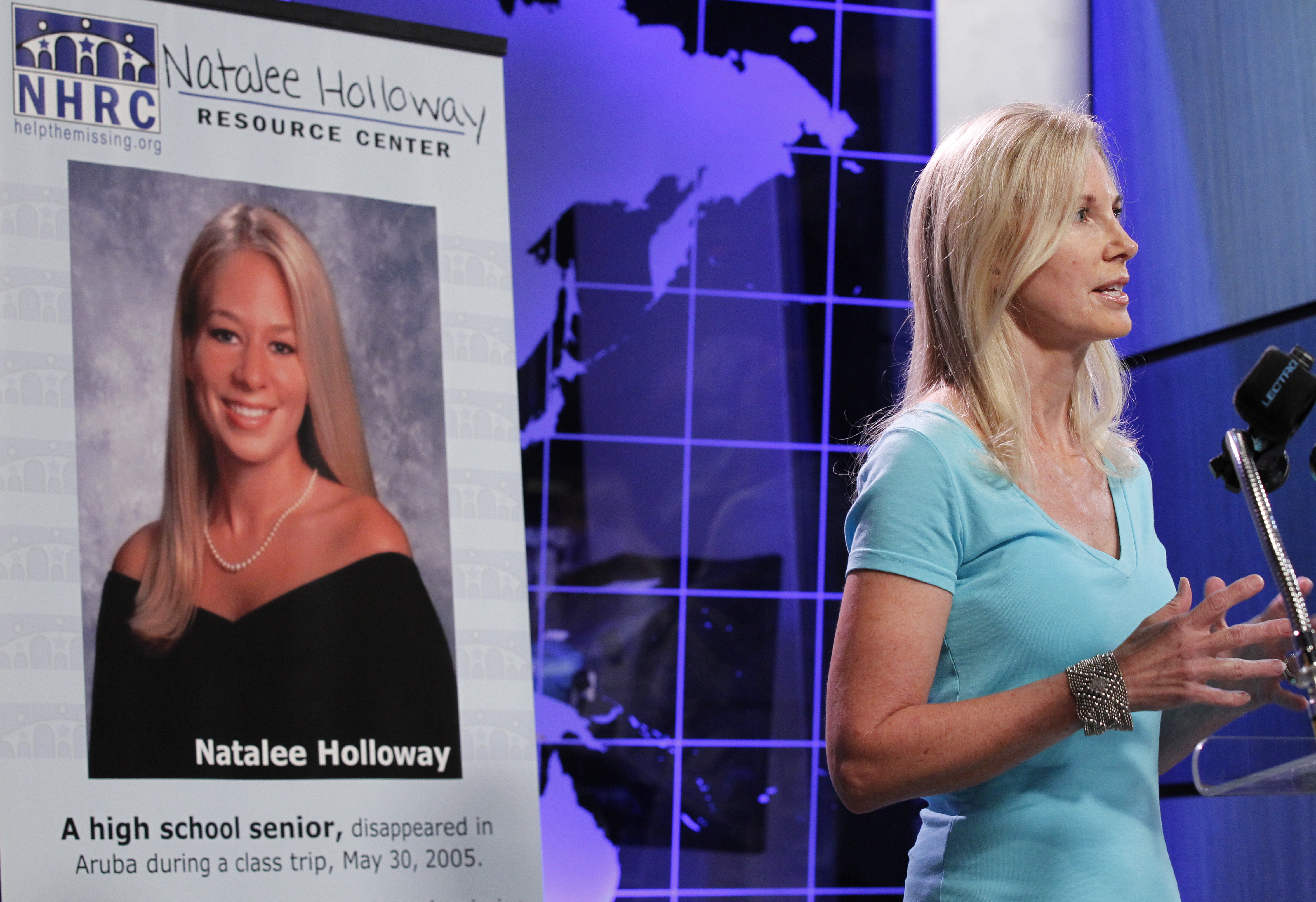
The most detailed publicly reported account of Beth’s early contact with Joran’s parents comes from an ABC News interview published in November 2019, in which Beth revisited the first weeks of the investigation. She said that, after Natalee vanished, she joined journalist Greta Van Susteren for an interview with Joran’s parents at their home. The conversation was not recorded as a conventional on-camera interview: Beth described it as an off-camera meeting, and said Paulus had invited them inside.
Beth recalled wanting to be physically close to Paulus because she wanted him to feel, in some way, the anguish she was experiencing. Her account was direct and deeply emotional. She later characterized him as someone she believed knew what had happened to Natalee. That was Beth’s conviction, not an independently established finding about what Paulus knew.
Van Susteren, who was present, separately described the atmosphere. ABC reported her recollection that Beth was stern and direct, that Anita was crying, and that Paulus was perspiring heavily. Van Susteren said she could not know the medical reason for the perspiration, while acknowledging that a viewer might interpret it as a sign of stress or knowledge. That qualification is important: an observed physical reaction is not proof of complicity or prior knowledge.

What did Paulus van der Sloot say?
In the public account cited above, Paulus is described as the person who invited Beth and Van Susteren into the family home. The available ABC report does not provide a substantive, attributable explanation from him about Natalee’s disappearance during that meeting. It records Beth’s interpretation of his behavior and Van Susteren’s description of the encounter, but those are not substitutes for Paulus speaking on the record.
That is the central “didn’t say” point. It is not responsible to turn a reported silence, an expression, or a physical reaction into a confession. Nor should a writer invent a quotation or imply that Paulus acknowledged knowledge of Natalee’s fate. He died in 2010, before Joran’s 2023 federal plea and confession, so he could not respond to that later account.
What did Anita van der Sloot say?
The same ABC report describes Anita as crying during the meeting. It does not publish a detailed statement from her explaining what she knew, what her son had told her, or what she believed had happened to Natalee. Her emotional response, as recalled by witnesses, is part of the reported scene; it does not establish what information she possessed.
That difference is especially important in a case shaped by years of contradictory accounts and intense public suspicion. A parent’s distress can have many explanations. Without a direct, verifiable statement, it is not possible to responsibly attribute a specific belief, admission or cover-up to Anita on the basis of that encounter alone.

Why the parents’ perspective is difficult to separate from the evidence
Joran was 17 when Natalee disappeared. He was among the last people seen with her, alongside brothers Deepak and Satish Kalpoe, after she left a nightclub in Oranjestad on May 30, 2005. In the first days, he gave accounts of taking her to a hotel and later leaving her near the beach; the accounts changed over time. Investigators did not have enough evidence to keep the young men in custody, and Joran was released during the early investigation.
Those events explain why Beth sought answers from his parents. They do not, by themselves, prove that either parent knew where Natalee was or participated in a crime. The distinction between a suspect’s conduct and a relative’s knowledge should remain clear in any retelling.
For readers following the documentary’s wider family context, our related report, Beth Holloway Meets van der Sloot’s Parents Weeks After Disappearance — What Anita Said, examines the reported encounter in more detail.
What changed after Joran’s 2023 confession?
In October 2023, Joran van der Sloot pleaded guilty in U.S. federal court to extortion and wire fraud connected to his attempt to obtain money from Beth in exchange for information about Natalee. During the plea proceedings, he admitted killing Natalee and described striking her before moving her body into the sea. The U.S. case was about the federal extortion and fraud offenses; it was not a murder conviction for Natalee’s death. Her remains have never been recovered.
The later confession gave Beth information she had sought for 18 years, but it did not retroactively establish what Paulus or Anita knew in 2005. Paulus had died in 2010. No verified public statement from Anita in the sources reviewed for this article establishes that she knew the details of the killing or helped conceal it. The absence of such a statement should not be filled with speculation.
Netflix’s November 4, 2026 follow-up interview with Beth focuses on what the confession meant to her and the legal work she says she is pursuing in the Netherlands. It also explains why the documentary was an opportunity to tell a comprehensive chronology. It does not supply a new, attributable account from Joran’s parents.
What viewers can fairly take away
The parents’ place in the story is real, but the public record is narrower than speculation often suggests. Beth has described a painful private meeting. Van Susteren has recalled the emotional atmosphere. ABC’s published account does not offer a detailed response from Paulus or Anita, and Netflix’s public list of interview participants does not identify either as a documentary interviewee.
That leaves viewers with unanswered questions about what Joran told his parents, what they believed, and what they may have known at different points. The available evidence does not answer those questions conclusively. A careful documentary analysis should preserve that uncertainty rather than present suspicion as fact.
Ultimately, Taken: Natalee Holloway is framed around Natalee, the people who searched for her, and Beth’s long pursuit of answers. The parents’ reported reaction adds context to the early investigation, but it should not be mistaken for proof of their involvement or for a first-person explanation that the public record does not contain.
Frequently asked questions
Are Joran van der Sloot’s parents interviewed in Taken: Natalee Holloway?
Netflix’s official published list of featured interview participants does not name Paulus or Anita van der Sloot. That list does not, by itself, establish whether they appear in any archival footage or are mentioned elsewhere in the series.
Did Beth Holloway meet Joran’s parents after Natalee disappeared?
Yes. Beth told ABC News that she and journalist Greta Van Susteren met Paulus and Anita at their home in the weeks after Natalee vanished. She described the meeting as off-camera.
What did Anita van der Sloot say during the meeting?
The ABC account describes Anita as crying, but it does not publish a detailed statement from her about Natalee’s disappearance or what she knew.
Did Paulus van der Sloot admit knowing what happened to Natalee?
No such admission appears in the cited public account. Beth expressed her belief that he knew, but that is her interpretation, not a verified confession by Paulus.
Did Joran’s 2023 plea convict him of Natalee’s murder?
No. He pleaded guilty to U.S. federal extortion and wire-fraud charges and admitted killing Natalee during the proceedings. The federal conviction was not a murder conviction for Natalee’s death.
Sources and further reading
- Netflix Tudum: Official overview and participant list for Taken: Natalee Holloway
- ABC News: Beth Holloway’s account of the early search and meeting with Joran’s parents
- Netflix Tudum: Beth Holloway on the 2023 confession and what comes next
- The Associated Press: Details of the 2023 confession and federal plea