Content note: This report discusses a violent crime in non-graphic terms. It focuses on what was documented in the 2023 proffer interview and court proceedings, not on speculation about Natalee Holloway’s final location.
For 18 years, Natalee Holloway’s disappearance in Aruba remained one of the most closely followed missing-person cases in the United States. In October 2023, Joran van der Sloot gave federal investigators an account of what he said happened on the beach on May 30, 2005. Two details became central to that account: a cinder block he said he found nearby, and his claim that he pushed Natalee’s body into the sea.
The account was not a newly discovered forensic finding. It was van der Sloot’s own statement, made during a proffer interview connected to a federal plea agreement in a separate extortion and wire-fraud case. That distinction matters when separating what he admitted, what the court proceedings established, and what remains unknown because Natalee’s remains have never been recovered.
Quick answer: In an October 3, 2023 interview described in court documents, van der Sloot said he kicked Natalee Holloway in the face after she resisted his sexual advances, then struck her with a cinder block he saw on the beach. He said he carried or dragged her into the water until it reached about his knees and pushed her out to sea. The confession did not identify a precise disposal location, and Natalee’s remains have never been found.

What van der Sloot said happened before the cinder block
According to the transcript excerpts reported by CBS News and other outlets, van der Sloot said he and Natalee were walking on a beach after leaving the area where she had been with classmates during the Aruba graduation trip. He said Natalee had wanted to return to her hotel, but he arranged for them to be dropped off farther away so they would have to walk.
In his account, the two sat or lay on the beach and began kissing. He then described trying to touch Natalee after she had told him to stop. The transcript records his statement that she kneed him in the groin. He said he stood up and kicked her forcefully in the face while she was on the ground.
Van der Sloot described Natalee as unconscious and said he was unsure whether she was already dead. The uncertainty in his own account is important: the public excerpts do not provide a medical examination, a recovered body, or independent forensic confirmation of the precise moment of death.
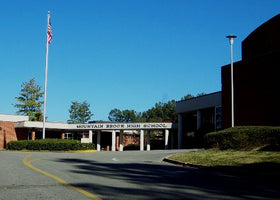
Natalee was 18. She had disappeared during a high-school graduation trip to Aruba on May 30, 2005. Her family spent years seeking answers, while investigators pursued leads and reviewed changing accounts from people connected to the case.

The cinder block: what the confession actually describes
After describing the kick, van der Sloot said he noticed a large cinder block on the beach. He told investigators he picked it up and struck Natalee with it. The detail was especially consequential because it was a specific object in an account that had changed over the years.
But the public record does not establish the block’s exact size, weight, shape, condition, or original location. It does not identify a recovered weapon or report that investigators found a cinder block and forensically matched it to the crime. The object is known publicly because van der Sloot described it in his proffer account, not because it was recovered and independently examined.
That difference should not be lost in retellings. A confession can provide an account of events and may be weighed by investigators alongside other evidence. It does not turn every detail in the speaker’s narrative into a separately verified physical fact. Responsible coverage should attribute the cinder-block detail to van der Sloot and avoid presenting an illustrative photograph of a concrete block as if it were the actual object.
What he said about taking Natalee into the ocean
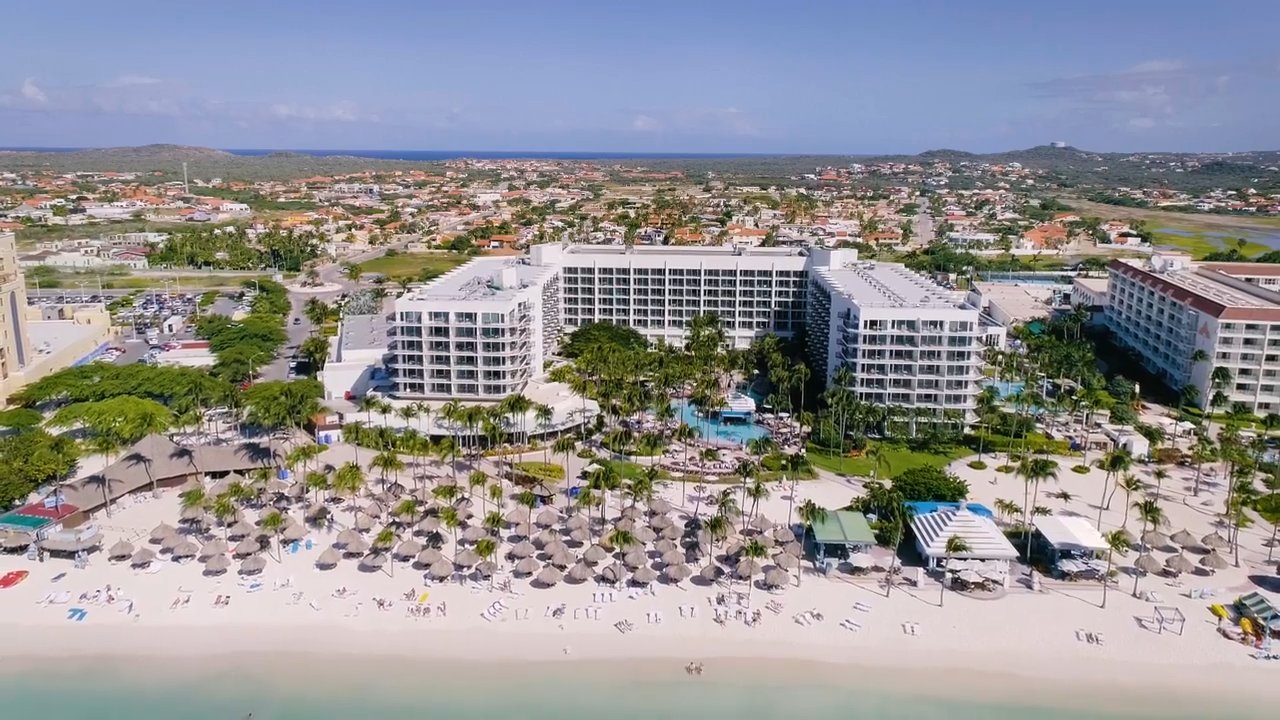
Van der Sloot’s account then moved from the beach to the water. He said he took Natalee’s body into the ocean, wading until the water reached approximately his knees, and pushed her out to sea. He said he then left and walked home.
The statement describes a claimed action, but it does not supply a map coordinate, a measured distance from shore, a direction of travel, a time of entry, a water depth beyond his own approximate description, or a scientifically established current path. The public transcript excerpts do not identify a precise point where he said he released her. It would therefore be inaccurate to draw a specific disposal location on a map or claim that a particular reef, current or stretch of coastline has been confirmed.
Why the ocean account did not lead to Natalee’s remains
Natalee’s remains have never been found. That fact remains true despite the 2023 confession. The public account did not provide investigators with a confirmed recovery site, and it did not end every unanswered question about the physical evidence.
Ocean searches are affected by many variables, including the location where an object enters the water, depth, currents, weather, seabed conditions and the passage of time. Those general factors cannot be used to reverse-engineer a reliable search location from a brief verbal description. Without verified coordinates or additional evidence, claims about where Natalee’s remains must be treated as speculation.
Searches over the years included land and sea efforts. The absence of recovered remains is not proof that a particular search area was correct or incorrect; it is simply a limit on what can be confirmed publicly. The most accurate wording is that van der Sloot said he pushed Natalee’s body into the sea, while her remains have not been recovered.
The confession was part of an extortion and wire-fraud plea agreement
The setting for the confession is essential. On October 18, 2023, van der Sloot pleaded guilty in federal court in Alabama to extortion and wire fraud. Prosecutors said he had sought money from Beth Holloway in 2010 in exchange for information about Natalee’s remains and the circumstances of her disappearance. The U.S. Department of Justice said he received a 20-year sentence for those federal offenses.
As part of the agreement, he was required to provide information about Natalee’s disappearance. His proffer interview with his attorney took place on October 3, 2023, and the family was able to hear his account. The confession became public during the October 18 proceedings.
It is important not to describe the Alabama case as a murder conviction for Natalee’s death. The federal charges to which van der Sloot pleaded guilty were extortion and wire fraud. He was not tried or convicted in that U.S. proceeding for Natalee’s murder. He was separately serving a Peruvian prison sentence for the 2010 killing of Stephany Flores.

How the 2010 false lead complicates the history of the case
The 2023 account also has to be understood against the earlier extortion attempt. In 2010, van der Sloot offered information about the location of Natalee’s remains in exchange for money. According to the Justice Department, he received a total of $25,100 and later described the information he had supplied as worthless. The earlier episode is one reason his statements have to be carefully attributed and checked against the record.
That history does not erase the significance of the 2023 proffer. It does mean that readers should distinguish the 2010 claims about a supposed burial location from the later account describing an attack on a beach and disposal in the ocean. They are different statements made at different times, in different circumstances.
The 2023 plea agreement required van der Sloot to provide complete and truthful information, according to the Justice Department’s description of the agreement. The public can assess the details that were disclosed, but should not assume that every unanswered question has been settled by a single interview.
What the family heard — and what remains unresolved
Beth Holloway said the admission answered the central question she had pursued for 18 years. In public remarks after the hearing, she said van der Sloot was no longer merely a suspect in her daughter’s murder. Her response reflected the emotional weight of hearing a direct account after years of changing stories and uncertainty.
Dave Holloway also addressed the confession. Public reporting described him as believing van der Sloot killed Natalee, while raising questions about whether anyone else may have helped with the disposal or concealment. Those comments were his assessment, not a judicial finding that another person participated.
The distinction between what the family believes, what van der Sloot said, and what authorities have independently established is important. The confession provided a detailed account. It did not produce Natalee’s remains, and it did not publicly resolve every question about the final physical evidence.
Watch ABC News’ report on the confession
The following report is from ABC News’ verified YouTube channel and covers the confession made public during the October 2023 proceedings. It contains discussion of a violent crime.
Frequently asked questions
What did Joran van der Sloot say he used to strike Natalee Holloway?
In his October 3, 2023 proffer interview, van der Sloot said he saw a cinder block on the beach and used it to strike Natalee after kicking her in the face. The public account does not establish that investigators recovered the specific object.
What did van der Sloot say he did with Natalee’s body?
He said he took her body into the ocean until the water was about knee-deep and pushed her out to sea. This is his account of what happened, not a recovered-body finding.
Did the confession identify the exact location where Natalee was pushed into the sea?
No precise coordinates or verified disposal point were identified in the public transcript excerpts. A specific map location or current path should not be presented as established fact.
Have Natalee Holloway’s remains ever been found?
No. Her remains have not been recovered, despite searches over the years and van der Sloot’s 2023 account.
Was van der Sloot convicted of Natalee Holloway’s murder in the United States?
No. In Alabama in October 2023, he pleaded guilty to federal extortion and wire-fraud charges and received a 20-year sentence. He was not tried or convicted there for Natalee’s murder.
When did he give the confession?
The proffer interview with his attorney took place on October 3, 2023. Details were made public during the federal plea and sentencing proceedings on October 18, 2023.
Why is the cinder-block detail significant?
It is a specific part of van der Sloot’s account of the killing. However, the detail should be reported as something he said, not as a physical object independently recovered and forensically verified.
Sources and further reading
- U.S. Department of Justice: Joran van der Sloot Pleads Guilty and Is Sentenced for Extortion and Wire Fraud — plea agreement, federal charges and sentence.
- CBS News: What Joran van der Sloot’s confession reveals about Natalee Holloway’s death — transcript details and the account of the cinder block and ocean.
- CBS News: Van der Sloot admitted to killing Natalee Holloway on Aruba beach — legal context and the fact that he was not charged with her killing in the United States.
- Associated Press: Joran van der Sloot’s confession provides long-sought answers, mother says — family response and remaining questions.
- ABC News: Van der Sloot pleads guilty and provides details of Natalee Holloway’s death — account from the proffer interview.
- CBS News/AP: Natalee Holloway’s family reacts to the confession — the family’s statements and the continuing absence of recovered remains.
Editorial note: The article attributes the cinder-block and ocean-disposal details to van der Sloot’s 2023 proffer statement. It does not claim that the object, precise disposal point, or remains were independently recovered.
Author: Shivam Das