By Shivam Das
The most unsettling part of Netflix’s Taken: Natalee Holloway may not be a newly uncovered clue or a dramatic police interview. It is a memory shared by one of Natalee’s friends: the group was not immediately alarmed when they saw the 18-year-old leave a nightclub in a car with three young men, including Joran van der Sloot. In hindsight, that ordinary-seeming moment has become almost unbearable to revisit.
That recollection can provoke anger in viewers. But the documentary’s wider account also explains why the friends did not understand the danger in real time. In Aruba, taxis were not always marked like the vehicles visitors might expect at home. Madison Greer says she believed Natalee may have thought the men could take her back to the hotel. The distinction matters: the friends were describing what they understood that night, not endorsing what happened or accepting responsibility for it.
Taken: Natalee Holloway premiered on Netflix on November 4, 2026. The three-part series brings Natalee’s friends Madison Greer and Claire Fierman into the account alongside her mother Beth Holloway, investigators, journalists and people who helped with the search. Netflix says the series uses previously unseen material and perspectives from people closest to the case. Netflix Tudum’s series guide identifies Greer and Fierman among the friends interviewed.

What Madison Greer remembers about the last night
According to accounts of the documentary, Natalee and her classmates had spent the final night of their senior trip out in Aruba. At the end of the evening, Natalee was seen getting into a gray Honda Civic with van der Sloot and brothers Deepak and Satish Kalpoe. Greer recalled that a friend saw Natalee in the car but did not panic. She explained that local taxis could look like ordinary cars, and she thought Natalee might have assumed she was getting a ride back to the hotel.
That is the detail that can sound shocking when heard with the knowledge audiences have today. Viewers know that Natalee never returned to her hotel and never boarded the flight home. Her friends did not have that knowledge in the parking lot. They were teenagers on a graduation trip, making sense of a brief departure in an unfamiliar place, with no way to know what the next hours would bring.
Greer also recalled Natalee appearing happy and energetic as the car left. That memory is painful precisely because it is so ordinary: a young woman calling out to friends, a group assuming the night is ending, and a moment that only later became the last known sighting of her alive. Retelling it should not turn a split-second judgment into a verdict on the people who cared about her.

Why the friends’ account can be misread as indifference
There is a difficult gap between what people know now and what they could reasonably know then. Once a disappearance becomes a global case, every small detail is replayed with the ending already in mind. A friend’s lack of alarm can be recast as carelessness; a decision that seemed routine can look reckless. That is hindsight, not evidence that the friends knew Natalee was in danger.
The documentary’s interviews are important because they restore the people around Natalee to the story. Netflix’s official description says she was known as “Hootie,” was academically driven, had a full scholarship to the University of Alabama and dreamed of becoming a doctor. Beth describes a daughter with a wide circle of friends, humor and strong opinions. These details counter the way a long-running crime story can reduce a teenager to a final photograph or a last-seen timeline.
It is also worth separating criticism of the documentary’s framing from criticism of the friends themselves. Some viewers may want more detail about who saw what, when the group separated, and how the final hours unfolded. Those are fair questions for a documentary to address. But a question about the timeline is not proof of complicity, and anger at the tragedy should not be redirected toward young women who were also caught in an event they could not foresee.

What the friends did after Natalee vanished
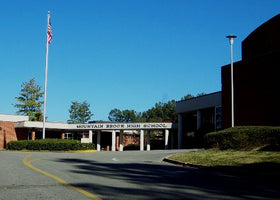
The friends’ role did not end when Natalee disappeared. Classmates and members of the Mountain Brook community organized support, wore bracelets, helped raise money and joined public efforts to keep her name visible. A 2005 Associated Press photograph published by CBS News shows Madison Whatley displaying bracelets she wore in support of her missing friend. Another shows friends preparing a benefit cookout for the family.
Those archival images offer a necessary counterweight to the single moment that has drawn so much attention. They show a community trying to help in the days after the disappearance, when the hope was still that Natalee would be found and brought home. The record is not simply a story of friends who failed to recognize a risk; it is also a record of people who mobilized after they learned she was missing.

Another CBS/AP archive image shows Beth Holloway handing out bracelets in Natalee’s memory and helping students braid them at St. Anna School in Aruba. The photographs do not establish what every individual friend did in every hour of the search. They do, however, document a wider circle of support that is often lost when the story is compressed into the final night.

The wider context: a night that became a 20-year case
Natalee disappeared on May 30, 2005, during a high-school graduation trip to Aruba. She was last seen leaving a nightclub in a car with van der Sloot and the Kalpoe brothers. The three men were arrested during the early investigation but were later released without being charged in connection with her disappearance. Natalee’s remains have never been recovered.
In 2023, van der Sloot pleaded guilty in the United States to extortion and wire fraud involving an attempt to obtain money from Beth in exchange for information about Natalee. As part of a proffer agreement, he admitted killing her in Aruba in 2005. That admission is a central part of the documentary, but it is important to describe the legal status accurately: the U.S. conviction was for extortion and wire fraud, not a murder conviction for Natalee’s death. Netflix Tudum reported on November 4, 2026, that van der Sloot had not been charged in connection with Natalee’s death, while Beth described her efforts to pursue a murder complaint in the Netherlands.
The documentary also revisits how the case was covered. American media attention brought resources and sustained public pressure, but it also created friction with some Arubans who felt their police and community were being portrayed unfairly. The friends’ recollections sit inside that larger history: a local disappearance that became an international spectacle, with every statement and decision scrutinized long after the people involved had lived through it.
Why viewer anger should focus on the right questions
The most useful response to the friends’ recollections is not to demand that they should have predicted the future. It is to ask what made the situation appear ordinary, what information was available to the teenagers, how the investigation handled the first reports, and why van der Sloot’s account was not tested more quickly. Those questions direct scrutiny toward the circumstances and investigative decisions rather than toward hindsight-based blame.
There is a second reason to be careful. The friends were not merely witnesses in a case file; they were young people who lost someone they knew. Public attention can turn people connected to a crime into targets, especially when an audience is encountering the story for the first time. The documentary’s inclusion of their voices gives viewers a chance to hear what they remember, but it should not become an invitation to harass them or assign guilt without evidence.
For a deeper look at the renewed series and the case’s legal aftermath, read our related coverage: Beth Holloway’s first 2005 meeting with van der Sloot, the unseen 2010 hotel footage, and the status of the Dutch murder complaint. You can also read how Beth keeps Natalee’s memory part of her daily life.
Frequently asked questions
Who are Natalee Holloway’s friends interviewed in Taken: Natalee Holloway?
Netflix identifies Madison Greer and Claire Fierman among Natalee’s friends interviewed in the three-part documentary. Beth Holloway, attorney John Kelly, family friend Sue Remick, Aruban journalist Dilma Arends Geerman, businessman Charles Croes, former deputy police chief Gerold Dompig and retired FBI agents also appear or contribute to the series.
Why were Natalee’s friends not alarmed when she left in the car?
Madison Greer explained that taxis in Aruba could be unmarked ordinary cars. She thought Natalee may have believed the men could be local drivers who would take her back to the hotel. That was the friends’ understanding at the time, not knowledge of what would happen.
Who was with Natalee when she was last seen?
Natalee was last seen leaving a nightclub in a gray Honda with Joran van der Sloot and brothers Deepak and Satish Kalpoe in the early hours of May 30, 2005.
Did Natalee’s friends help after she disappeared?
Friends and classmates supported the family and the search effort. Contemporary Associated Press photographs document benefit preparations and friends wearing bracelets in support of Natalee.
Has Joran van der Sloot been convicted of Natalee Holloway’s murder?
No. He admitted killing Natalee as part of a 2023 proffer agreement and pleaded guilty to U.S. extortion and wire-fraud charges, but the U.S. conviction was not a murder conviction for Natalee’s death. Netflix Tudum reported in November 2026 that he had not been charged in connection with her death.
Sources and reporting notes
- Netflix Tudum: Documentary details, Natalee’s friends and interview participants
- CBS News / Associated Press: May 2005 photographs, including Natalee with friends in Aruba
- CBS News / Associated Press: June–July 2005 photographs of friends and community support
- AOL: Madison Greer’s recollection of the final car ride and friends’ reaction
- Netflix Tudum: Beth Holloway’s November 4, 2026 interview and legal update
- Glamour: Natalee’s close friends reflect on grief and the years after her disappearance
Editorial note: The phrase “viewer outrage” in the headline describes the emotional reaction the scene can provoke; this article does not claim a measured or platform-wide backlash without verified audience data. The friends’ recollections are presented as recollections, not proof of wrongdoing. Photograph captions identify the Associated Press credit as displayed by CBS News; publication on another site does not by itself establish reuse permission.