Warning: This article discusses major revelations from all three episodes of Netflix’s Taken: Natalee Holloway, including the 2010 FBI operation and the account Joran van der Sloot gave in 2023.
Some of the most startling moments in Netflix’s three-part Taken: Natalee Holloway are not built around dramatic music or a sudden twist. They land because they put a human face on years of uncertainty: Beth Holloway describing the first hours after she reached Aruba, a former police official revisiting the early investigation, and previously unseen footage from the FBI operation that exposed an attempt to profit from a mother’s desperation for answers.
The series premiered November 4, 2026, and follows the 2005 disappearance of 18-year-old Natalee Holloway during a high-school graduation trip to Aruba. Netflix says the production draws on exclusive access to Beth and people who were with Natalee when she vanished, along with investigators and material that had not previously been made public. The three episodes are titled “Natalee Is Missing,” “Tangle with the Devil” and “I Knew He Would Kill Again.” Netflix’s official series description lays out the scope of the documentary.
Why these moments stand out: they reveal how the case moved from an urgent search to a long, frustrating investigation, then to a federal sting and a 2023 confession. They also show why the story cannot be reduced to a mystery puzzle: Natalee was a young woman with a family and friends who spent years living with unanswered questions.
1. Beth Holloway’s first confrontation with van der Sloot
One of the most emotionally charged moments revisited in the series is Beth’s account of confronting Joran van der Sloot soon after she arrived in Aruba. The Independent’s November 5 breakdown of the documentary says Beth recalled suspecting that he was lying about Natalee’s whereabouts within hours of reaching the island. The power of the scene is not that it offers a neat answer in 2005; it shows a mother trying to make sense of conflicting explanations while her daughter was still missing.
That distinction matters. The early investigation was unfolding in real time, with incomplete information and a missing young woman whose whereabouts were unknown. The documentary’s retrospective structure lets viewers see how Beth interpreted events then, but hindsight should not be mistaken for proof that every detail was obvious to everyone involved at the time.
For many viewers, this is the point where the story stops feeling like a familiar headline and becomes a record of a mother’s first days of fear, urgency and determination. Netflix’s Tudum feature describes Beth’s arrival and the large volunteer effort that grew around the search. Read Netflix Tudum’s series background.
2. Gerold Dompig’s account of the early questioning
The appearance of former Aruban deputy police chief Gerold Dompig is another moment that changes the texture of the documentary. Netflix identifies Dompig among the people interviewed, and Tudum says he speaks about the case publicly in the series for the first time in twenty years. His perspective gives the production an official voice from the early investigation rather than relying only on the recollections of the Holloway family and U.S. media coverage.
The Independent reported Dompig’s claim that van der Sloot changed his account roughly 40 times during an initial June 2005 interrogation. That figure should be attributed to Dompig’s account, not presented as an independently established transcript count. The important point for viewers is the documentary’s attempt to show how investigators were dealing with shifting statements, pressure for answers and the absence of Natalee’s remains.
It is also a reminder that a documentary interview is one participant’s account, not a court ruling. A fair reading keeps the distinction between what a person says on camera, what investigators documented, and what a court formally decided.
3. The previously unseen 2010 FBI sting footage
The sequence most likely to make viewers pause is the 2010 operation involving Beth’s attorney, John Q. Kelly, and van der Sloot. The documentary includes footage from a secretly recorded meeting in Aruba. According to reporting by People and Mediaite, van der Sloot sought $250,000 in exchange for information about where Natalee’s remains could be found. Kelly handed over an initial $10,000 as part of the operation, while the FBI recorded the encounter.
The footage is disturbing because it shows the family’s search for answers being turned into a proposed financial transaction. Van der Sloot described a supposed location where Natalee’s body had been hidden; that account was false. The operation led to federal extortion and wire-fraud charges in the United States. The sequence is not simply a new visual detail: it helps explain why the 2010 episode became a major turning point in the case.
There is a legal distinction worth keeping clear. Van der Sloot later pleaded guilty in the U.S. case to extortion and wire fraud. His statements about killing Natalee were part of the 2023 proffer and plea proceedings; he was not convicted of Natalee’s murder in that federal case. People’s report on the FBI footage details the meeting and the money discussed.
4. The false blouse lead and the cost of manufactured hope
Another unsettling thread concerns a 2021 tip involving a blouse that was represented as potentially connected to Natalee. The Independent’s summary of the series says FBI DNA analysis debunked the lead and established that the item was part of an anonymous scam. Netflix Tudum also recounts how investigators examined information passed to journalist Greta Van Susteren and how the inquiry concluded that the tip did not provide a genuine lead.
For viewers, the jaw-dropping element is the cruelty of false hope. Families of missing people can be forced to evaluate every new claim, photograph, object or message because the possibility of an answer is so difficult to ignore. The documentary places this episode within the long chronology of the case, showing that the search did not end when the first wave of international attention faded.
The Aruba Public Prosecutor’s Office has separately described its investigation into the information publicized in 2022, saying the material did not help solve Natalee’s disappearance and that the source had been deceived by people seeking payment. The Aruba Public Prosecutor’s Office statement is useful primary-source context for this part of the story.
5. The friends’ memories that restore Natalee’s life beyond the case
The interviews with Natalee’s friends are essential because they move the story away from the narrow frame of the night she disappeared. Netflix’s official Tudum coverage names friends Madison Greer and Claire Fierman among the participants. Their memories, alongside the documentary’s archival material, help viewers see Natalee as a student, daughter and friend rather than only as the subject of a criminal investigation.
This part may not contain the most sensational revelation, but it is among the series’ most important choices. True-crime coverage can allow the victim to disappear behind timelines, suspects and theories. Personal memories push back against that tendency. They remind viewers that Natalee had plans for college and a future that was interrupted, and that the people who loved her have carried the loss for decades.
Reviewers have noted that the documentary’s emotional center is Beth and the people close to Natalee. Decider’s review, for example, says the series may offer few new facts to viewers who have followed the case for years, but finds its value in the family’s and friends’ perspective. That is a useful counterweight to the idea that every “jaw-drop” moment must be a shocking new clue.
6. The search images that show how large the response became
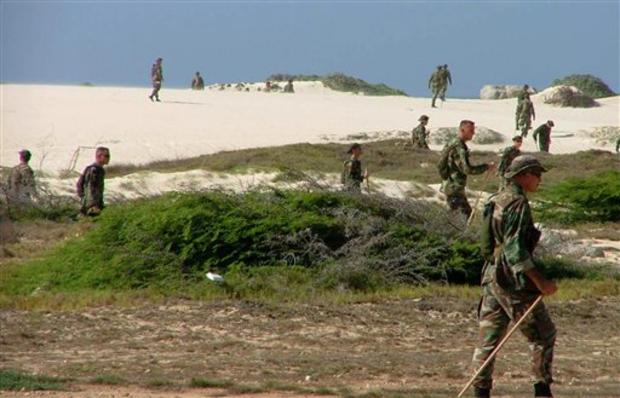
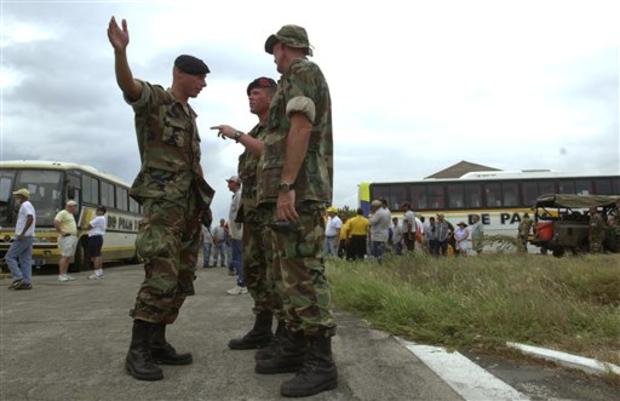
Archival photographs of the 2005 search are a powerful visual thread. They show Dutch marines, police, volunteers and members of the public participating in efforts to find Natalee. Netflix Tudum reports that Beth recalled roughly 100 to 150 people rallying on the island at the height of the search, while its backgrounder describes the involvement of authorities and volunteers from Aruba, the United States and the Netherlands.
The images also complicate the simplified version of the case that sometimes circulates online. Aruba was not merely a backdrop. Its residents, officials, journalists and volunteers were part of a search that unfolded under intense international attention. The documentary revisits the tension between the urgency felt by Natalee’s family and the criticism directed at local authorities, but viewers should avoid treating one interview or one news clip as the complete account of an entire island’s response.
7. The final episode’s title and the five-year parallel
The third episode, “I Knew He Would Kill Again,” connects the date Natalee disappeared with the murder of Stephany Flores in Peru five years later. Netflix’s episode description identifies this parallel as a central part of the final chapter. The chronology is difficult to watch because it places two separate families’ losses in the same timeline and shows how van der Sloot’s movements after leaving Aruba intersected with another violent crime.
Van der Sloot was convicted in Peru for Flores’s murder and sentenced to 28 years in prison. In 2023, he was temporarily extradited to the United States to face the extortion and wire-fraud charges connected to the Holloway family. The series follows the path from the Peru case to the U.S. proceedings and the account he gave about Natalee. The legal outcomes should not be collapsed into one: the Peruvian conviction concerns Flores, while the U.S. conviction concerns extortion and wire fraud.
What viewers are actually responding to — and what we cannot measure
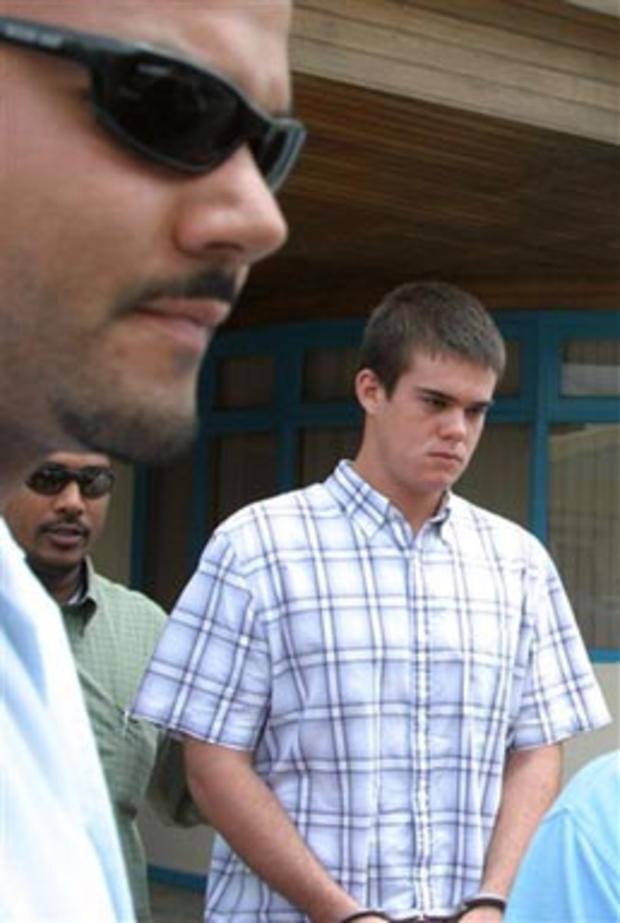
Early coverage of the series has focused on the newly surfaced FBI footage, Beth’s recollections, Dompig’s account of the investigation and the false lead involving the blouse. The Independent, People and other outlets have each highlighted different revelations. That is evidence of editorial attention, not proof that every viewer is talking about the same scene or that a particular moment has become a measurable social-media trend.
There is no public, independently verified dataset in the sources reviewed here that ranks the most discussed scenes across Netflix viewers, TikTok, Instagram, Reddit and X. For that reason, this article does not invent a viral ranking, quote anonymous posts as representative audience sentiment, or claim that a scene is “the most talked-about” based on a handful of comments. The moments above are selected because they are documented in the series and highlighted in contemporaneous reporting.
Watch the official Netflix trailer
The official trailer provides a short preview of the documentary’s interviews, archival material and central themes.
Readers can watch the official Netflix trailer and consult the Netflix series page for the episode descriptions. The documentary is a retelling of a real case involving a murdered young woman; discussion should remain grounded in the record and respectful toward Natalee’s family, friends and the other people affected.
Frequently asked questions
What is the most shocking scene in Taken: Natalee Holloway?
One of the most startling sequences is the previously unseen 2010 FBI-recorded meeting involving Beth Holloway’s attorney and van der Sloot. Reporting on the documentary says he sought money in exchange for information about Natalee’s remains. The scene is significant because it documents an attempted extortion operation, not because it provides a genuine location for her remains.
Does the Netflix series include previously unseen FBI footage?
Yes. Netflix’s Tudum coverage and multiple November 2026 reports say the series includes footage from the 2010 FBI operation involving van der Sloot and Beth Holloway’s attorney.
Who is Gerold Dompig in the documentary?
Gerold Dompig was Aruba’s deputy police chief during the early investigation. Netflix’s Tudum identifies him as one of the people interviewed and says he discusses the case in the series for the first time in twenty years.
Did the 2021 blouse tip lead investigators to Natalee’s remains?
No. The Independent’s report on the documentary says FBI DNA analysis debunked the tip and showed the blouse was unrelated to Natalee. The Aruba Public Prosecutor’s Office has also described a later investigation into false information that did not help solve the disappearance.
Were Natalee Holloway’s remains ever found?
No. Netflix’s Tudum states that Natalee’s remains have never been recovered. Van der Sloot gave an account of her killing during the 2023 U.S. proceedings, but the remains have not been found.
How many episodes are in Taken: Natalee Holloway?
The Netflix documentary has three episodes: “Natalee Is Missing,” “Tangle with the Devil” and “I Knew He Would Kill Again.”
Sources and further reading
- Netflix Media Center — Taken: Natalee Holloway: official synopsis and production information.
- Netflix Tudum — Beth Holloway Tells the Full Story of Natalee’s Disappearance: interviews, series details and search background.
- The Independent — Five Biggest Revelations in Netflix’s Documentary: reporting on the confrontation, interrogation account, FBI footage and blouse tip.
- People — Previously Unseen Footage of the 2010 FBI Sting: details about the recorded meeting and proposed payment.
- Mediaite — Never-Before-Seen FBI Sting Footage: reporting on the recorded hotel meeting.
- Openbaar Ministerie Aruba — Natalee Holloway: official statement on the investigation into the later tip.
- Decider — Taken: Natalee Holloway Review: critical perspective on the documentary’s family-centered approach.
- CBS News — Natalee Holloway: Paradise Lost: archival AP photographs and captions used in this article.
Editorial note: “Jaw-drop moments” describes scenes and revelations highlighted in the documentary and contemporary coverage. It is not a claim that a measured majority of viewers ranked them in this order. Claims about statements, investigations and legal proceedings are attributed to the relevant sources.
Author: Shivam Das