On May 30, 2010, a second tragedy became permanently linked to the Natalee Holloway case. Exactly five years after the Alabama teenager vanished during a graduation trip to Aruba, 21-year-old Peruvian university student Stephany Flores Ramírez was killed in a hotel room in Lima. Joran van der Sloot, the Dutch man long scrutinized in the Holloway disappearance, later pleaded guilty to Flores’ murder and received a 28-year prison sentence in Peru.
The date is the striking connection. The two cases are not the same crime, the victims were not interchangeable, and the coincidence of the calendar date does not itself establish a motive. But the May 30 overlap transformed the Flores investigation into a major international story and drew the Holloway case back into the headlines. This is the documented timeline behind that five-year link—and why Stephany Flores deserves to be remembered as a victim in her own right, not merely as a footnote in another case.

May 30, 2005: Natalee Holloway disappears in Aruba
Natalee Holloway was 18 and from Mountain Brook, Alabama, when she disappeared on May 30, 2005, during a high-school graduation trip to Aruba. She had spent the evening with friends and was last seen leaving an Oranjestad nightlife venue with a group that included 17-year-old Joran van der Sloot. She did not return to her hotel.
Aruban authorities investigated the disappearance and arrested van der Sloot and brothers Deepak and Satish Kalpoe in June 2005 on suspicion of kidnapping and murder. They were later released without charges. The investigation remained unresolved for years. In 2012, an Alabama judge declared Natalee legally dead, although her remains had not been found.
For the Holloway family, May 30 became a date associated with unanswered questions and a long search for information. Five years later, the same date would mark the beginning of a separate murder investigation in Peru.

May 30, 2010: Stephany Flores is killed in Lima
Stephany Tatiana Flores Ramírez was 21, a business-administration student at the University of Lima and the daughter of Peruvian businessman and racing driver Ricardo Flores. She met van der Sloot at a casino in Lima. On May 30, they entered a room at the Hotel TAC in the Miraflores district.
Hotel surveillance later became a central part of the investigation. Reports described footage showing the pair entering the hotel room together and van der Sloot leaving alone several hours later. Stephany was reported missing; on June 2, 2010, her body was found in the hotel room. Peruvian authorities began looking for van der Sloot, who had left the country and crossed into Chile.
Contemporaneous reporting described the murder as occurring exactly five years after Natalee Holloway disappeared. That calendar connection was factual and immediate. It did not mean that the two women knew each other, that the cases were legally joined, or that the date alone explained why Stephany was killed.
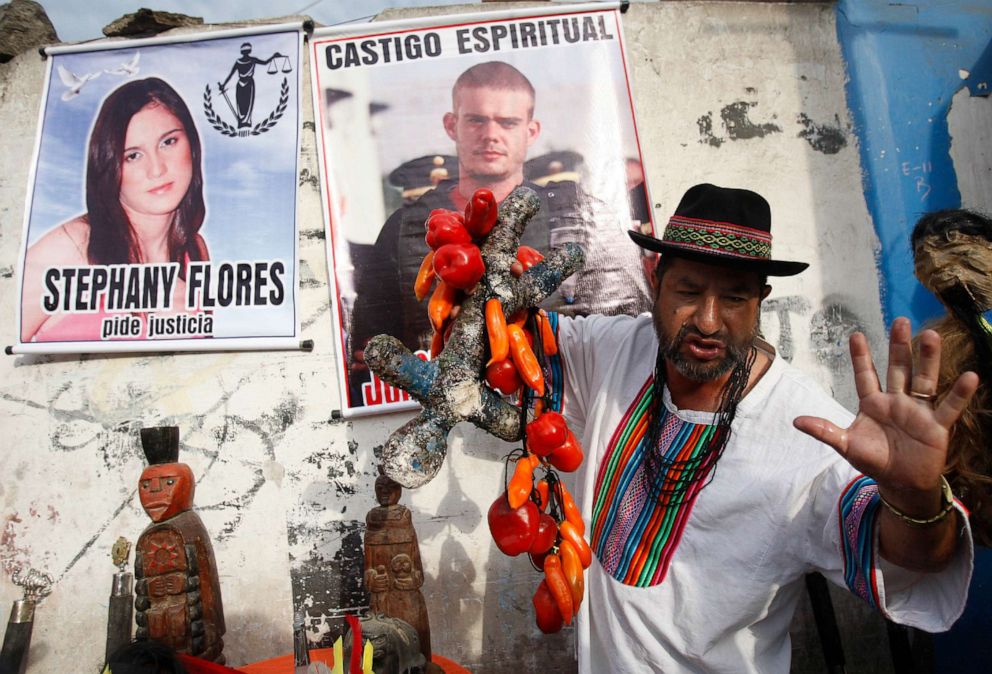
The investigation, arrest and guilty plea
Van der Sloot was arrested in Chile on June 3, 2010, and handed over to Peruvian authorities. Peru’s state news agency Andina reported that he was investigated for the killing of Flores and that the case involved the theft of money from her. The official court account later described the charges as aggravated homicide and simple theft.
Van der Sloot initially gave an account to investigators and later admitted responsibility in the Peruvian proceedings. On January 11, 2012, he accepted an early conclusion of the trial and pleaded guilty to the charges. Two days later, on January 13, a Lima criminal court sentenced him to 28 years in prison and ordered him to pay 200,000 Peruvian soles in civil compensation to Stephany’s legal heirs.
The Peruvian Judiciary’s own announcement recorded the sentence, the compensation order and the court’s decision that the sentence would run from his initial detention, with the stated completion date of June 10, 2038. The court also said he was to be expelled from Peru after completing the sentence. These are judicial outcomes, not simply media descriptions of the case.

Why the five-year date connection mattered
The timing created an unusually stark news narrative: the man whose name had become closely associated with the disappearance of an American teenager was now accused of killing a young woman in another country on the same date five years later. News organizations naturally placed the events side by side. But the most responsible way to tell the story is to separate the coincidence from the evidence.
For Natalee’s family and the public following the Aruba investigation, the Flores case raised new questions about van der Sloot’s movements and conduct after leaving Aruba. For Stephany’s family, the priority was justice for a daughter whose life had been taken. The coverage often connected the cases because of the suspect and the date, but Stephany’s identity, education, family and the legal proceedings in Peru stand on their own.
The five-year link also illustrates how a single date can carry different meanings for different families. May 30 was the day Natalee disappeared in 2005; it was also the day Stephany was killed in 2010. The date should not obscure either young woman’s life or reduce the second victim to a plot point in the first case.
The Holloway case continued after the Peru conviction
The Peruvian conviction did not resolve the separate question of what happened to Natalee. Van der Sloot later faced federal charges in the United States arising from an extortion scheme targeting Natalee’s mother, Beth Holloway. On October 18, 2023, he pleaded guilty to extortion and wire fraud and was sentenced to 20 years in federal prison, to run concurrently with his Peruvian sentence.
According to the U.S. Department of Justice, van der Sloot had solicited money from Beth Holloway in 2010 by promising information about her daughter’s remains and the circumstances of her death. The DOJ said he received $25,100 but provided information he later described as worthless. During the 2023 proceedings, he also admitted details about Natalee’s death as part of the plea process. The federal case was legally distinct from the Peruvian murder prosecution.
ABC News’ 2023 timeline recounts the sequence: Natalee disappeared in 2005; Stephany was killed in 2010; van der Sloot was sentenced in Peru in 2012; and the U.S. extortion case concluded with a guilty plea in 2023. Each event has its own record and legal significance.

What the record establishes—and what it does not
- Established: Natalee Holloway disappeared in Aruba on May 30, 2005.
- Established: Stephany Flores was killed in Lima on May 30, 2010—five years later.
- Established: Van der Sloot pleaded guilty in Peru to Flores’ murder and theft-related charges and was sentenced to 28 years on January 13, 2012.
- Established: The Peruvian court ordered 200,000 soles in civil compensation for Flores’ legal heirs.
- Separate legal outcome: Van der Sloot pleaded guilty to U.S. extortion and wire-fraud charges in 2023 and received a 20-year federal sentence to run concurrently.
- Not established by the date coincidence: That the five-year interval itself explains the motive for Flores’ murder or creates a legal connection between the two prosecutions.
Remembering Stephany Flores beyond the headline
Stephany Flores was a 21-year-old student with a family, ambitions and a future. Her murder deserves to be covered as a crime against her—not only as an event that happened to involve a man already known internationally because of Natalee Holloway’s disappearance. The legal record in Peru reflects the seriousness of the crime and the court’s sentence, but no sentence can restore the life that was taken.
The five-year anniversary link remains one of the most chilling chronological facts in the wider story. Its significance is not that the two tragedies were one case. It is that two young women’s lives were forever connected in public memory by a date, a perpetrator and years of legal proceedings across different countries. Responsible reporting keeps both victims visible and lets the evidence—not the coincidence alone—define what can be said.
Sources and further reading
- Peruvian Judiciary: official announcement of the 28-year sentence and civil compensation, January 13, 2012.
- Andina: details of the conviction for Stephany Flores’ murder.
- Andina: initial report on Stephany Flores being found dead at the Miraflores hotel.
- ABC News: Natalee Holloway mystery, 10 years later — timeline, May 30, 2015.
- ABC News: Natalee Holloway’s disappearance — timeline, including the May 2010 murder of Stephany Flores.
- U.S. Department of Justice: 2023 guilty plea and sentence for extortion and wire fraud.
Editorial note: The article distinguishes court-established outcomes from the historical context and media coverage connecting the two cases. It does not use the five-year date coincidence to infer motive.