By Shivam Das
When an Alabama probate judge declared Natalee Holloway legally dead on January 12, 2012, the ruling did not end the mystery of what happened to the 18-year-old who vanished in Aruba. It did not recover her remains, establish where she died, or decide who was criminally responsible. It was a legal determination made after more than six years without contact, and it gave her family a way to address practical matters that had remained unresolved while she was officially missing.
The decision was especially difficult because Natalee’s parents did not agree about it. Her father, Dave Holloway, asked the court to make the declaration. Her mother, Beth Holloway, opposed it because she was not ready to relinquish the possibility that her daughter might still be alive. The judge’s order therefore carried two meanings at once: a formal step in Alabama probate law and a deeply personal moment for a family still living with uncertainty.
More than a decade later, the ruling is often mentioned alongside the 2023 admission by Joran van der Sloot and the 2026 Netflix documentary Taken: Natalee Holloway. Those later developments changed what the public knew about the case, but they did not change what the 2012 order actually did. Understanding that distinction is essential to understanding the family’s legal and emotional journey.

Why was Natalee Holloway declared legally dead?
Natalee disappeared during a high-school graduation trip to Aruba. She was last seen in the early hours of May 30, 2005, after leaving a nightclub with a group that included Joran van der Sloot. She did not return to her hotel and did not board the flight home with her classmates. Search teams and investigators pursued leads on the island, but her whereabouts remained unknown.
By 2011, more than six years had passed without reliable evidence that Natalee was alive. Dave Holloway filed paperwork in Alabama seeking a legal declaration of death. The request was not presented as a claim that he wanted his daughter to be dead. It was a recognition that the family could not remain indefinitely in a legal limbo while trying to manage the affairs connected to someone who had disappeared.
Contemporary reporting said Dave wanted to stop paying Natalee’s medical-insurance premiums and gain access to a college fund of about $2,000 so the money could be used for her younger brother. The declaration also allowed the family to address the administration of Natalee’s estate. These practical reasons were part of the court record as described by news organizations at the time; they should not be confused with the emotional reason a parent would have for wanting a child to be declared dead.
What happened in the Alabama court on January 12, 2012?
Jefferson County Probate Judge Alan King signed the order in Birmingham on January 12, 2012. The hearing followed a process that had begun months earlier. In September 2011, the judge had allowed the petition to proceed after considering the evidence and the statutory presumption associated with a prolonged unexplained absence. Notices were published and an opportunity was provided for information that Natalee was still alive to be brought forward.
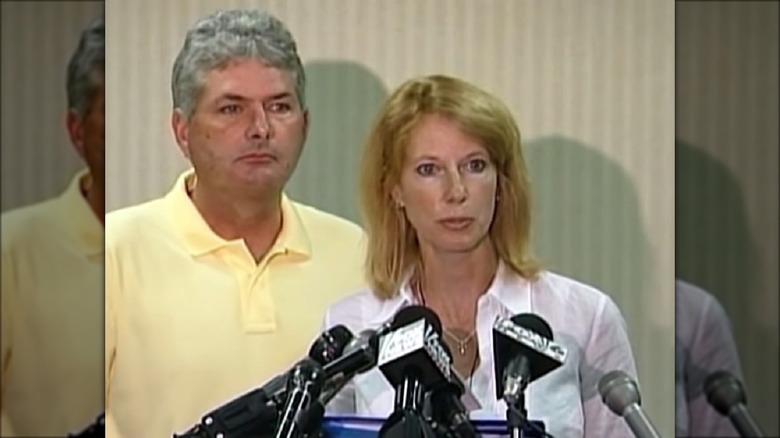
At the January hearing, both of Natalee’s divorced parents were present. Dave’s attorney, Mark White, represented the request. The order formally declared Natalee dead under the relevant Alabama legal process. Reports at the time described the decision as the conclusion of a probate proceeding, not a criminal trial.
That difference matters. A probate judge was not deciding whether van der Sloot had murdered Natalee, whether a particular witness was truthful, or what had happened on an Aruba beach. The court was addressing Natalee’s legal status after a lengthy absence and the consequences that status had for family and estate matters. No criminal defendant was convicted as a result of the probate order.
What does “legally declared dead” actually mean?
In everyday language, “declared dead” can sound like a court has discovered a body or established the precise circumstances of a death. That is not what happened in Natalee’s case. A legal presumption of death is a rule that allows a court to determine a person’s status when the person has been absent for a defined period, has not been heard from, and the absence remains unexplained despite diligent efforts to find them.
Alabama’s probate law at the time included a five-year presumption: a person absent continuously for five years, not heard from during that period, and not satisfactorily accounted for after diligent search or inquiry could be presumed dead. The presumption made it possible for a court to resolve legal questions that otherwise could remain unsettled indefinitely. The law did not require a recovered body in every such case.
Today, Alabama’s code contains updated provisions on determining death and status. The current statutory text continues to include a five-year unexplained-absence presumption, while also setting out other ways death may be established. The present-day wording should not be retroactively treated as the exact text the court applied in 2012; the important historical point is that the 2012 proceeding relied on the law then in force.
A declaration of this kind can help establish the legal status needed for estate administration and related financial matters. It does not, by itself, establish a criminal cause of death, identify a perpetrator, settle the location of remains, or resolve every question about what happened. Those are separate factual and legal issues.
Why did Dave Holloway ask for the declaration?
Dave Holloway’s request was rooted in the realities of an absence that had lasted more than six years. He told the court that he believed Natalee had died. Contemporary Associated Press reporting said he wanted to stop paying her medical insurance and use the approximately $2,000 college fund he had set aside for her to help her younger brother.
Those details are sometimes reduced to a headline about money. That framing misses the point. A missing adult can leave family members unable to make ordinary decisions about property, accounts, insurance, and responsibilities. A parent may have to keep paying for arrangements that can no longer serve their original purpose, while money intended for education or other family needs remains inaccessible. The legal process offers a way to address some of those consequences.
Dave also described the order as closing one chapter while acknowledging that the family still wanted justice. That distinction helps explain why the declaration did not amount to giving up on the investigation. A family can accept a legal status for practical purposes and continue seeking a truthful account of a disappearance.

Why did Beth Holloway oppose the ruling?
Beth Holloway’s position was different. She opposed the declaration because she was unwilling to give up the hope that Natalee might still be alive. ABC News reported in January 2012 that Beth’s attorney said she had not wanted the court to declare her daughter dead because she was holding on to the possibility of Natalee’s safe return.
That disagreement should not be turned into a story of one parent caring more than the other. Dave and Beth were confronting the same devastating absence from different emotional and practical positions. Dave believed the time had come to resolve the legal uncertainty. Beth was not prepared to make that emotional step. The court’s ruling did not measure their love for Natalee or determine which parent had the correct way to grieve.
It is also important to remember that a legal declaration does not force a family to stop remembering, asking questions, or pursuing accountability. The order changed Natalee’s legal status for the purposes addressed by the court. It did not dictate how either parent had to feel, what they could say about their daughter, or whether they could continue to seek answers.

Did the 2012 declaration prove that Natalee had been murdered?
No. The declaration was a probate determination of legal status. It did not prove murder, and it did not identify a killer. At the time, investigators had not recovered Natalee’s remains, and no one had been convicted of killing her. The legal finding that a missing person should be treated as dead for probate purposes is not interchangeable with a criminal court’s finding that a named person committed homicide.
That distinction is especially important because the case generated years of conflicting accounts, speculation, and false claims about Natalee’s supposed burial place or remains. The absence of a body made it even more important for journalists and commentators to distinguish confirmed facts from allegations. A probate order could not fill those evidentiary gaps.
In October 2023, van der Sloot pleaded guilty in U.S. federal court to extortion and wire fraud connected to his attempt to obtain money from Beth in exchange for information about Natalee. During the proceedings, he admitted that he killed Natalee in Aruba. The admission was a major development and provided information the family had sought for years. However, the U.S. convictions were for extortion and wire fraud, not a U.S. murder conviction for Natalee’s death.
Natalee’s remains have still not been recovered. The 2023 admission changed the public record and the family’s understanding of what happened, but it did not transform the 2012 probate order into a criminal verdict. These events belong to different legal processes and should be described accurately.
How the 2026 Netflix documentary reframes the old court decision
Taken: Natalee Holloway, Netflix’s three-part documentary series, premiered on November 4, 2026. It revisits the disappearance through Beth Holloway’s perspective and the experiences of people connected to the search and investigation. The series has brought renewed attention to the family’s long effort to learn what happened and to the later admission by van der Sloot.
For viewers encountering the story through the documentary, the 2012 declaration can seem like a final answer. It was not. It was a legal response to years of unexplained absence. The later confession addressed a different question: van der Sloot’s account of how Natalee died. The fact that the documentary can now present that admission does not mean the family or investigators had that information when the probate judge signed the order in 2012.
Beth’s public comments in 2026 also make clear that the 2023 admission did not necessarily end every legal question. Her work with lawyers in the Netherlands has focused on the possibility of further accountability. Any review or complaint in another jurisdiction is separate from the Alabama probate proceeding and must be assessed under the law and evidence applicable there.
What the ruling meant — and what it did not mean
- It did mean: An Alabama court formally recognized Natalee as legally dead for the purposes of the proceeding, allowing the family to address estate and related practical matters.
- It did mean: The court accepted the legal basis for resolving her status after more than six years of unexplained absence and a diligent search.
- It did not mean: Natalee’s body had been found or her remains identified.
- It did not mean: The probate judge had determined the exact date, place, or cause of death.
- It did not mean: Joran van der Sloot or anyone else had been convicted of murdering Natalee.
- It did not mean: Beth Holloway had accepted the ruling emotionally or stopped hoping for answers.
The most accurate way to understand January 12, 2012 is as a legal milestone in a case that remained factually unresolved. It gave the family a mechanism to handle matters that had been frozen by Natalee’s disappearance, while leaving the central questions about her fate to investigators and the passage of time.
Frequently asked questions
When was Natalee Holloway declared legally dead?
An Alabama probate judge, Alan King, signed the order on January 12, 2012, more than six years after Natalee disappeared in Aruba on May 30, 2005.
Who asked the court to declare Natalee Holloway dead?
Her father, Dave Holloway, requested the declaration. He told the court that he believed she had died and wanted to resolve practical matters involving her medical insurance and college fund.
Why did Dave Holloway want Natalee declared legally dead?
Contemporary reports said he wanted to stop paying her medical-insurance premiums and use a college fund of about $2,000 for her younger brother. The declaration also allowed the family to address the administration of Natalee’s estate.
Did Beth Holloway agree with the 2012 decision?
No. Beth opposed the declaration because she was not ready to give up hope that Natalee might still be alive. Her position was reported by ABC News at the time of the hearing.
Does being declared legally dead mean a body was found?
No. A legal presumption of death can be made after a prolonged unexplained absence under applicable law. Natalee’s remains were not recovered, and the 2012 order did not establish their location.
Did the 2012 ruling prove that Joran van der Sloot murdered Natalee?
No. It was a probate proceeding, not a criminal trial. Van der Sloot later admitted killing Natalee during proceedings connected to his 2023 U.S. guilty plea, but he pleaded guilty to extortion and wire fraud, not to a U.S. murder charge for Natalee’s death.
What happened to Natalee’s college fund?
Contemporary reporting said Dave sought access to an approximately $2,000 fund he had established for Natalee so it could help her younger brother. The public sources cited here do not document the fund’s final distribution in detail.
Did the legal declaration end the Holloway family’s search for answers?
No. The declaration addressed Natalee’s legal status and related family matters. The family continued seeking answers, and the 2023 admission by van der Sloot came more than 11 years later.
What is the connection between the 2012 ruling and Netflix’s Taken: Natalee Holloway?
The documentary revisits the disappearance and the later developments in the case. The 2012 order is part of the chronology, but it was a probate decision made years before van der Sloot’s 2023 admission and before the documentary premiered in November 2026.
Sources and further reading
- CBS News / Associated Press, January 12, 2012: Judge formally declares Natalee Holloway legally dead
- ABC News, January 12, 2012: Natalee Holloway is declared dead; Beth Holloway opposes the ruling
- Los Angeles Times, January 12, 2012: Why Dave Holloway requested the declaration
- Associated Press photographs and reporting from the January 12, 2012 probate hearing, via Deseret News
- Alabama Code § 43-8-6 (2023): Five-year presumption of death under the prior probate-code section
- Alabama Code § 43-8-211: Current rules for determining death and status
- Associated Press, October 2023: Van der Sloot’s guilty plea and admission about Natalee
- Netflix Tudum: Background and release information for Taken: Natalee Holloway
Editorial note: This article separates the 2012 Alabama probate ruling from the 2023 U.S. criminal proceedings and the later Dutch legal questions. It does not describe the probate order as a murder conviction or claim that Natalee’s remains were recovered. Historical legal descriptions are based on reporting from the time and the cited Alabama statutory text. Photographs are credited to the publishers or agencies identified in their captions; an image credit does not itself establish a reuse license.
Related coverage: Beth Holloway on why she chose to tell the documentary story now and the timeline of the Dutch complaint and Aruba case files.