By Shivam Das
For more than two decades, one short sequence has anchored the public timeline of Natalee Holloway’s disappearance: an evening out in Oranjestad, a final departure from Carlos’n Charlie’s, and a gray or silver Honda carrying the 18-year-old away with three young men. The sequence is often compressed into a single headline. The evidence deserves a more careful account.
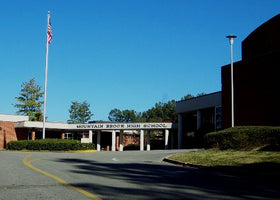
Natalee was in Aruba with classmates from Mountain Brook High School in Alabama on a graduation trip in May 2005. On the final night of the trip, she went with friends to Carlos’n Charlie’s, a restaurant and nightclub in downtown Oranjestad. Classmates later told investigators and reporters that they saw her leave in a car with Joran van der Sloot and brothers Deepak and Satish Kalpoe. That departure is the last confirmed sighting of Natalee alive in the public record described by the federal affidavit and contemporary reporting.
The distinction between what classmates saw, what the young men later told investigators, and what was established years afterward is essential. The departure from the club is a documented point in the timeline. The events after the car left are a separate and far more contested evidentiary question.

What happened on Natalee Holloway’s final night in Aruba?
Natalee and more than 100 classmates arrived in Aruba in late May 2005 for a graduation celebration. They were staying near Palm Beach, while Carlos’n Charlie’s was in the capital, Oranjestad. The group’s final evening included time at the nightclub, where Natalee was with friends and encountered van der Sloot, a Dutch teenager who lived on the island, and the Kalpoe brothers.
Contemporary accounts place the departure in the early hours of Monday, May 30, even though it is often described as the night of Sunday, May 29. That is not a contradiction: the evening began on May 29 and continued past midnight. The U.S. government affidavit filed in the later federal extortion case says Natalee was last seen by classmates leaving Carlos’n Charlie’s on May 30, sitting inside a vehicle with van der Sloot and the two Kalpoe brothers.

The people in the car: what the record identifies
The three men named in the last-sighting account were Joran van der Sloot and brothers Deepak and Satish Kalpoe. The federal affidavit identifies them as the people with whom Natalee left the nightclub. Contemporary news coverage also described the vehicle as a gray or silver Honda. The affidavit is particularly important because it records the account in a sworn law-enforcement document rather than relying only on later retellings.
That identification should not be stretched beyond what the source establishes. It tells readers who was in the vehicle when classmates last saw Natalee. It does not, by itself, establish what each person did afterward, what each knew, or whether any other person was involved. The Kalpoe brothers were arrested during the investigation but were later released without charges. They have not been convicted in connection with Natalee’s disappearance.
Van der Sloot was 17 at the time. In the first days after Natalee disappeared, he acknowledged that he had left the club with her and the brothers. He told authorities that they drove toward the California Lighthouse and Arashi Beach and that he later dropped her at the Holiday Inn. That account became a central part of the early investigation, but it was not a verified account of Natalee safely returning to her hotel.
Why the Holiday Inn detail became so important
Natalee was expected to return home with her classmates on May 30. When she did not appear for the flight, people from the group went looking for her. Her packed luggage and passport were still in her hotel room. The absence of a confirmed return to the hotel sharply contradicted the early claim that she had been dropped off there.
ABC News’ reporting on the case noted that surveillance footage did not show Natalee returning to the Holiday Inn. The absence of that confirmation mattered because the hotel was the last known place where her family and classmates expected her to be. It also meant that the account of a routine drop-off could not be treated as an established final destination.
The hotel detail illustrates a basic principle in reconstructing a criminal timeline: a person’s reported destination is not proof that they arrived there. Investigators needed to distinguish a statement made by a person who had been with Natalee from independent evidence that could confirm the statement. That distinction remains useful when reading later summaries of the case.

What investigators could—and could not—confirm after the club
In the immediate aftermath, investigators worked from witness accounts, statements by the men who had been with Natalee, hotel information, and searches across the island and surrounding waters. The first explanations changed over time. Some accounts placed the group near the lighthouse or beach; later statements described different versions of what happened. Those changing accounts complicated efforts to establish a reliable sequence after the nightclub departure.
A CNN report from June 2005 described how police and lawyers were piecing together statements about the group’s movements after leaving Carlos’n Charlie’s. It also made clear that much of the early reconstruction depended on what the people involved had told investigators. This is why a careful article should not present every reported stop or time as if it were independently verified by surveillance, physical evidence, or an uncontested witness account.
Search teams covered beaches, coastal areas, and other locations. Dutch military personnel, Aruban police, FBI agents, and volunteers took part in the effort. The searches produced intense public attention but did not locate Natalee. Her remains have never been recovered.

The 2023 confession changed the account—but not the last-sighting evidence
In October 2023, van der Sloot pleaded guilty in a U.S. federal case involving extortion and wire fraud. The charges concerned his attempt to obtain money from Natalee’s mother, Beth Holloway, in exchange for information about Natalee’s remains. As part of the plea proceedings, he gave investigators an account of how he killed Natalee after they were together on a beach. The account included an attack with a cinder block and the disposal of her body in the ocean.
The confession supplied information about what van der Sloot said happened after the car left the nightclub. It did not change what classmates had witnessed at the club: Natalee’s final confirmed sighting was her departure in the vehicle with the three men. Nor should the confession be confused with a U.S. murder conviction for Natalee’s death. The federal conviction was for extortion and wire fraud. Van der Sloot received a 20-year U.S. sentence to run concurrently with the sentence he was already serving in Peru for the 2010 murder of Stephany Flores Ramírez.
The distinction is important because legal outcomes are specific to the charges a court decides. Van der Sloot admitted to killing Natalee during the federal proceedings, but those proceedings did not produce a separate U.S. murder conviction in her case. Natalee’s remains have not been found, and the 2023 account did not turn every disputed detail of the 2005 timeline into independently corroborated physical evidence.

Why the nightclub exit remains the key chronological marker
The Carlos’n Charlie’s departure is not important because it answers every question. It is important because it is the last point at which the public record offers a clear, shared observation from classmates who saw Natalee alive. After that, the timeline moves into accounts that changed, statements made by suspects, investigative leads, and eventually the 2023 admission.
For readers revisiting the case through Netflix’s Taken: Natalee Holloway, the sequence can be easy to blur. The documentary revisits a story that unfolded over many years, while the original night involved a handful of hours and incomplete information. Keeping the stages separate helps prevent a common mistake: treating a suspect’s early explanation as a fact simply because it was repeated in the first news reports.
It also keeps Natalee at the center of the story. She was an 18-year-old high-school graduate on a trip with classmates. The nightclub was one stop during that trip, not the defining feature of her life. The final-sighting account matters because it is a precise, limited fact in a much larger story about a young woman who never returned home.
A timeline of the final evening and the first hours
- May 29, 2005, evening: Natalee spends the final evening of the graduation trip with classmates and goes to Carlos’n Charlie’s in Oranjestad.
- After midnight, May 30: Classmates see Natalee leave the nightclub in a gray or silver Honda with Joran van der Sloot, Deepak Kalpoe, and Satish Kalpoe.
- Later that morning: Natalee does not appear for the group’s scheduled departure flight to Alabama.
- May 30: Her classmates and chaperones discover she is missing; her luggage and passport remain in her hotel room.
- Following days: Aruban authorities, Dutch military personnel, the FBI, and volunteers search the island and surrounding areas.
- October 2023: Van der Sloot pleads guilty to federal extortion and wire-fraud charges and gives an account of Natalee’s killing as part of the proceedings.
Times in early reports are not always identical, and some accounts refer to the evening by the date it began while others use the calendar date after midnight. The reliable anchor is the sequence: the night out on May 29, the departure in the early hours of May 30, and the discovery that Natalee was missing later that day.
What the public record does not establish
A responsible account should leave several boundaries visible:
- The final confirmed sighting identifies the vehicle and the people seen with Natalee; it does not independently establish every stop made afterward.
- The early claim that Natalee was returned to the Holiday Inn was not confirmed by hotel surveillance.
- The Kalpoe brothers were arrested during the investigation but were not convicted in connection with Natalee’s disappearance.
- Van der Sloot’s 2023 U.S. guilty plea was for extortion and wire fraud, not a U.S. murder charge for Natalee’s death.
- Natalee’s remains have not been recovered.
These qualifications are not attempts to diminish the significance of the confession. They are necessary to separate witness observations, suspect statements, investigative findings, and court outcomes. That is the only way to tell the story without turning uncertainty into invented certainty.
Frequently asked questions
Where was Natalee Holloway last seen?
Classmates last saw Natalee leaving Carlos’n Charlie’s, a restaurant and nightclub in Oranjestad, Aruba, in the early hours of May 30, 2005.
Who was with Natalee when she left Carlos’n Charlie’s?
The last-sighting account identifies Joran van der Sloot and brothers Deepak and Satish Kalpoe as the three men in the vehicle with her.
What kind of car did Natalee Holloway get into?
Contemporary reporting and the case record describe it as a gray or silver Honda. The U.S. federal affidavit identifies the vehicle occupants but does not make the car’s color the central evidentiary point.
Was Natalee dropped off at the Holiday Inn?
Van der Sloot initially said he dropped her at the hotel, but the account was not corroborated by hotel surveillance. Natalee’s luggage and passport were still in her room when she was discovered missing.
When did Natalee Holloway disappear?
She was last seen after midnight on May 30, 2005, following an evening out that began on May 29. She failed to appear for her scheduled flight home later that day.
Did Joran van der Sloot confess to killing Natalee?
During his October 2023 U.S. federal proceedings, van der Sloot admitted to killing Natalee in an account provided as part of his plea agreement for extortion and wire fraud. Those were the federal charges to which he pleaded guilty.
Have Natalee Holloway’s remains been found?
No. Her remains have not been recovered.
Were Deepak and Satish Kalpoe convicted in the case?
No. They were arrested during the investigation but were later released without charges and have not been convicted in connection with Natalee’s disappearance.
Sources and further reading
- U.S. federal affidavit: sworn account of Natalee’s last sighting at Carlos’n Charlie’s
- ABC News: Natalee Holloway’s disappearance, a detailed timeline
- CNN, June 14, 2005: Contemporary reporting on the nightclub departure and early statements
- CBS News / Associated Press: Archival photographs from the 2005 case
- CBS News: What the 2023 confession and federal case established
- Associated Press: Van der Sloot’s 2023 guilty plea and admission
- Aruba Public Prosecutor’s Office: Official updates on the Natalee Holloway investigation
Editorial note: This article distinguishes the last sighting reported by classmates from later statements and the 2023 admission. It does not imply that every post-departure detail was independently verified. The Carlos’n Charlie’s exterior photograph is licensed CC BY 2.0; the image credit and license are provided. Other photographs are attributed to their publishers and credited agencies; attribution does not itself establish a reuse license.