For years, Beth Holloway’s public identity was inseparable from the search for her daughter, Natalee, who disappeared during a high-school graduation trip to Aruba in May 2005. But the work that followed was never only about keeping one case in the headlines. Holloway used what her family experienced to speak about safer travel, support other families facing a missing-person crisis, and share practical lessons she wished she had been able to access when Natalee vanished.
That wider effort took more than one form. Holloway founded the International Safe Travels Foundation after Natalee’s disappearance, with a stated mission of educating people about safer international travel. In 2010, she also helped launch the Natalee Holloway Resource Center in Washington, D.C., a separate initiative designed to help families of missing people navigate the first, often chaotic, stages of a search. The two efforts are connected by the experience that inspired them, but they should not be confused as one organization.
In a November 2026 interview with Netflix’s Tudum, Holloway described continuing to assist families of missing people in practical ways: helping facilitate communication with law enforcement and pointing families toward search-and-rescue resources, personnel, and guidance. She also said she had returned to work as a public-school speech pathologist. Her advocacy today is best understood as an extension of what she learned—not as proof that every organization she founded decades ago remains operational in the same form.

Why travel safety became part of her mission
Before Natalee disappeared, Holloway worked as a speech pathologist. Her daughter’s disappearance exposed how difficult it can be for relatives to coordinate information, communicate with authorities, organize volunteers, and make decisions while frightened and far from home.
Holloway’s response included a prevention message. The International Safe Travels Foundation was established in 2006 to inform and educate the public about traveling more safely internationally. A profile published by Saint Mary-of-the-Woods College described the foundation as an effort to educate the public on safer international travel. Recent profiles also describe Holloway as continuing to speak with young people about travel safety.
The underlying lesson is not that travel itself should be treated as dangerous. It is that preparation, communication, and clear decision-making matter when people are away from familiar support systems. Students traveling with school groups, families taking international trips, and young adults traveling independently may face different risks, but all benefit from knowing who is responsible for the group, how to contact local help, and what to do if someone cannot be reached.
The Resource Center had a different purpose
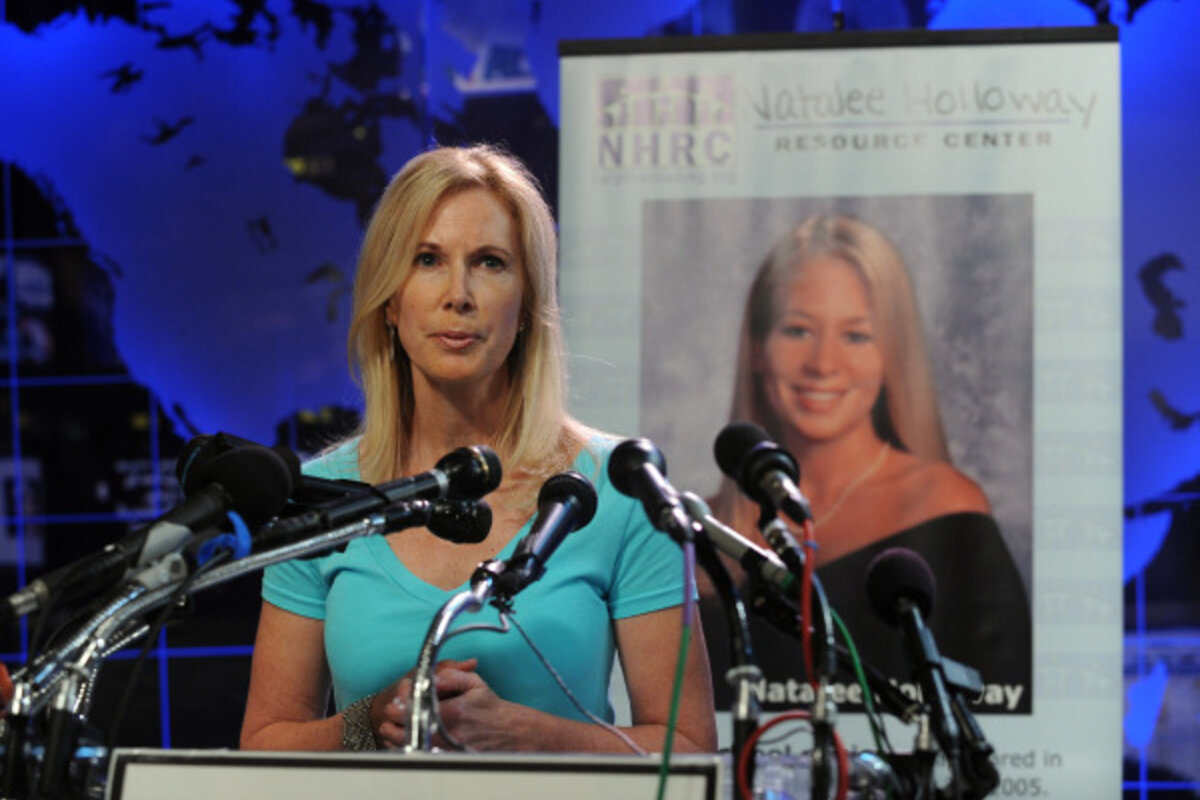
In 2010, Holloway and the National Museum of Crime & Punishment announced the Natalee Holloway Resource Center (NHRC) in Washington, D.C. Its stated purpose was to support families after a loved one went missing. The center’s launch announcement described a crisis-clearinghouse model: helping families build an action plan, find resources and contacts, prepare missing-person posters, and coordinate media outreach.
The announcement explained the reason for the project. When Natalee disappeared, her family experienced the difficulty of finding and organizing assistance while trying to locate a missing relative. The center was intended to reduce some of those obstacles for other families, both in the United States and internationally.
The NHRC also planned prevention and education work, including safe-travel education for children and adults, crime-prevention programs, and encouragement of careers in law enforcement and forensic science. The center therefore combined two goals: helping families respond after a disappearance and teaching people how to reduce risks before a crisis occurs.
The distinction matters. The International Safe Travels Foundation was focused on travel education. The NHRC’s 2010 announcement described a broader missing-person support role, including action plans, media coordination, and practical resources. One should not assume the two organizations had identical programs, staffing, or current status.
What practical help can a missing-person resource center offer?
A disappearance creates an immediate information problem. Relatives may be dealing with several agencies, unfamiliar local procedures, uncertain timelines, media calls, social-media messages, and volunteers offering advice that may or may not be reliable. A family can lose time trying to decide what should happen first.
The NHRC’s original plan addressed several of those pressures:
- An action plan: a structured starting point for relatives trying to understand what steps to take.
- Contacts and resources: help identifying relevant law-enforcement and support organizations.
- Missing-person materials: poster templates and information to communicate a clear description.
- Media coordination: assistance with press releases and media outreach.
- Prevention education: programs about safe travel and crime prevention.
These are the services described in the center’s 2010 launch material; they are not a guarantee that each service is currently available. Families facing a present-day disappearance should contact local law enforcement promptly and follow official instructions. A private resource or advocacy group can provide guidance, but it does not replace an official missing-person report or emergency response.

How Holloway now helps other families
Holloway’s description of her current work is notably practical. In the November 2026 Netflix Tudum interview, she said families sometimes need help communicating with law enforcement. In other situations, she may help them find search-and-rescue resources, personnel, or guidance. She said she wanted to give back because so many people had reached out to help her during the search for Natalee.
That support is not necessarily a formal investigation or a promise to solve a case. It can mean helping a family organize questions, understand whom to contact, or communicate clearly with the people responsible for a search. Families need accurate information and realistic expectations, not guarantees that an advocate can control an investigation.
Holloway’s return to speech pathology also gives context to her present-day routine. She told Tudum she had returned to the classroom after stepping away from the profession for nearly a decade while searching for her daughter. Her work with missing-person families sits alongside that career rather than replacing it. Read more about why Beth Holloway returned to speech pathology and the daily ritual she has described in remembering Natalee.

What is known about the organizations today?
Documenting an organization’s original mission is different from confirming that it is currently active. The 2010 NHRC announcement describes the center’s planned services and its location at the National Museum of Crime & Punishment in Washington. Recent interviews describe Holloway’s continuing personal advocacy, but the sources reviewed for this article do not establish that the NHRC still operates at that original location or that every service listed in its launch announcement remains available.
Similarly, the International Safe Travels Foundation’s historical mission is documented, but the sources reviewed do not provide a current program schedule, active-service directory, or verified operational update. It would be misleading to claim that the foundation is currently accepting requests or running a specific program without confirmation. The accurate statement is that Holloway founded it as a travel-safety education initiative and continues to speak about safety and assist other families through her personal advocacy.
This qualification does not diminish the significance of the work. It distinguishes a documented founding mission from present-day service availability. Anyone seeking help should verify an organization’s current status and contact details before relying on its services.
Why the advocacy reaches beyond one family’s story
Natalee’s disappearance drew extraordinary national and international attention. Many other missing-person cases do not receive the same level of coverage. The NHRC’s original announcement addressed that gap, describing a need for practical help for families who may not know where to turn or how to organize a search. That is one of the clearest ways Holloway’s experience was translated into a broader public mission.
Her travel-safety message also reaches beyond the Aruba case. It asks people to think ahead: share itineraries, agree on check-in plans, know how to reach local emergency services, keep trusted contacts informed, and understand the arrangements made by a school or tour organizer. Those are sensible precautions, not a promise that a checklist can prevent every disappearance or crime.
Holloway’s public work has repeatedly returned to a basic idea: people facing a crisis should not have to discover every resource and every next step entirely on their own. Her advocacy cannot guarantee an outcome for another family, but it can help make the first steps less confusing.
Frequently asked questions
What is the International Safe Travels Foundation?
It is a travel-safety education initiative founded by Beth Holloway after Natalee disappeared in 2005. Its stated mission was to inform and educate the public about safer international travel. The sources reviewed here do not confirm a current program schedule or service availability.
Is the Safe Travels Foundation the same as the Natalee Holloway Resource Center?
No. The International Safe Travels Foundation was founded in 2006 with a focus on travel-safety education. The Natalee Holloway Resource Center was launched in 2010 with the National Museum of Crime & Punishment and was designed to help families of missing people with action plans, contacts, missing-person materials, and media coordination.
Does Beth Holloway still help families of missing people?
In a November 2026 interview with Netflix Tudum, Holloway said she continues to assist families in practical ways, including helping facilitate communication with law enforcement and pointing people toward search-and-rescue resources, personnel, and guidance.
Is the Natalee Holloway Resource Center still operating?
The 2010 launch announcement documents its original mission and location. The sources reviewed do not verify whether it continues to operate at that location or provide the same services today. Readers should confirm current status before relying on its services.
What should a family do first when someone goes missing?
Contact local law enforcement promptly and follow official instructions. Preserve relevant messages and information, designate a reliable family contact to coordinate updates, and be cautious about unverified tips or requests for money. A support organization may help with planning and communication, but it does not replace an official report or emergency response.
Sources and further reading
- Netflix Tudum, November 4, 2026: Beth Holloway discusses her ongoing work with families of missing people and her return to teaching.
- Natalee Holloway Resource Center launch announcement, June 2010: original mission, planned services, and location.
- Saint Mary-of-the-Woods College: profile of Holloway’s teaching, advocacy, and International Safe Travels Foundation.
- TV Guide: background on the Safe Travels Foundation and the Natalee Holloway Resource Center.
- WBRC/AP, June 2010: coverage of the resource center’s opening and intended role.
Editorial note: This article distinguishes the organizations’ documented historical missions from current operational status. The sources reviewed do not verify that every historical service remains available today. Photographs are credited to their publishers or creators; the Wikimedia Commons images are licensed under CC BY-SA 2.0.