

Spoilers for Black Doves Seasons 1 and 2. In most crime dramas, a gunshot is a full stop: the music drops, everyone freezes, and the story gives the wounded character a solemn beat to register the danger. Black Doves often does something stranger. A bullet can interrupt a conversation, a threat can land like a punchline, and two people who make their living around violence can carry on talking as if the day has merely become inconvenient.
That is the dark-comedy rule at the heart of the Netflix spy thriller: violence is genuinely dangerous, but the characters have lived so close to it that their reactions can be startlingly ordinary. The joke is not that getting shot is harmless. It is that the people in this world have developed a professional, social, and emotional vocabulary for catastrophe—and sometimes that vocabulary sounds like a complaint about bad timing.
The contrast is clearest in the show’s assassin partnerships. In its official Season 2 locations guide, Netflix quotes Ella Lily Hyland describing Williams and Eleanor as so used to their work that it has become second nature. They can be having an intense conversation about friendship while walking around shooting people. That image captures the series better than any generic description of it as a “funny action thriller”: the characters do not stop being people when the violence starts, and they do not stop being dangerous when the conversation turns personal.

The punchline is the reaction, not the injury
Dark comedy depends on a gap between what happens and how someone responds. In Black Doves, that gap can be enormous. A character may be standing in a room full of danger while remaining focused on an argument, a personal slight, or the practical inconvenience of the situation. The audience understands the threat; the character’s refusal to give it the expected dramatic response creates the laugh.
That does not mean the series treats every wound as trivial. Its violence is often messy, sudden, and consequential. People are injured and killed; relationships are damaged; the consequences of a job can follow a character long after the immediate action has ended. The comedy comes from the characters’ coping style and the show’s timing, not from a claim that bullets do not matter.
There is a useful distinction between a character being unbothered and a character being unaffected. Sam can keep moving through a crisis because he has experience, not because the crisis has no cost. Helen can deliver a cutting line in a frightening situation without the scene pretending that she is safe. The humor lets the characters stay recognisably themselves under pressure, while the danger remains visible to us.
Ordinary conversation inside extraordinary danger
One of the show’s most effective comic habits is to let a mundane conversation continue in the least appropriate setting imaginable. Netflix’s Season 2 guide highlights exactly this quality in Williams and Eleanor: the pair can talk about their friendship while moving through a gunfight. Their intimacy and their violence are not separated into different modes. Both are part of the same working day.
That combination makes the assassins feel less like action figures and more like colleagues with an alarming job. They have rhythms, private jokes, irritations, and unfinished emotional business. A mission does not magically suspend those things. In fact, danger can make their everyday exchanges even funnier because the stakes are so wildly out of proportion to the subject of the conversation.
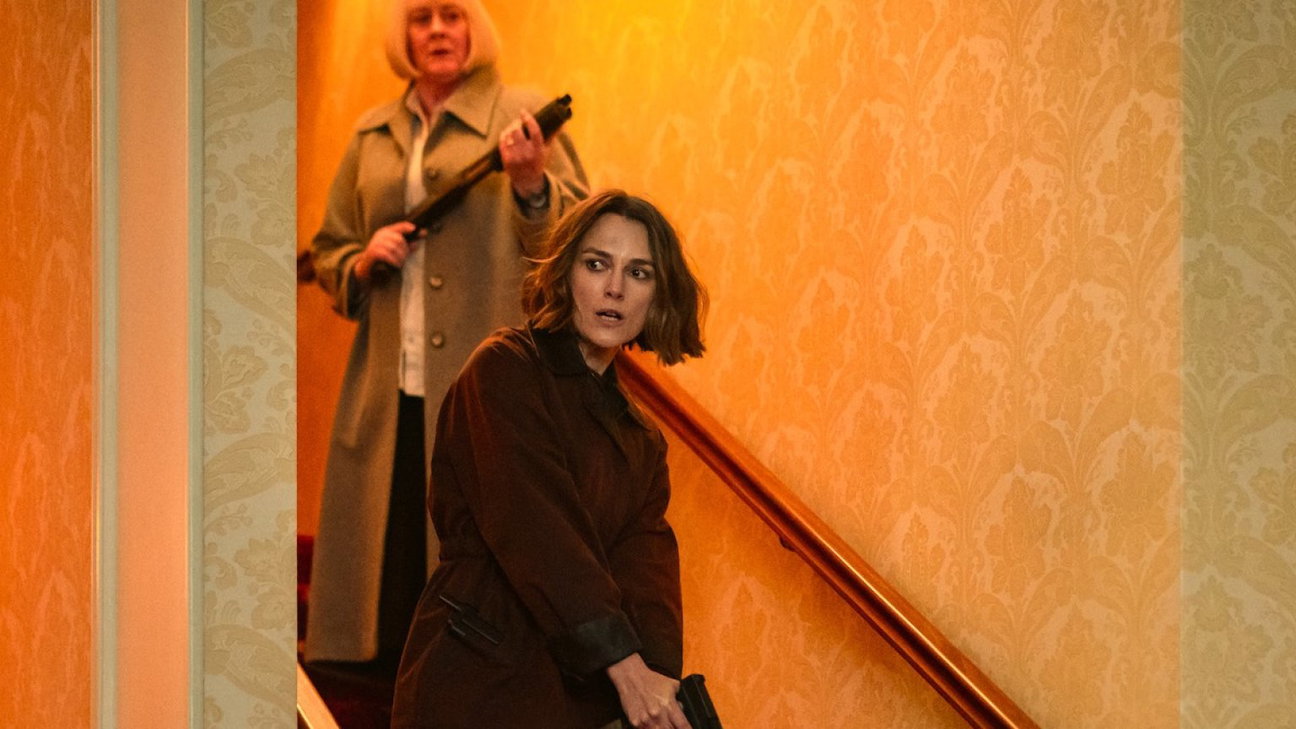
The effect is also a way of showing competence without a speech explaining it. When a character barely pauses to process a threat, the audience understands that this is not their first dangerous room. The calmness becomes a character detail. It may be funny, but it also hints at how much of their ordinary emotional life has been reorganised around risk.
Why the show’s violence can feel funny without becoming weightless
The Royal Television Society’s behind-the-scenes feature on the first season describes the creative team’s desire to make the fight scenes visceral and emotional rather than simply flashy. Director Lisa Gunning spoke about “epic intimacy”—large action sequences that still feed an emotional story. The feature also points to a kitchen fight in which Helen threatens to turn an attacker into a smoothie using a NutriBullet. It is an absurdly specific domestic threat, but it works because the scene has not forgotten that someone is in real danger.
That mixture is central to the show’s tone. The setting is not a glossy fantasy world where violence happens without friction. It is a recognisable London of kitchens, bars, streets, flats, clubs, and government corridors. The characters bring lethal work into spaces that should be ordinary. A kitchen appliance becomes an improvised threat; a casual chat happens in the middle of an operation; a familiar social ritual is interrupted by a weapon. The comedy comes from the collision of these worlds.

It is important that the series does not turn every violent beat into a gag. Some moments are frightening or tragic, and the story allows them to remain so. The comedy is a rhythm, not a universal filter. A joke can make the next serious beat sharper because the audience has been reminded how quickly the tone can change.
Helen and Sam: two people who know the routine too well
Helen and Sam are a particularly effective pair for this kind of comedy because they have a long history of speaking plainly to each other. Their banter is not simply a stream of one-liners pasted over action. It comes from familiarity: they know which buttons to press, when to challenge each other, and how to keep a conversation moving even when the situation is dangerous.
The Royal Television Society feature describes them as bantering, bickering best friends and notes how the show makes its specific characters feel grounded inside an elevated world. That balance matters. If Helen and Sam were only quip machines, the jokes would lose their force. Their friendship gives the exchanges emotional context, while their jobs supply the absurdly high stakes.
Season 2 raises the pressure around Helen’s double life and Sam’s position in the criminal world. Netflix’s official season overview describes the pair as returning to action amid broken loyalties, dangerous decisions, and painful sacrifices. The humor does not cancel those stakes. Instead, it gives the characters a way to keep functioning while the world around them becomes more unstable.
The younger assassins make the comic contrast even sharper
Williams and Eleanor bring a different energy. Their partnership mixes professional coordination with romantic tension, and the show allows both threads to remain active even when the environment is hostile. The Season 2 Netflix guide’s description of their friendship talk amid gunfire is revealing because it shows how the comedy is rooted in character relationships, not just in the mechanics of an action scene.
Their exchanges can feel almost pedestrian precisely because the work is so extreme. They are not delivering grand speeches about the morality of violence every time a mission turns chaotic. They are dealing with the immediate problem, and with each other. That refusal to become ceremonious is part of the joke—and part of what makes the characters feel alive.

That does not make Williams and Eleanor interchangeable with Helen and Sam. Their relationship has its own vulnerabilities and its own comic timing. The difference between the pairs helps the series avoid a single repeated joke: one duo’s humor comes from years of shared history, while the other’s often comes from the tension between new intimacy and an already established professional routine.
The dark-comedy rule: never let the joke erase the stakes
The strongest version of Black Doves’ humor follows a simple rule: the characters may behave as if violence is part of the schedule, but the audience must still feel what it costs. If every injury were shrugged off and every death immediately converted into a punchline, the series would lose the danger that gives its comedy electricity.
That is why the show’s best tonal shifts are not simply “someone gets shot, then someone says something funny.” They are built around character. A person makes a joke because that is how they handle fear. Someone keeps talking because they are focused on the relationship in front of them. An assassin treats a crisis as routine because routine is the only way to do the job. The humor grows out of personality and history.
It also helps that the action is often physically grounded. The RTS account of the production notes the directors’ interest in messy, practical fights and improvised objects. A fight in a kitchen feels different from a weightless digital spectacle; the audience recognises the space and the objects in it. The absurdity of the threat becomes sharper because the setting is so familiar.
Why “nobody seems bothered” is only half the story
The title question has a deliberately exaggerated answer. The characters do seem remarkably unbothered at times, but that is not the same as being invulnerable. The show’s emotional stakes keep reminding us that the people who survive these encounters still have to live with their decisions, their losses, and the damage to their relationships.
In other words, Black Doves does not make violence funny by pretending it is harmless. It makes the response to violence funny by showing people who have normalised the abnormal. That is a much more interesting comic engine—and a more unsettling one. The audience gets the laugh, then has a moment to wonder what kind of life would make that reaction feel normal.
What makes the dark comedy work?
- Underreaction: Characters respond to extraordinary danger with everyday impatience or dry remarks.
- Character-based banter: Jokes grow out of relationships and familiarity rather than random punchlines.
- Grounded action: Fights happen in kitchens, flats, streets, and other recognisable spaces.
- Emotional consequences: The series still allows violence to hurt, frighten, and permanently change people.
- Tonal contrast: Humor makes the serious moments more startling instead of replacing them.
Frequently asked questions
Why is Black Doves funny despite all the violence?
The comedy comes largely from contrast: characters treat dangerous situations with dry, practical, or conversational reactions. The humor is rooted in their relationships and professional familiarity with violence, while the show still gives serious consequences room to land.
Does Black Doves treat getting shot as unimportant?
No. The characters can appear casual about danger, but the series depicts real injuries, deaths, betrayals, and emotional fallout. Their underreaction is part of the dark-comedy style, not proof that violence has no consequences.
What makes Williams and Eleanor’s scenes especially funny?
Their partnership combines assassin-level competence with ordinary relationship conversations. Netflix’s Season 2 guide specifically highlights how they can talk about friendship while moving through a gunfight, a contrast that captures the show’s comic tone.
Who created the dark-comedy tone in Black Doves?
Creator and writer Joe Barton developed the series’ blend of espionage, character drama, and dark humor. The Royal Television Society’s production feature also discusses how the directors aimed to make action feel visceral, emotional, and grounded.
More Black Doves coverage
- The Show’s Habit of Making Violence Feel Casually Funny
- How the Younger Assassins Carry the Comic Energy This Season
- The Palace Game Moment – When a Dying Spy Just Wants to Finish Watching Football
- Laila’s Enigma Status – Why We Still Don’t Fully Know Her Backstory
Editorial note: This article distinguishes on-screen storytelling and attributed production commentary from interpretation. It does not claim that characters are medically unaffected by gunshot wounds; the focus is the series’ comic treatment of their reactions.


