

Season 2 spoilers ahead. The younger assassins in Black Doves do not make the danger feel smaller. They make it funnier, stranger and, at key moments, more human. Williams and Eleanor can turn a professional operation into a running argument, a deadpan exchange or a disastrously timed confession without losing the sense that either woman could be lethal within seconds. Their comic energy is not a break from the show’s violence; it is one of the ways the series makes its violence watchable.
That balance is a major part of the appeal of Ella Lily Hyland’s Williams and Gabrielle Creevy’s Eleanor. They are not written as a conventional comedy double act, and the show rarely pauses the plot to let them deliver a punchline. Instead, their humor comes from temperament: Williams’s dry, controlled observations collide with Eleanor’s brash openness, and both women behave as if the absurdity of their work is obvious to everyone except the people trying to take it seriously.
Why Williams and Eleanor change the show’s comic rhythm
The central story of Black Doves is built around compromised loyalties, political secrets and people who are very good at doing terrible things. Helen Webb’s double life and Sam Young’s history with the underworld give the series a darker, more melancholy centre. Williams and Eleanor bring a different rhythm into that world. Their scenes often move through banter and irritation before snapping back into action.
Netflix’s official Season 2 cast guide describes Williams as a dry-witted, hard-to-rattle killer who often sees a situation more clearly than the people around her. Eleanor, by contrast, is described as brash, funny and remarkably unfazed by violence. Those descriptions point to a useful comic contrast: Williams tends to underplay, while Eleanor is more likely to say the thing everyone else is avoiding.
The contrast is not simply “serious one, funny one.” Williams can be playful, and Eleanor can be sharply perceptive. Their best exchanges work because both characters are funny in different ways. Williams’s restraint creates the space for a joke to land; Eleanor’s lack of filter pushes the scene somewhere unpredictable.
The joke is often the mismatch between the job and the people doing it
Assassin stories usually lean on a familiar image: professional killers are cool, quiet and emotionally sealed off. Black Doves repeatedly punctures that image. Its operatives can be efficient in a crisis and ridiculous in conversation. Williams and Eleanor make that contradiction especially visible because they are not trying to look elegant or mysterious for the audience.
Their work is dangerous, but their personalities remain recognisably messy. They bicker. They misread each other. They have awkward emotional reactions at precisely the moments when a more conventional thriller would demand a stoic stare. The humor comes from the fact that the stakes are real even when the people involved are behaving like difficult colleagues.
That tonal combination is a distinctive strength of Joe Barton’s series. Netflix’s official description calls the show darkly funny and emphasises the explosive wit that sits alongside its espionage plot. Williams and Eleanor are among the clearest embodiments of that approach: their jokes do not erase the threat around them; they expose how strange it is to build an ordinary working relationship inside an extraordinary, violent profession.
Two accents, two comic instincts
The performers have also spoken about the importance of keeping their own accents. Hyland is Irish, while Creevy is Welsh, and the actors told the Press Association that being able to use their natural voices made the roles feel distinctive. Creevy has described the experience as freeing, while Hyland has spoken about how meaningful it was to hear her own accent represented on screen.
That matters beyond representation. Their voices help the partnership feel specific rather than generic. The rhythm of a line, the timing of a retort and the contrast between a dry response and an unfiltered one all contribute to the comedy. Their accents are not a gimmick or a punchline; they are part of the characters’ texture and the performers’ chemistry.
In the Netflix interview about Season 2, Creevy also pointed to humor and understanding as reasons the pair work so well together. Hyland agreed, describing the characters as so closely connected that Williams almost cannot exist without Eleanor. That sense of a shared rhythm is what makes their exchanges feel less like isolated jokes and more like an ongoing relationship.
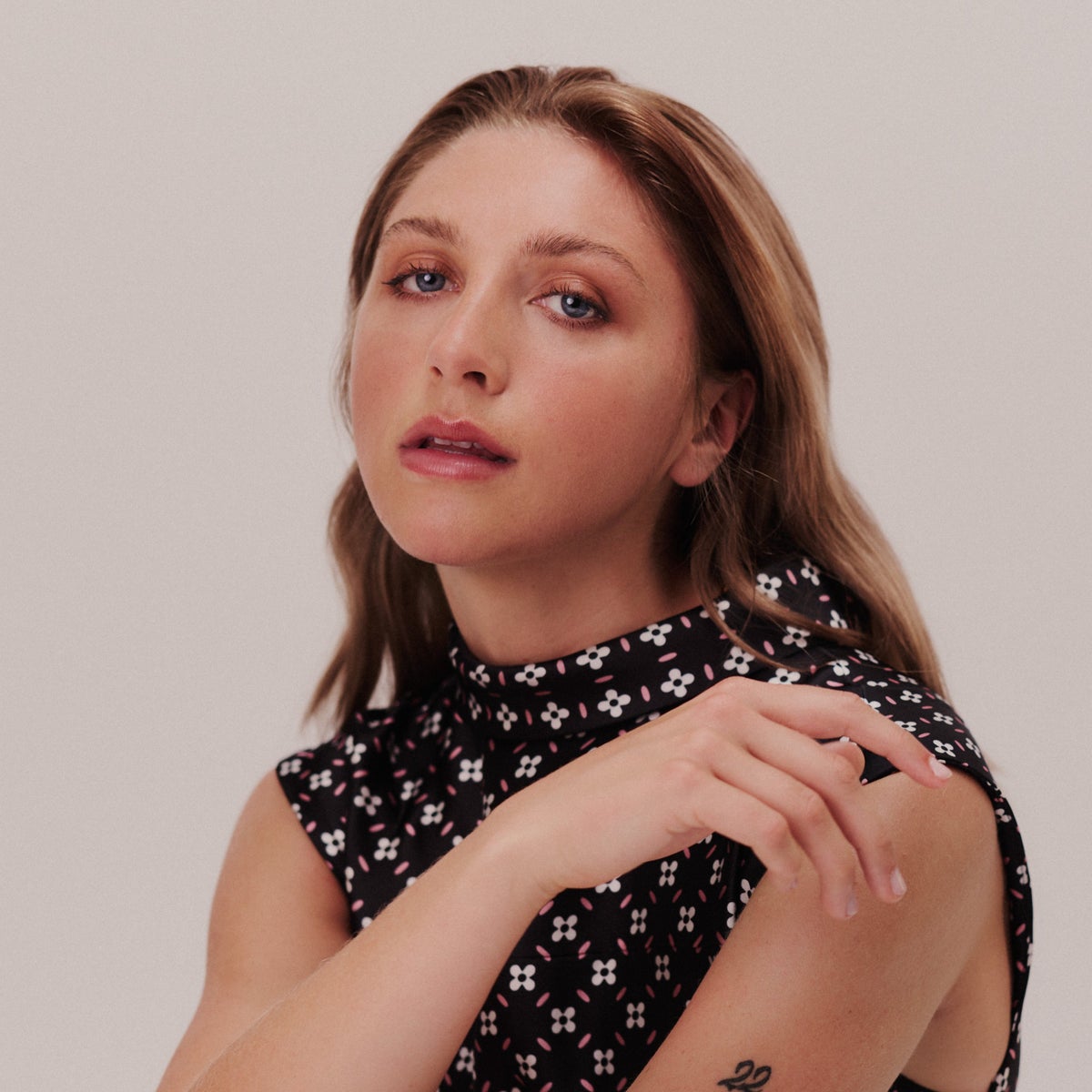
Williams’s deadpan delivery keeps the chaos grounded
Williams is often the steadier presence in the pair. The official cast guide calls her hard to rattle, and that quality gives the comedy a useful anchor. When a situation becomes chaotic, Williams’s reactions can be funny precisely because she does not seem to think the chaos deserves a dramatic response.
Hyland has described Williams as moving into a new emotional stage in Season 2, beginning to recognise that she cares about people and may not be as apathetic as she once appeared. That shift creates a different kind of comedy. A character who is comfortable with danger but less comfortable with vulnerability can be unexpectedly funny when feelings demand a response she has not rehearsed.
The show does not need to turn Williams into a clown to reveal that side of her. Her awkwardness is enough. When she tries to approach an emotional problem with the same directness she might bring to a job, the mismatch becomes comic—and revealing. The humor lets the audience see the person underneath the professional mask without requiring a sudden change in personality.
Eleanor’s openness makes every scene less predictable
Eleanor’s comic energy is more outward. She is brash, funny and unfiltered, which means she can shift the temperature of a scene simply by saying what she thinks. Netflix’s cast guide notes that her openness can get her into trouble. That is a useful summary of the character’s strength and weakness in one sentence.
Her willingness to speak plainly can puncture the pretence that often surrounds the Black Doves. In a world where people trade secrets, hide loyalties and calculate every move, Eleanor’s lack of a filter is both refreshing and dangerous. It makes her funny, but it also means that the same trait can complicate a mission or expose a feeling she would rather keep private.
Creevy has said that she enjoys the freedom of playing a Welsh assassin and that the character’s directness is part of what makes her appealing. The performance does not treat Eleanor’s humor as a decorative feature. It is a survival style: a way of moving through a frightening world without allowing every moment to become solemn.
Their chemistry is more than a sequence of funny lines
The strongest reason the younger assassins carry so much of the season’s comic energy is that their relationship develops. A double act can be amusing for a few scenes, but it becomes dramatically useful when the characters begin to matter to each other. Season 2 takes Williams and Eleanor from an effective professional pairing toward a more complicated emotional connection.
Netflix’s interview with Hyland and Creevy explains that Williams was originally conceived as a character driven by revenge against Sam after he killed her previous partner. As the story developed, the writers created Eleanor as a new character and the chemistry between the performers helped shape the partnership. The actors describe a connection built on humor, understanding and a sense that they operate almost as one unit.
That backstory matters because the comedy is not random. Williams and Eleanor have learned how to work together, and their banter reflects the comfort that comes from knowing how the other person will react. They can irritate each other because they understand each other. The jokes are a form of intimacy before either character is ready to call it that.
Season 2 turns the banter into emotional comedy
Major spoiler: the season’s most memorable shift comes when Williams admits her feelings for Eleanor under gunfire. The confession is deliberately ill-timed, awkward and funny because it arrives in the middle of the kind of situation where most people would be concentrating on staying alive. In Episode 5, Eleanor returns those feelings during another firefight, and the pair share their first kiss.
The scene works because the show does not suddenly replace their personalities with a conventional romantic speech. Williams remains direct and slightly awkward; Eleanor takes longer to acknowledge what is happening. The danger around them makes the emotional honesty feel even more absurd—and more sincere.
Creator Joe Barton told Netflix that he was interested in the problem of two business partners developing feelings that are inconvenient for the work they do. That is the comic engine of the relationship: the emotional truth is real, but the setting is completely unsuitable. The characters cannot step outside their profession to have a tidy conversation. Their feelings arrive in the middle of the job.
Creevy has described Williams as a safe place for Eleanor in a dangerous world, while Hyland has spoken about the warmth Williams begins to show as she lets someone in. Those comments help explain why the romance does not cancel the humor. It gives the humor a deeper foundation: two people who are used to surviving alone discover that being understood by someone else can be as disorienting as being shot at.
Why the younger assassins are not just comic relief
Calling Williams and Eleanor comic relief would undersell what they do for the series. They provide levity, but they also carry plot, danger and emotional change. Their work is not harmless, and the story does not treat it as harmless. Their humor makes them more human without making their actions consequence-free.
That distinction is important in a show where violence can sometimes become so stylised that the audience risks treating it as spectacle. The characters’ odd habits and emotional contradictions remind us that these are people, not simply action figures. Their jokes can make a scene lighter, but the larger story still asks what it means to build a life around violence and then try to make room for love.
The contrast also broadens the series’ emotional palette. Helen and Sam often carry the weight of old choices, guilt and betrayal. Williams and Eleanor bring a younger, more impulsive energy, but their story is not shallow. Their connection gives the show a different way to explore trust: not through decades of friendship, but through two people who gradually realise that a professional partnership has become something they do not want to lose.
What their comic energy adds to the wider Black Doves story
Season 2 expands the audience’s view of the Black Doves organisation, showing more of its internal structure and the people who keep its operations running. In that wider world, Williams and Eleanor are useful because they make the organisation feel populated by individuals with different temperaments—not just handlers, executives and anonymous operatives.
Their partnership also offers a contrast to Laila, whose own lone-wolf habits make teamwork unfamiliar. The finale brings Laila together with Eleanor and Williams during the rescue operation at Black Doves headquarters. That team-up is significant because it puts three distinct comic and professional styles in the same space: Laila’s blunt chaos, Eleanor’s openness and Williams’s dry composure. Netflix’s ending explainer notes that working with the pair may begin to lower some of Laila’s barriers.
For more on that contrast, read Laila’s Enigma Status – Why We Still Don’t Fully Know Her Backstory. The difference between Laila’s independence and the Williams–Eleanor partnership helps explain why the younger assassins are such a valuable part of the ensemble.
The secret is balance, not constant punchlines
What makes the younger assassins funny is not that every line is a joke. It is that the series allows humor to coexist with fear, competence, jealousy and tenderness. A character can be ridiculous in one moment and genuinely frightening in the next. A confession can be sincere and still arrive at the worst possible time. A professional partnership can be both a source of tactical strength and the beginning of an emotional complication.
That balance is what keeps Williams and Eleanor from feeling like a separate sitcom accidentally dropped into a spy thriller. Their comic energy grows out of the same traits that make them effective assassins: confidence, quick reactions, an ability to read people and a willingness to act before a situation has become comfortable.
Ultimately, Williams and Eleanor carry the comic energy of Black Doves Season 2 because they make its dangerous world feel lived in. Their banter gives the action a pulse, their accents and contrasting instincts make the partnership distinctive, and their developing romance gives the jokes emotional consequences. They are funny because they are human—not because the show forgets how dangerous they are.
Frequently asked questions
Who plays the younger assassins in Black Doves?
Ella Lily Hyland plays Williams, and Gabrielle Creevy plays Eleanor. They are freelance assassins whose professional partnership becomes a central source of humor and emotional development in Season 2.
Why are Williams and Eleanor funny?
Their humor comes from contrasting personalities: Williams is dry-witted and hard to rattle, while Eleanor is brash, open and often unfiltered. Their shared understanding makes the banter feel natural rather than scripted as a string of punchlines.
Do Williams and Eleanor become a couple in Season 2?
Yes. Williams confesses her feelings during a firefight in Episode 4, Eleanor returns them in Episode 5, and they share their first kiss.
Are Williams and Eleanor only comic relief?
No. They are capable assassins with important roles in the plot. Their humor adds levity, while their partnership and growing feelings deepen the show’s themes of trust, loyalty and connection.
Sources and further reading
- Netflix Tudum: Williams and Eleanor’s Romance, Explained by the Cast
- Netflix Tudum: Black Doves Season 2 Cast and Characters
- Netflix Tudum: Black Doves Season 2 Ending Explained
- RTÉ: Ella Lily Hyland on keeping her Carlow accent
Reporting note: Character descriptions and plot details are grounded in Netflix’s official cast guide, finale explainer and interviews with the performers. Interpretation of the comedy and character dynamics is analysis, not a claim about the creators’ private intentions.


