

Quick answer: RAYE’s version of “Bang Bang (My Baby Shot Me Down)” returns in the closing stretch of Black Doves Season 2, Episode 6, “Peace Summit.” Its effect is bigger than a familiar theme-song callback: the restrained, melancholy cover gives the finale a reflective aftertaste after a season built around betrayal, grief, divided loyalties and the cost of staying alive.
Spoiler warning: This article discusses the final episode of Black Doves Season 2 and its closing music.

Where RAYE’s “Bang Bang” appears in the finale
The song is heard in Episode 6, “Peace Summit,” the final chapter of Season 2. The episode’s soundtrack listings identify “Bang Bang (My Baby Shot Me Down)” by RAYE among the closing selections. SeekerTune places the track at approximately 50:31, near the end of the episode; exact timing can vary slightly by platform, recap screens and playback version.
That placement matters. “Peace Summit” is not a quiet episode in the conventional sense. Political ceremony is overtaken by violence, the Black Doves are left badly damaged, and Helen has to confront what her secret life has done to the people closest to her. The finale does not resolve every consequence. Instead, it leaves characters facing the emotional and practical work that survival demands.
RAYE’s cover arrives as a musical release from that pressure. It does not erase what has happened or turn the ending into a neat victory lap. Its slower, more vulnerable mood gives viewers room to absorb the cost of the story before the credits finish.
Why this is an emotional closer rather than a conventional action song
“Bang Bang” has an unmistakable title, and in a series full of gunfights it could easily be treated as a literal wink at the violence. But RAYE’s performance works in the opposite direction. It leans into the song’s sadness rather than turning it into a punchline. The result is less a victory anthem than a lingering question about what remains after the shooting stops.
That distinction fits Black Doves. The series can be funny and fast-moving, but its central characters are not untouched by their work. Helen’s professional competence does not protect her from the damage done to her family. Sam’s skill does not make his choices painless. Reed’s authority cannot undo the history that catches up with her. A reflective song at the end allows those contradictions to remain in the foreground.
My reading is that the cover gives the finale an emotional coda without explaining away its ambiguity. The characters have survived the immediate crisis, but survival is not the same as peace. A more triumphant song would imply that the danger has been defeated. RAYE’s version leaves the audience with something more unsettled, which is closer to the show’s actual ending.
From Cher to Nancy Sinatra to RAYE: the song’s musical history
“Bang Bang (My Baby Shot Me Down)” began with Cher, who recorded the song in 1966. It was written by Sonny Bono. Nancy Sinatra recorded her own version in the same year, and that interpretation later became especially familiar to film audiences after its use in Quentin Tarantino’s Kill Bill: Volume 1. The song has therefore carried several different musical identities across generations: pop hit, spare and cinematic lament, and now a contemporary cover closely associated with a Netflix spy drama.
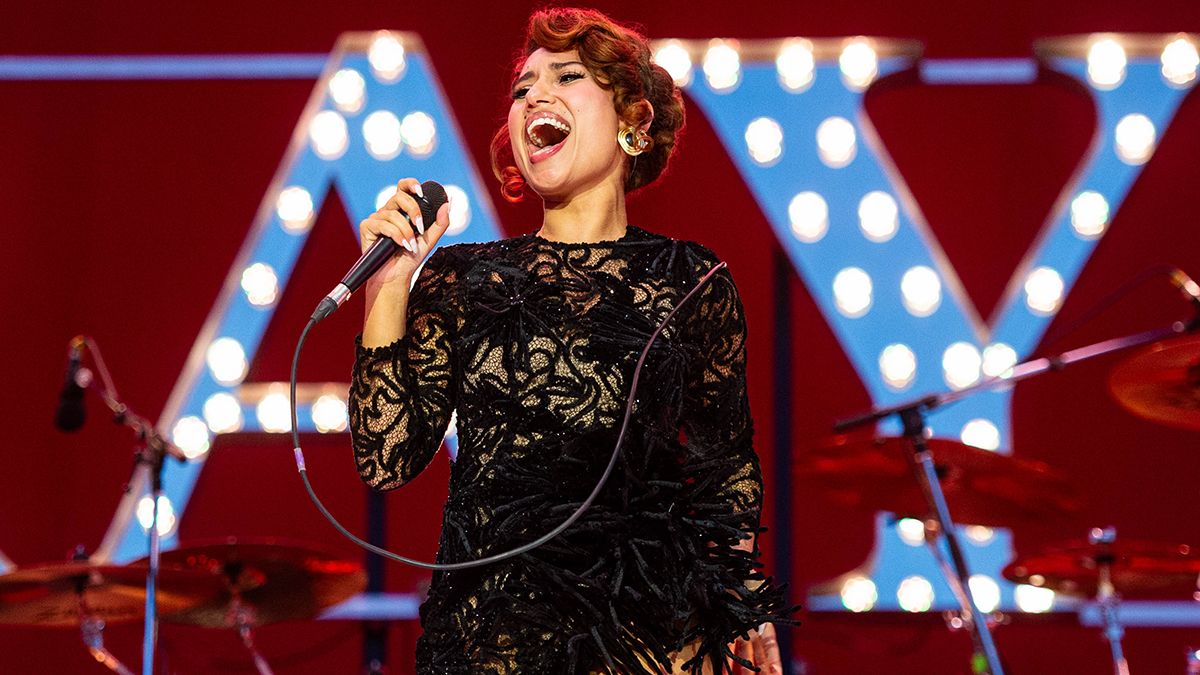
RAYE is not simply reproducing either earlier arrangement. Her recording has its own vocal character, and the series uses that performance as part of its musical identity. The official Netflix guide identifies RAYE as the singer behind the cover and confirms its use in the end credits of all six Season 1 episodes. That repeated placement helped make the track recognizable as a signature sound before the second season brought it back.
It is worth being precise about the lineage: RAYE is covering the same song, not singing a track originally written for Black Doves. Cher’s recording is the original; Nancy Sinatra’s is another famous interpretation; RAYE’s is the version the series has adopted for its end-credit identity.

Why the callback matters after Season 1
In Season 1, the song played over the end credits of all six episodes, according to Netflix’s official series guide. That repetition made it a ritual: after each chapter’s tension, viewers heard the same haunting musical signature. It became part of how the series said goodbye to an episode.
Season 2 uses the track more selectively in its soundtrack listings, identifying it in the finale rather than describing it as an end-credit feature across the whole new run. That change gives the return a different function. It is not simply the same pattern repeated. It feels like a deliberate callback saved for the point where the season’s story has reached its final beat.
The effect depends on memory. Viewers who remember Season 1 recognize the sound immediately; those arriving at the song for the first time can still hear the melancholy in the performance. Either way, the track links the seasons without requiring a character to explain the connection.

The finale’s unresolved emotions make the song land harder
“Peace Summit” leaves the Black Doves with a damaged organization and a future that is far from secure. Reed and Mr. Conteh face the challenge of rebuilding. Patrick remains a threat. Helen’s relationship with Wallace has changed because she has finally admitted that the life he knew was built on secrets, even though she has not told him everything. Sam’s departure offers the possibility of distance, but not a guarantee that he can leave his past behind.
Those threads make “Bang Bang” feel less like a decorative end-credit choice and more like an emotional summary. The song does not tell viewers that Helen is free, that Sam has found peace or that the organization is safe. Instead, it allows the ending to hold loss and possibility at the same time.
That is why the cover feels appropriate for this particular finale. It is familiar but not comforting, beautiful but not triumphant. It sends the audience out of the story with the sense that the characters’ lives continue beyond the last frame—and that the consequences will travel with them.

How the song fits the wider Season 2 soundtrack
Season 2 moves through an unusually broad musical palette. Its episode tracklists include Billy Joel, Paul Anka, Can, Einstürzende Neubauten, Olly Murs, Nick Cave & the Bad Seeds, DJ Shadow and Run the Jewels, Billie Holiday and Nina Simone, as well as Peter, Paul & Mary. The songs do not all serve the same purpose: some sharpen the action, some reveal character, and others create contrast between the everyday and the dangerous.
RAYE’s “Bang Bang” occupies a separate place because it has a history with the show itself. It is both a licensed song and a recurring signature. The original score, composed by Ian Arber and Martin Phipps, performs a different job: it supports the atmosphere and dramatic movement across the episodes, while the RAYE recording carries the series’ recognizable end-credit identity.
For more soundtrack context, read our related coverage: the full Black Doves Season 2 soundtrack list, Nina Simone’s “Sinnerman” in Episode 5, Billy Joel’s “She’s Always a Woman”, and Paul Anka’s “Put Your Head on My Shoulder.”
Watch the official Black Doves trailer featuring RAYE’s cover
Netflix’s official Season 1 trailer features RAYE’s “Bang Bang,” giving viewers a way to hear the song in the context that first introduced it to the series.
Frequently asked questions
Does RAYE’s “Bang Bang” play in the Black Doves Season 2 finale?
Yes. Season 2 soundtrack listings include RAYE’s “Bang Bang (My Baby Shot Me Down)” in Episode 6, “Peace Summit.” SeekerTune places it at approximately 50:31.
Was RAYE’s cover used in Season 1 too?
Yes. Netflix’s official guide says RAYE’s cover plays over the end credits of all six Season 1 episodes.
Who originally recorded “Bang Bang (My Baby Shot Me Down)”?
Cher recorded the original version in 1966. Nancy Sinatra also released a famous version that same year, and RAYE later recorded the cover used in Black Doves.
Why does RAYE’s “Bang Bang” suit the finale?
Its restrained, melancholy mood contrasts with the violence and unresolved personal consequences of the finale. Rather than making the ending feel triumphant, it leaves the audience reflecting on what the characters have lost.
Is RAYE’s “Bang Bang” the original Black Doves theme?
It is a pre-existing song cover used as part of the series’ end-credit identity, not a newly composed theme written specifically for the show.
Does the song play in every Season 2 episode?
The Season 2 soundtrack listings consulted for this article identify it in Episode 6. Netflix’s official guide confirms the all-six-episode end-credit use in Season 1.
Sources and further reading
- Netflix Tudum: Black Doves — RAYE’s cover and the series song guide
- Radio Times: Black Doves soundtrack, including Season 2 songs
- SeekerTune: Season 2 soundtrack and episode timings
- NME: Who sings the Black Doves theme song?
- NME: Every song on the Black Doves soundtrack
- Film Music Reporter: Season 2 original score album details
By Shivam Das


