

Quick answer: Black Doves Season 2, Episode 4, “The Opportunity to Become Savage,” uses Can’s “Vitamin C” and Einstürzende Neubauten’s “Perpetuum Mobile” during its East Berlin, 1988 flashback. The two tracks do different jobs: Can’s tightly coiled groove gives the sequence a strange, propulsive pulse, while Einstürzende Neubauten’s mechanical, industrial sound deepens the sense of a city and an operation under pressure. Together, they help make Reed’s past feel like a different world from Helen’s present-day London.
Spoiler warning: This article discusses the 1988 Berlin storyline and the revelations about Reed, Franz and Vita in Season 2, Episode 4.

Which Can and Einstürzende Neubauten songs play in the Berlin flashback?
The two key needle drops are “Vitamin C” by Can and “Perpetuum Mobile” by Einstürzende Neubauten. Both appear in Episode 4, which moves back to East Berlin in 1988 and shows the history behind Reed’s undercover life inside Kestrel. The episode-by-episode soundtrack listing places “Vitamin C” early in the flashback and “Perpetuum Mobile” later in the episode. Exact playback timestamps can vary slightly between versions and platform playback.
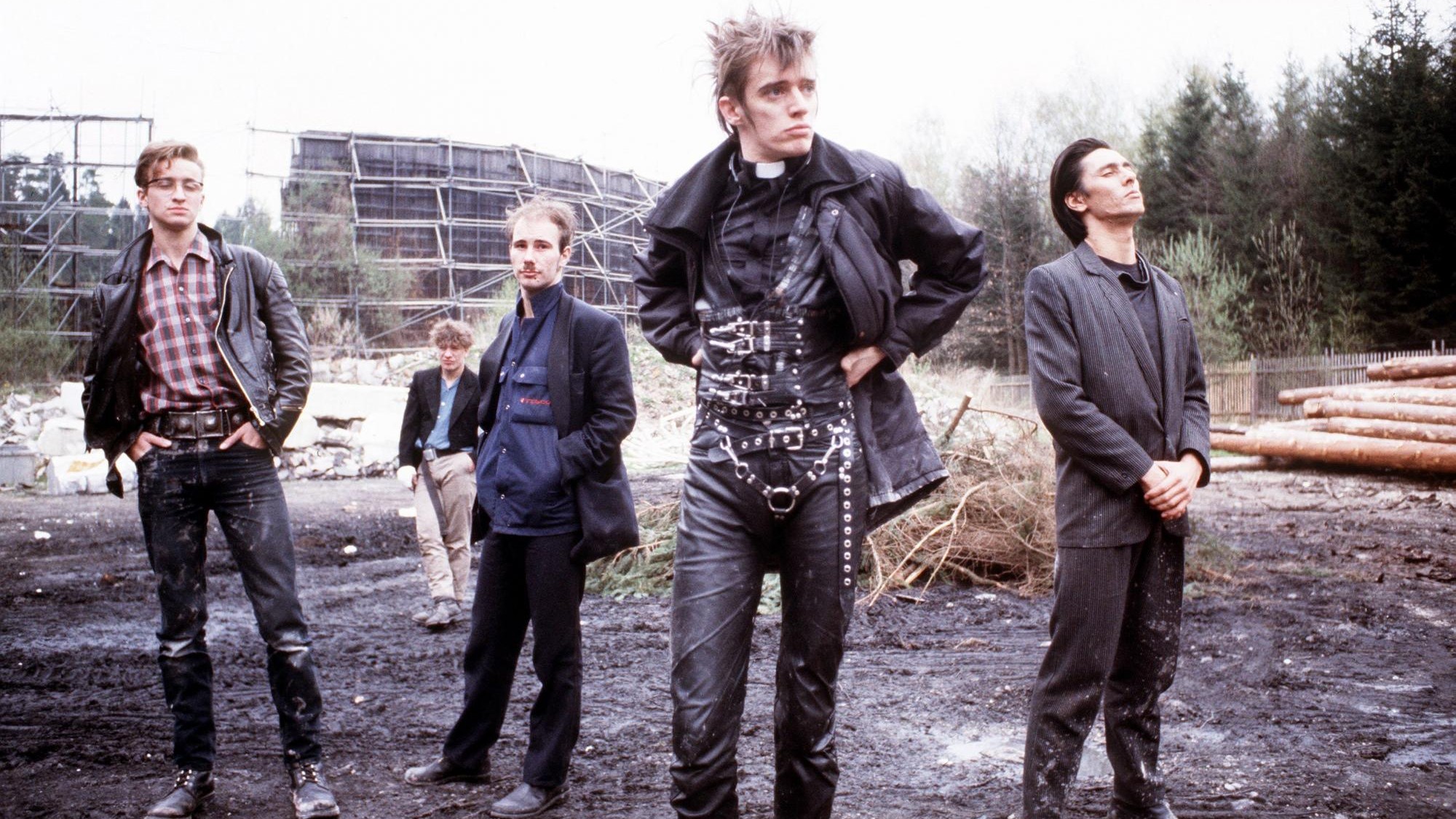
It is worth separating the two songs rather than treating them as one generic “German music” cue. Can were a Cologne-based experimental rock group whose music often fused repetition, improvisation and an unusually physical rhythm section. Einstürzende Neubauten emerged from West Berlin’s industrial and underground scene, building music from noise, found materials and unconventional percussion. The sounds are distinct, but both resist the polished conventions of mainstream rock. That shared refusal makes them a strong fit for a story about secret identities and a clandestine organization operating in a divided city.

Why “Vitamin C” feels so unsettled and propulsive
“Vitamin C” first appeared on Can’s 1972 album Ege Bamyasi. Its instantly recognizable opening vocal phrase, clipped rhythmic pattern and persistent bass-and-drum motion make it feel both catchy and disorienting. The groove is tight, but it never settles into the comfortable predictability of conventional pop. The result is music that seems to move forward while keeping the listener slightly off balance.
That quality suits the Berlin material. Reed’s 1988 mission is not a nostalgic detour; it is the buried origin of the present crisis. She is embedded in Kestrel, living with Franz and their young daughter, Vita, while maintaining her Black Doves identity. Every domestic moment is shadowed by the fact that her cover can collapse. Can’s music brings an uneasy energy to that world: rhythmic enough to keep the scene moving, strange enough to remind us that the apparent normality is fragile.
Can’s official record label, Spoon Records, describes Ege Bamyasi as part of the band’s focused early-1970s period and confirms that “Vitamin C” is one of the album’s tracks. The band’s official Bandcamp page also lists the song on the 1972 album. This is useful context because the track is not a contemporary score written to imitate the Cold War. It is a real piece of music from the period before the Berlin Wall fell, brought into a fictional 1988 setting.

How Einstürzende Neubauten turns the flashback industrial
“Perpetuum Mobile” brings a very different texture. Einstürzende Neubauten became known for treating the city itself as a source of sound: metal, construction materials, machinery and improvised objects could become instruments. Their early work rejected the idea that a band needed to rely on the familiar guitar-bass-drums arrangement. The result was often abrasive, physical and deliberately difficult to categorize.
That aesthetic carries a particular resonance in a Berlin story set in 1988. The city was still divided, and the physical environment of the Cold War was not an abstract backdrop. Borders, checkpoints, surveillance and damaged urban spaces shaped daily life. Industrial music does not automatically recreate that history, and the song should not be mistaken for a documentary sound recording. But its metallic, constructed feel gives the episode a sonic vocabulary for a world built around barriers and controlled movement.
The title “Perpetuum Mobile” suggests perpetual motion, and that idea works as a counterpoint to Reed’s predicament. Her life inside Kestrel is a system that keeps moving, but it is not stable. Each decision creates another consequence. The track’s restless mechanical energy can be heard as an echo of that machinery: the organization, the cover identity, the operation and the chain of violence that eventually reaches Vita.
Why the two bands make sense together
Can and Einstürzende Neubauten are not interchangeable, and that is precisely why the pairing works. Can’s “Vitamin C” is built around a memorable, almost hypnotic groove. Einstürzende Neubauten’s “Perpetuum Mobile” leans into a more abrasive and mechanical sound world. One pulls the listener forward through rhythm; the other makes the environment itself feel unstable.
Episode 4 needs both kinds of energy. The flashback is intimate because it follows Reed’s relationship with Franz and her life as Vita’s mother. It is also a political and operational story about Kestrel, Black Doves and the cost of maintaining a cover. A single musical mood would flatten those layers. The contrast between Can and Einstürzende Neubauten lets the soundtrack move between human momentum and institutional menace.
There is a broader pattern in the season’s music choices. The soundtrack repeatedly refuses to behave like a standard spy-thriller score. Familiar pop, soul, experimental rock and industrial music are allowed to sit beside violence and emotional fallout. Rather than telling viewers that every scene is solemn, the music gives each moment its own character. Episode 4’s Berlin selections are among the clearest examples of that approach.

Reed’s Berlin past is the real story underneath the music
The flashback reveals that Reed’s relationship with Kestrel was not simply a professional infiltration. She lived under cover as Franz’s partner and became Vita’s mother. When the operation turned catastrophic, a young Vita witnessed violence and ran away. The consequences of that moment continued for decades, shaping Vita’s identity and her determination to punish Reed.
That is why the soundtrack matters beyond atmosphere. The music helps distinguish the past from the present, but it also makes the past feel active rather than safely finished. The series is showing that Reed did not leave Berlin in 1988 and leave the consequences there. Her choices continued to shape the people and institutions around her. The flashback is a memory with present-day consequences.
Sarah Lancashire’s performance gives the storyline its emotional restraint. Reed is a character who has learned to turn feeling into procedure, and the music supplies some of the instability she refuses to show. In that sense, the industrial soundscape does not merely decorate her past; it offers an external expression of the pressure she has spent years containing.
Listen to Can’s “Vitamin C”
The official video for “Vitamin C” was released by Mute, Can’s record label, as part of its The Singles collection. It was created by Josh Graham at Suspended in Light. The embed below uses the label’s official YouTube upload.
What this soundtrack says about Black Doves Season 2
The Berlin flashback is where the series shows how personal history becomes institutional damage. Reed’s choices, Kestrel’s internal logic and Vita’s childhood trauma are not separate plot threads; they are parts of one long chain. Can and Einstürzende Neubauten give that chain a sound that is recognizably European and experimental without pretending to be a literal historical document.
My reading is that the strongest detail is the contrast between Can’s groove and Neubauten’s industrial abrasion. The first gives the flashback a pulse; the second makes the surrounding world feel built from hard edges. Together, they keep the sequence from becoming a generic Cold War montage. They sound like music selected for a specific place, a specific past and a character whose private life has become impossible to separate from her work.
For more soundtrack context, read our related coverage: the complete Black Doves Season 2 soundtrack guide, the “Murder Mix” playlist breakdown, and why Olly Murs, Billy Joel and Can can share one playlist.
Frequently asked questions
What Can song plays in Black Doves Season 2?
Can’s “Vitamin C” appears in Season 2, Episode 4, “The Opportunity to Become Savage,” during the East Berlin, 1988 flashback.
Which Einstürzende Neubauten song is in Black Doves Season 2?
“Perpetuum Mobile” by Einstürzende Neubauten is also featured in Episode 4.
Are “Vitamin C” and “Perpetuum Mobile” in the same episode?
Yes. Both are listed in the soundtrack for Episode 4, which explores Reed’s past in East Berlin in 1988.
What album is Can’s “Vitamin C” from?
“Vitamin C” is from Can’s 1972 album Ege Bamyasi, released on the United Artists label.
Why does Black Doves use industrial music in the Berlin flashback?
The industrial textures of Einstürzende Neubauten provide a strong tonal contrast to Can’s groove and help give the flashback a tense, unsettled atmosphere. This is an interpretation of the music’s dramatic effect, not a claim that the track documents Berlin’s history.
Who are Can and Einstürzende Neubauten?
Can were a German experimental rock band formed in Cologne in 1968. Einstürzende Neubauten are a West Berlin experimental group known for incorporating industrial sounds and unconventional materials into their music.
Where can I watch Can’s official “Vitamin C” video?
Mute published the official “Vitamin C” video on YouTube. It is embedded above and can also be found through Mute’s official channel.
Sources and further reading
- Time Out: Black Doves Season 2 soundtrack, by episode
- Radio Times: Black Doves soundtrack guide
- Can official Bandcamp: Ege Bamyasi and track listing
- Spoon Records: Official Can history and Ege Bamyasi context
- Mute: Can – “Vitamin C” official video
- Deutschlandfunk Kultur: Einstürzende Neubauten’s history
- Netflix Tudum: Black Doves Season 2 ending and Vita’s backstory
By Shivam Das


