

Black Doves makes its action memorable not simply by putting skilled spies in gunfights, but by giving those fights a recognizable personality. Helen Webb’s controlled intensity, Sam Young’s weary competence and the newer agents’ chaotic confidence all shape how violence plays on screen. Critics have praised the series’ pace, energy and audacious mix of brutality with comedy — although not every reviewer is convinced that bigger action always means better choreography.
Spoiler note: This article discusses the action style across both seasons, including selected Season 2 set pieces, without recapping every major twist.
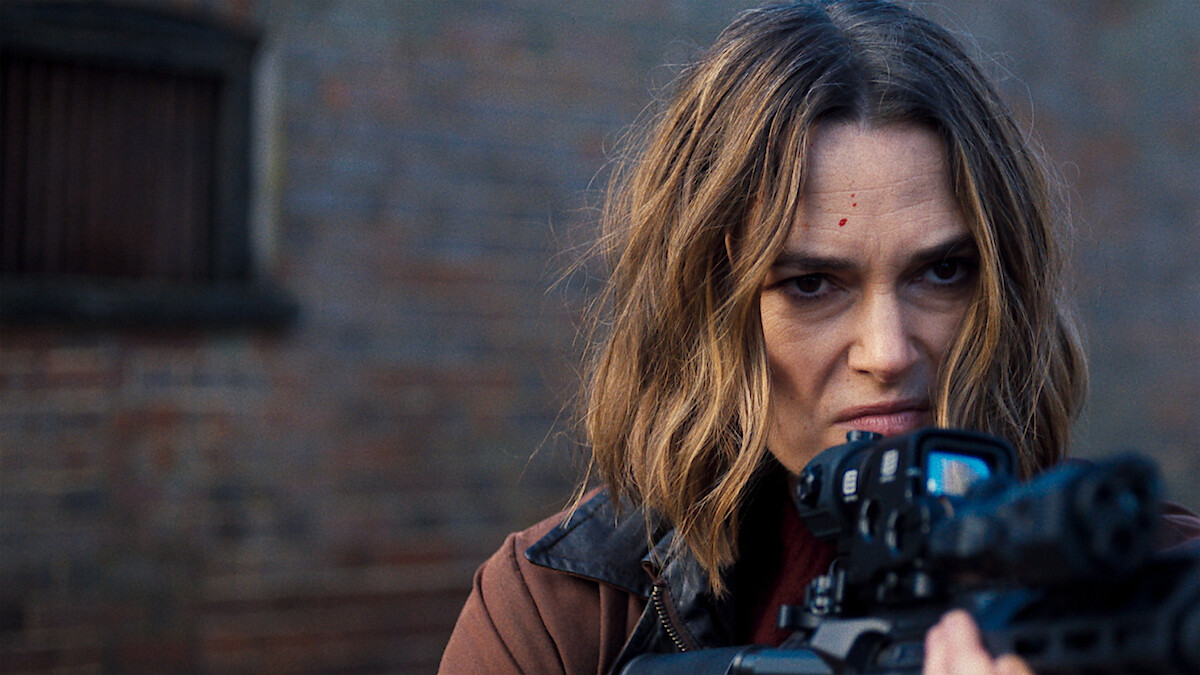
Why the fights feel like Black Doves rather than generic spy action
The series’ signature is a collision of precision and absurdity. A character may be making a lethal decision while delivering a dry aside, arguing about a playlist or behaving as if an assassination assignment is an inconvenient item on an ordinary workday. The contrast does not make the violence harmless; it makes the characters’ emotional distance from their work visible. The action becomes an extension of the show’s dark comic voice.
That tonal choice is one reason the fights are so easy to recognize. Instead of treating every encounter as solemn spectacle, Black Doves lets personality interrupt the choreography. The result can be funny, startling and uncomfortable in quick succession. The best sequences are not just a series of impacts: they reveal who is calm under pressure, who improvises, who trusts a partner and who is trying to pretend that danger is routine.
Actor-led movement gives Helen a distinct physical vocabulary
Keira Knightley has described the preparation behind Helen’s fights in unusually concrete terms. In a Netflix Tudum interview, she said her training with stunt coordinator Sarah and fight coordinator Rob Cooper included mixed martial arts, beginning with boxing and adding elements of jiu-jitsu and Filipino knife-fighting. She explained that the team watched how she naturally moved and built the fights around her physical instincts rather than forcing her into a generic action-hero template.
Knightley also described a compressed preparation schedule: roughly a month of training, with two or three sessions a week, and one shooting day for each fight. That is a demanding production rhythm. It helps explain why choreography has to be designed for the performer, the location, the camera and the time available — not simply for how impressive a move looks on paper.
Her account is useful because it points to a central principle of screen combat: believable movement is often more important than technically complicated movement. A sequence feels convincing when the actor’s posture, timing and reactions belong to the character. Helen is disciplined and guarded; her physical choices should feel different from someone who treats violence as a game.

Partner choreography is about timing, trust and readable geography
When two characters fight side by side, the audience needs to understand more than who is winning. We need to see how they divide space, cover each other’s blind spots and react when a plan changes. The show’s team-up scenes work best when the performers appear to share an unspoken map of the room. A glance, a pause or a change of direction can communicate coordination more clearly than a rapid burst of cuts.
That is especially important when a sequence involves multiple performers, weapons, furniture and moving camera positions. Every action has to be repeatable and safe, while still looking spontaneous. Stunt performers, coordinators, camera operators, editors and actors are all solving the same problem from different angles: how to make a complex sequence legible at speed.
Season 2 expands the ensemble around Helen and Sam, bringing Laila further into the action and giving Williams and Eleanor more room to operate as a pair. Their styles are not interchangeable. A useful action scene lets those differences register rather than flattening everyone into the same efficient fighter.
What critics are praising — and where the praise has limits
The critical response is enthusiastic in several prominent reviews, but it is not unanimous. TheWrap describes the series’ action as exceptionally slick and praises the way sharp dialogue gives way to energetic violence. NME calls the second season pacy and says it delivers even more explosive action than the first. The Independent highlighted Knightley’s command of the action, reporting her enjoyment of physical moments such as kicking a door and sending an opponent through a window.
Rotten Tomatoes’ Season 2 critics page also collects reviews that emphasize the show’s fast pace, slapstick brutality and high-energy genre mix. Those reactions help explain the title’s “critics keep praising” angle: the praise is real, especially for the combination of pace, wit and spectacle. It should not be mistaken for a claim that every critic loves every fight.
There is a counterpoint. Some reviews argue that the show’s larger gunfights can feel too easy for its central characters, reducing tension when danger does not seem to carry enough consequence. That criticism matters. Choreography can be stylish and still weaken suspense if the staging makes every opponent look disposable or every escape feel guaranteed. The strongest action needs both visual invention and a credible sense of risk.
Comedy does not cancel the stunt work
One of the show’s cleverest balancing acts is letting characters speak in the middle of danger without pretending the danger is not there. That can make a fight feel lighter, but it also raises the bar for performance. Actors must land dialogue, hit marks, maintain timing and react to choreographed movement while keeping the scene emotionally coherent. The stunt team must make the action safe and repeatable; the performers must make it feel as if nobody is thinking about the mechanics.
In a Netflix Tudum interview about the series, Gabrielle Creevy and Ella Lily Hyland discussed how demanding stunt work is for both actors and stunt teams. Creevy noted that performers must think about their stunt doubles and the crew, and Hyland pointed to the effort behind a continuous sequence involving Ambika Mod and Knightley. Their comments are a reminder that apparent effortlessness is usually the product of extensive coordination.
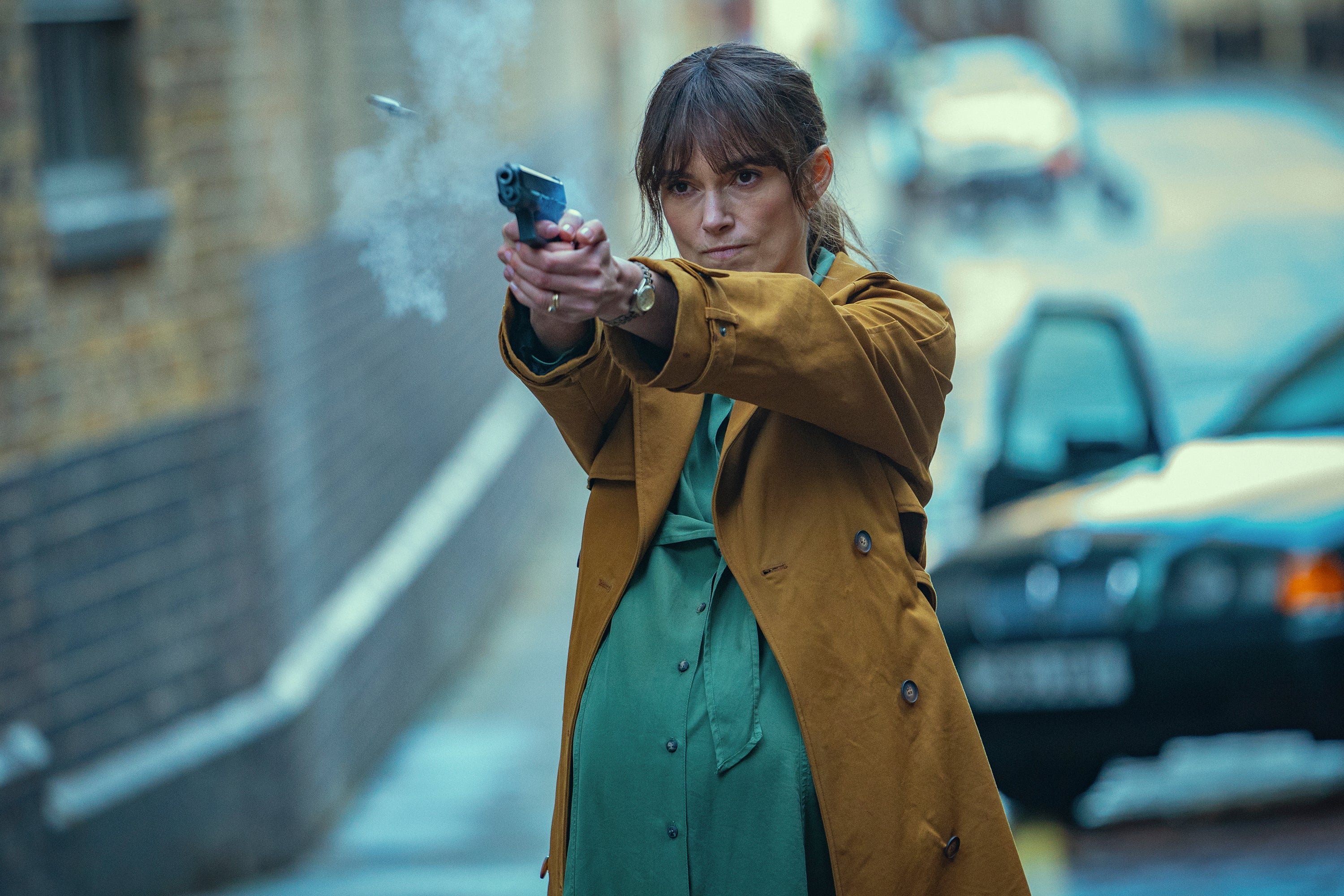
Locations change the choreography
A fight designed for a narrow corridor cannot simply be transferred to a shop floor, stairwell or open street. The available space determines how far performers can travel, where the camera can stand and which movements can be shown safely. Knightley has explained that the jewelry-shop fight with Dani was especially solid because it was staged in a studio, while other fights changed as the production responded to location constraints.
That detail matters more than it might sound. Good choreography is not a fixed dance that actors perform regardless of their surroundings. It is a plan adapted to architecture, sightlines, props, camera movement and the story beat. A cramped staircase creates tension through limited escape routes; a wider room can support more complex movement; a one-shot sequence demands precise timing from everyone involved.
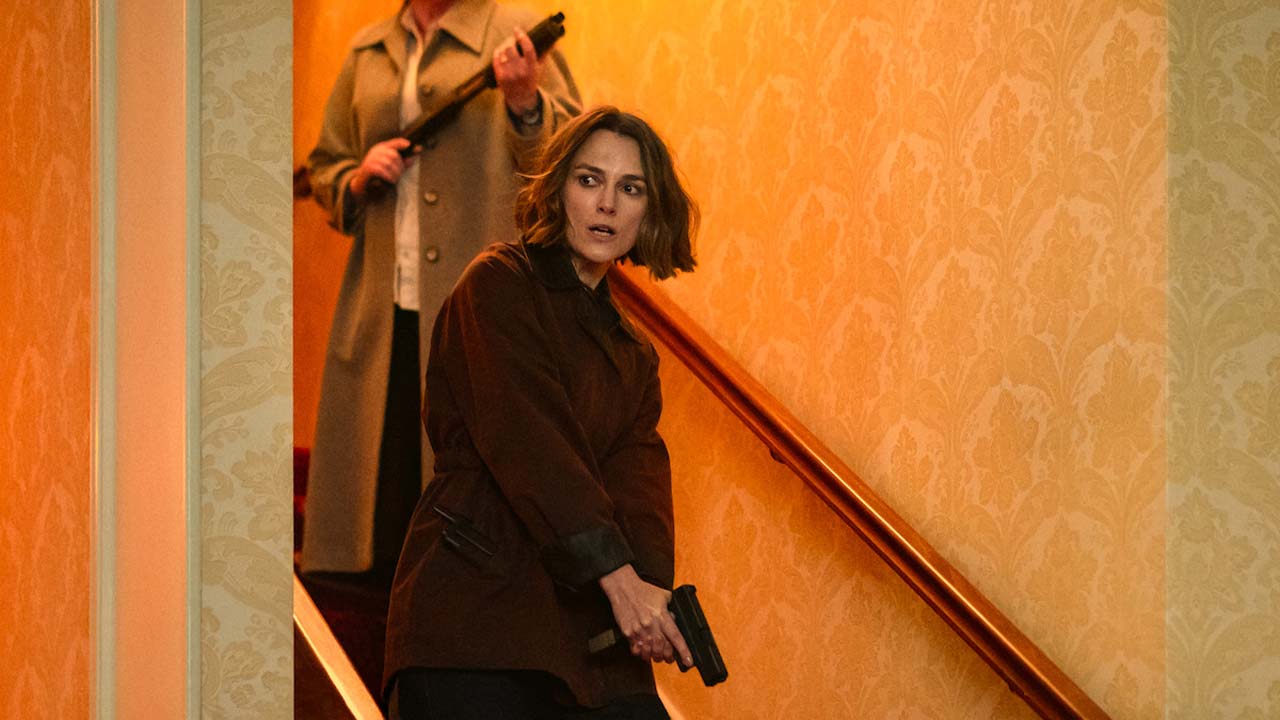
What makes a memorable fight sequence?
- Character-specific movement: the fight should tell us something about the person performing it.
- Clear geography: viewers should understand where the danger is and how the characters move through the space.
- Visible consequences: injuries, fatigue, fear or changed relationships should matter after the action ends.
- Rhythm: pauses, reversals and reactions are as important as speed.
- Teamwork: when several characters share a scene, their timing should reveal trust, friction or improvisation.
- Tonal control: humor can sharpen a violent scene, but it should not erase the stakes.
By those standards, Black Doves is at its most distinctive when its action is both entertaining and revealing. The show does not need every fight to be realistic in a documentary sense. It does need the audience to understand the rules of its heightened world and to feel that the characters pay a price for living inside it.
How this connects to the show’s wider action style
The choreography is part of a broader design: crisp dialogue, carefully chosen music, stylish interiors and a willingness to let danger arrive in the middle of an ordinary conversation. We have also looked at why the fights feel witty and how choreography matches the sharp dialogue, as well as the on-screen partnership between Knightley and Whishaw. This article takes a different angle: the critical response, the physical craft and the reasons a fight can feel both playful and dangerous.
Frequently asked questions
Who coordinates the fight scenes in Black Doves?
Keira Knightley has identified Sarah as the stunt coordinator and Rob Cooper as the fight coordinator who trained her for the series. The wider stunt department and performers contribute to planning and executing the sequences.
What training did Keira Knightley do for Black Doves?
Knightley told Netflix Tudum that her preparation included mixed martial arts, boxing, jiu-jitsu and elements of Filipino knife-fighting. She said the choreography was adapted to the way she naturally moved.
Are critics unanimous in praising the action?
No. Several reviews praise the pace, energy and stylish staging, while other criticism questions whether the characters face enough believable danger. The fairest conclusion is that the show’s action is distinctive and widely discussed, but its effectiveness can vary from sequence to sequence.
Why does the choreography feel different from a conventional spy thriller?
Its identity comes from combining character-specific movement with dark humor, quick dialogue and carefully staged team-ups. The action is designed to express personality as well as move the plot forward.
Sources and further reading
- Netflix Tudum: Keira Knightley on Black Doves fight-scene preparation
- Netflix Tudum: Black Doves Season 2 trailer and official stills
- Netflix Tudum: Williams and Eleanor’s stunt-work discussion
- TheWrap: Black Doves Season 2 review
- NME: Black Doves Season 2 review
- The Independent: Knightley and Whishaw discuss Season 2 action scenes
- Rotten Tomatoes: Season 2 critics’ reviews
By Shivam Das


