

Black Doves Season 2 does not use music simply to decorate its spy story. It uses songs to wrong-foot the audience. A tender old standard can sit beside a secret or a betrayal; a jagged punk or hip-hop track can turn a quiet-looking scene into something volatile; and an unexpectedly cheerful pop song can accompany a gunfight. The result is a soundtrack that keeps changing the emotional rules just when viewers think they understand the scene.
The contrast is especially clear across the season’s licensed needle drops: Billy Joel’s soft-focus “She’s Always a Woman,” Paul Anka’s intimate “Put Your Head on My Shoulder,” Can’s hypnotic “Vitamin C,” Capdown’s abrasive “Bitches and Nike Shoes,” Ocean Wisdom’s “Brick or Bat,” and DJ Shadow and Run the Jewels’ confrontational “Nobody Speak.” They do not all belong to the same genre or era. That is precisely why the mix feels so alive.
Spoilers: This article discusses music placements and scenes across Black Doves Season 2.

The soundtrack’s central trick: make the audience feel one thing, then another
Many thrillers build a consistent sonic vocabulary. Low strings mean danger, percussion means pursuit, and a rising score tells viewers when to brace for impact. Black Doves is more mischievous. Its licensed songs often arrive with their own histories and emotional associations, which may have little to do with the action on screen. Instead of reinforcing a scene’s surface mood, the track can challenge it.
That approach creates a useful split between what the characters are doing and what the audience is hearing. A romantic oldie may make a moment feel almost domestic even while the story is moving through political manipulation. A hard-edged rap track can make an operation feel faster, rougher and less controlled. A familiar melody can also expose the absurdity of professional killers treating another dangerous day as routine.
The effect is not random playlist chaos. The songs help the series move between its two defining registers: the polished world of government, marriage and public appearances, and the messy private world of assassins, handlers and compromised loyalties. The soundtrack keeps those worlds from settling into separate boxes.
Velvet oldies make the danger feel strangely intimate
Season 2 opens this contrast with songs that carry a soft, familiar glow. Billy Joel’s “She’s Always a Woman” appears in Episode 1, “Black Door,” while Paul Anka’s “Put Your Head on My Shoulder” appears in Episode 2. Both tracks have a graceful, old-fashioned romantic quality. They can suggest tenderness, nostalgia or the comfort of a familiar record.
But Black Doves is not offering uncomplicated romance. Helen’s public role as a politician’s wife sits beside her covert work; her marriage is built around information she cannot share. Sam’s friendships and loyalties are repeatedly tested by the people who pay him. In that context, a smooth love song can sound less like a promise than a question: what does intimacy mean when almost everyone is hiding something?
“Put Your Head on My Shoulder” is particularly effective as a title because the phrase suggests trust and physical closeness. The series’ characters rarely get to enjoy either without complications. The old recording’s softness becomes a kind of counterpoint to the hard decisions being made around it.

Raw hip-hop and punk bring the show’s sharper edge to the surface
The other side of the season’s musical personality is more abrasive. Episode 2 includes Capdown’s “Bitches and Nike Shoes”; Episode 3 features Ocean Wisdom’s “Brick or Bat”; and Episode 5’s “Murder Mix” includes “Nobody Speak” by DJ Shadow and Run the Jewels. These tracks bring a very different energy from the velvet oldies: clipped rhythms, forceful delivery, hard-edged production and a sense of forward motion.
“Nobody Speak” is an especially pointed choice for a series about people who trade in secrets, pressure and power. The track’s confrontational character gives the scene a swagger that is not the same thing as confidence. It feels like a challenge, a provocation, a refusal to be polite. That is a natural fit for a show in which professional courtesy can disappear the moment someone becomes a threat.
Capdown and Ocean Wisdom widen the palette beyond the familiar classic-pop references. Their presence makes the soundtrack feel connected to contemporary British music culture rather than a generic spy-thriller library. The show can move from an American singer-songwriter standard to UK underground energy without pausing to explain the transition.

Berlin’s music sounds like a different world
The Season 2 soundtrack also uses music to distinguish time and place. Episode 4, “The Opportunity to Become Savage,” moves into the Cold War-era Berlin history that reshapes the present-day story. Can’s “Vitamin C” and Einstürzende Neubauten’s “Perpetuum Mobile” give those flashbacks a more experimental, unsettled texture.
Can’s motorik pulse can feel hypnotic: the rhythm keeps moving, but it does not offer the comfort of a conventional pop chorus. Einstürzende Neubauten bring a more industrial sense of motion and texture. These choices help the Berlin material feel distinct from the contemporary London story without relying only on dialogue or costume to mark the shift.
The music also fits the emotional landscape of Reed’s past. The flashbacks are not a nostalgic escape to a simpler time. They reveal the compromises and betrayals that shaped the people now trying to control the Black Doves. A strange, propulsive track can make the past feel active rather than safely finished.

“Murder Mix” brings the contrasts together
Episode 5 is where the season’s musical philosophy becomes most explicit. Its title, “Murder Mix,” points to a playlist assembled for a mission, and the episode’s track sequence moves through several sharply different moods. The published episode lists include Cain Culto’s “KFC Santería,” Nick Cave & the Bad Seeds’ “People Ain’t No Good,” “Nobody Speak,” Olly Murs’ “Dance with Me Tonight,” Billie Holiday’s “Solitude,” and Nina Simone’s “Sinnerman.”
That is an unusually broad emotional range for one episode. Nick Cave brings bleak introspection; DJ Shadow and Run the Jewels bring a combative pulse; Olly Murs supplies bright pop; Billie Holiday turns the temperature inward; and Nina Simone closes the sequence with a performance that can feel both spiritual and relentless. The playlist is not trying to make the action sound like one continuous mood. It keeps changing the ground under the audience.
The Olly Murs placement has already drawn attention because “Dance with Me Tonight” accompanies a gunfight. Creator Joe Barton told Radio Times that the song came back to him from a period when he played it repeatedly at bath time with his young son. He connected that domestic memory to Helen’s children and the way her home life collides with her spy life. That explanation makes the needle drop more than a cheeky mismatch: it is a personal memory turned into a tonal device.
The sequence also demonstrates why “oldies versus hip-hop” is only a starting point for understanding the season. Black Doves is not sorting music into two fixed camps. It is moving among pop, soul, jazz, punk, hip-hop, experimental rock and original score, choosing the sound that makes a particular moment more complicated.
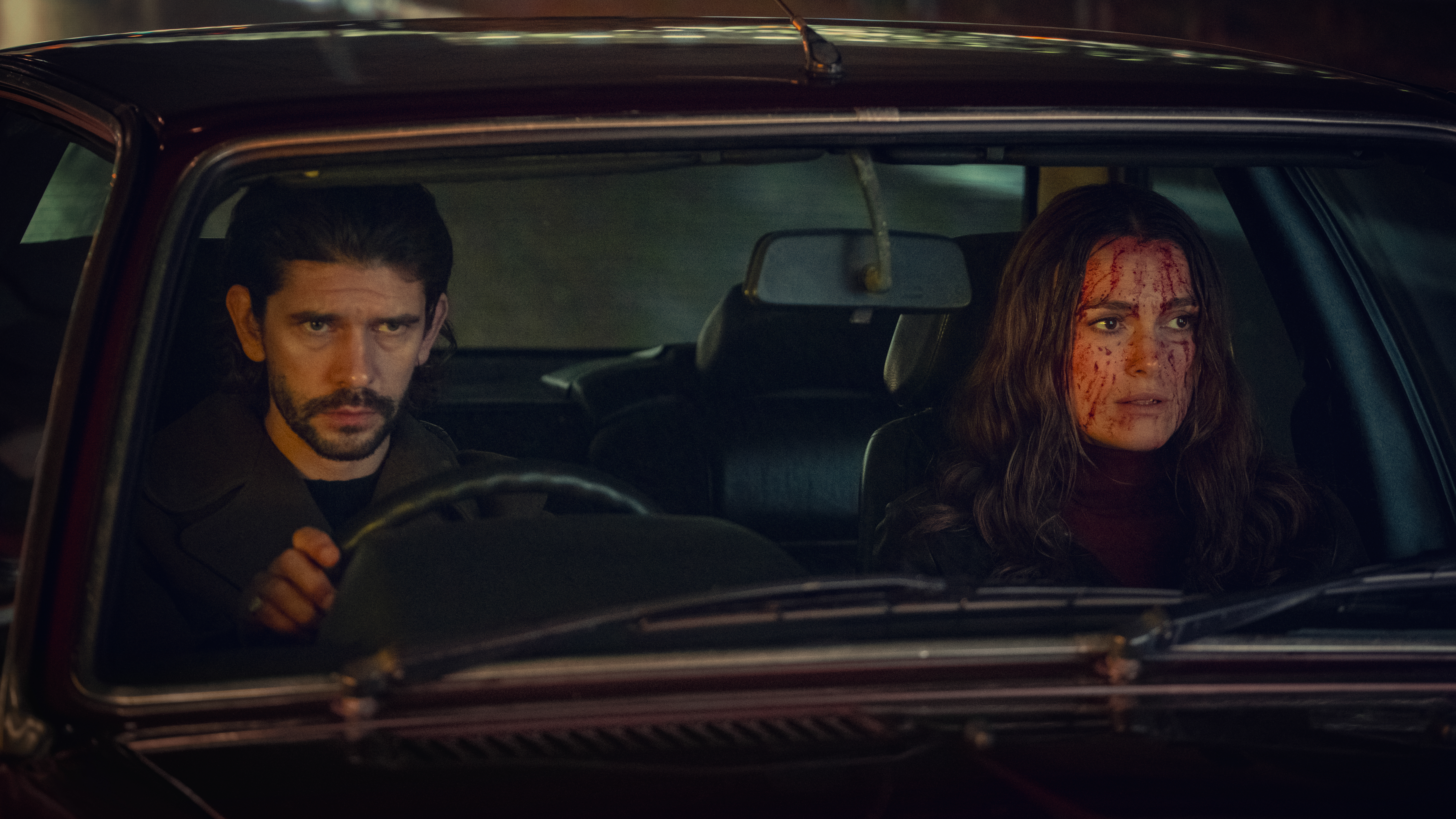
Licensed needle drops are not the same as the original score
It is worth separating the songs selected for scenes from the original instrumental music written for the series. Season 2’s score is credited to composers Ian Arber and Martin Phipps, with Benji Merrison also credited on the track “Conteh.” The soundtrack album includes pieces such as “Another Lifetime Ago,” “Spy Wife,” “Don’t Worry, It’s All Part of It,” “A Black Dove,” “Kill List” and “The Backup Plan.”
Those original cues do a different job from the licensed songs. They can sustain suspense across a scene, connect two storylines or carry the emotional residue of a decision without drawing attention to a familiar singer or lyric. The needle drops, by contrast, arrive with cultural memory already attached. Viewers bring their own associations to Billy Joel, Paul Anka, Can, Nick Cave or Nina Simone before the scene has finished unfolding.
That division is one reason the soundtrack feels coherent despite its range. The score provides continuity beneath the story, while the licensed tracks create deliberate jolts. The two approaches work together rather than competing for the same space.
Why the musical whiplash works for Black Doves
The music constantly pulls the rug out because the characters themselves live in a world of unstable identities. Helen can move from public spouse to covert operative; Sam can be a weary friend and a lethal professional; Reed can be a handler whose past is more complicated than her authority suggests. A soundtrack that refuses to stay in one genre reflects a story in which nobody gets to remain in one role.
There is also a comic dimension to the contrast. The series often lets its characters behave with dry, almost casual humor while the consequences around them are serious. A bright pop track over violence can make the action look absurd without making the danger disappear. A romantic standard beside deception can make tenderness feel more fragile. A hard-edged rap track can puncture the polished surface of political power.
My reading is that the season’s best music choices do not simply tell us whether a scene is happy, sad or dangerous. They create friction between those categories. That friction is the point: the show’s world is funny and frightening, intimate and brutal, polished and chaotic, often at the same time.
Watch the official Black Doves Season 2 trailer
Netflix has published the Season 2 trailer on its official Tudum site. Watch the official Black Doves Season 2 trailer on Netflix Tudum, or visit the official Netflix series page.
Frequently asked questions
Why does Black Doves Season 2 mix old songs with hip-hop?
The contrast reflects the show’s shifting worlds: polished political and domestic surfaces sit beside violent, unpredictable work. Older romantic songs can make a scene feel intimate or ironic, while hip-hop and punk tracks add urgency, confrontation and contemporary British texture.
Which Billy Joel song appears in Black Doves Season 2?
“She’s Always a Woman” appears in Episode 1, “Black Door.”
Which Paul Anka song is used in the series?
“Put Your Head on My Shoulder” appears in Episode 2.
Does Black Doves Season 2 feature Run the Jewels?
Yes. “Nobody Speak,” credited to DJ Shadow and Run the Jewels, appears in Episode 5, “Murder Mix.”
Which songs help create the Berlin flashback atmosphere?
Episode 4 includes Can’s “Vitamin C” and Einstürzende Neubauten’s “Perpetuum Mobile,” among other tracks.
Who composed the original Black Doves Season 2 score?
The original score is composed by Ian Arber and Martin Phipps. Benji Merrison is also credited alongside Phipps on “Conteh.”
Is the soundtrack album the same as the full list of songs heard in the episodes?
No. The score album contains selected original instrumental cues. The licensed songs heard in episodes, such as Billy Joel, Paul Anka, Can and Run the Jewels, are a separate part of the series’ music selection.
Sources and further reading
- Time Out: Black Doves Season 2 soundtrack, episode by episode
- Radio Times: Full Black Doves soundtrack and Joe Barton on the “Murder Mix”
- Film Music Reporter: Ian Arber and Martin Phipps’ Season 2 score album details
- Netflix Tudum: Season 2 guide, cast and story details
- Netflix: Black Doves official series page and trailer
By Shivam Das


