

Black Doves works because its characters rarely get a clean choice between right and wrong. In Joe Barton’s spy thriller, loyalty can become a liability, affection can complicate an assignment, and a decision that looks practical in one scene can leave a lasting moral cost in the next. That refusal to make the easy answer obvious is not a side effect of the show’s twists. It is one of the central ideas shaping the drama.
Keira Knightley has described Barton as a writer who “never goes for an easy option” and who keeps subverting what an audience expects. Her comments help explain why Helen Webb, Sam Young, Reed and even the show’s more unpredictable assassins feel difficult to sort into simple hero-and-villain categories. The series wants viewers to understand why people make damaging choices without automatically excusing those choices.
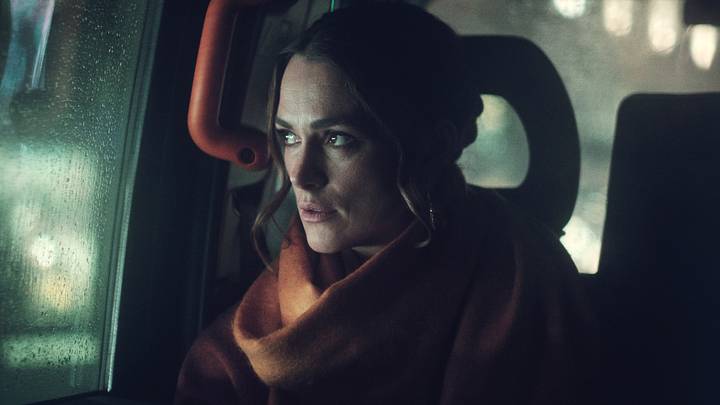
What does “never gives easy options” mean in Black Doves?
It means the story does not reliably reward characters for choosing the option that appears most respectable, nor does it let a character’s good intention erase the damage caused by their actions. A spy may protect a friend and still hurt someone else. A spouse may genuinely care for a partner while withholding the truth that makes the marriage possible. An organization may describe itself as professional while treating its own people as expendable.
That approach makes the plot more than a sequence of surprises. The twist matters because it changes how the audience understands a relationship, a motive or an earlier decision. When the series reveals another layer of a character, it does not necessarily replace one simple answer with another. It often makes the original question harder.
In a 2026 interview with the Evening Standard, Knightley praised Barton’s multidimensional character writing and his willingness to avoid predictable outcomes. That is a useful description of the show’s method: the characters are allowed to be strange, contradictory and morally unsettled.
Helen Webb is not simply a good person trapped in a bad job
Helen’s double life initially invites a familiar spy-story reading. She is a wife and mother who has a secret career, and the audience can easily begin by treating the secret work as the dangerous part and the domestic life as the authentic one. Black Doves gradually makes that division less convincing.
Helen is capable of tenderness, humour and fierce loyalty. She is also trained to deceive, gather information and use violence. Neither side cancels the other. Her feelings for her family do not make her professional choices harmless, and her work does not mean that every emotion she shows at home is fake.
Season 2 intensifies that contradiction by moving Wallace closer to the centre of political power. Helen’s position becomes more exposed at the same time that the secrets surrounding her work become harder to contain. Netflix’s official Season 2 guide describes her as a covert operative whose roles as political spouse, mother and spy are increasingly difficult to keep separate.

Sam’s moral code is a lifeline, not a clean bill of health
Sam Young has a code. It matters to him, and it gives him a way to imagine that he can control the moral meaning of a profession built around killing. But the series repeatedly asks whether a personal rule can remain meaningful when the work itself is violent and transactional.
In a 2024 conversation with British GQ, Barton said he finds moral absolutes boring. Discussing Sam, he described the character’s code as a kind of life raft: something Sam clings to even though the audience can see the limits and contradictions in it. The point is not that Sam has no principles. It is that principles can become a form of self-protection when someone does not want to face the full consequences of their choices.
That tension makes Sam more interesting than a conventional hitman with a hidden heart of gold. He wants connection and loyalty, but he is also capable of terrible acts. His friendship with Helen gives him a reason to keep going; it does not automatically make every decision made in her name defensible.

Wallace complicates the usual spy-thriller marriage
A predictable version of this story might make Wallace a foolish husband whose only function is to be deceived. Black Doves gives the marriage more texture. Wallace has his own political ambitions and blind spots, but he is not simply a cardboard obstacle between Helen and her secret life.
That complexity matters because a relationship becomes more painful when the people involved have genuine reasons to care about one another. If Wallace were only an antagonist, Helen’s deception would be easier to frame as a tactical necessity. If Helen were only a victim of circumstance, her choices would carry less weight. The show resists both shortcuts.
Barton discussed the need to make Wallace and Helen’s marriage emotionally credible in his British GQ interview. He explained that the dramatic tension depends on the possibility that Helen could actually like her husband, rather than treating him as a purely functional cover. A complicated marriage creates more difficult choices than a simple sham.

Reed and the Black Doves organization make loyalty transactional
Reed is another character who resists a simple label. She is a handler with authority, experience and a clear understanding of how the organization operates. She can also be ruthless. The series gradually asks viewers to consider what happens when someone who has spent years managing other people’s secrets becomes vulnerable to the consequences of her own past.
The organization itself is built around information as a commodity. Its operatives are valuable because of what they can access, but that value can make them targets or bargaining chips. Season 2 expands the audience’s view of the institution, showing more of its internal structure and the people who make decisions behind the scenes. Netflix’s cast guide notes that the season digs further into how the organization works, before putting that structure under pressure.
This is where the show’s moral ambiguity becomes institutional rather than merely personal. The Black Doves may offer a sense of belonging and professional purpose, but its business model is not the same thing as a moral mission. Characters can be loyal to the group and still be used by it.
Even the supporting characters are allowed to change direction
One of Barton’s most revealing choices concerns Williams and Eleanor. Williams was initially imagined as a villain seeking revenge on Sam. As the casting and character work developed, Eleanor was created as a new role, and the pair’s chemistry opened up a different direction for the story.
Netflix’s official interview with Ella Lily Hyland and Gabrielle Creevy explains how that dynamic evolved. The characters’ partnership becomes more than a professional arrangement, and their emotional breakthrough arrives in the middle of danger rather than in a conventional romantic setting.
That evolution is a good example of subverting expectations without making a twist feel random. A character can begin with one narrative function and gradually reveal another side. The change feels earned when the performers, dialogue and circumstances make the new direction believable.

Why the twists work: they change the question, not just the answer
A twist can be surprising and still feel empty if it exists only to shock the audience. Black Doves is strongest when a revelation forces viewers to reconsider what they thought they understood. The reveal of a hidden motive, a changed allegiance or a private vulnerability can shift the meaning of earlier scenes.
That is also why the show’s humour matters. The sharp dialogue and absurdly matter-of-fact approach to violence can make a character feel entertaining, but the comedy does not erase the consequences. A funny line can sit beside a devastating decision. The tonal contrast keeps the series lively while reminding viewers that these characters are not operating in a world with neat moral boundaries.
In the Season 2 finale, the story pushes Helen toward a terrible choice involving Wallace and the children. Barton told Netflix Tudum that the creative team spent time working out how to place her in a situation with seemingly no way out. The official ending explainer is especially revealing on this point: the dilemma is designed to make the character confront the cost of the life she has built.
What this writing style means for the future of Black Doves
The series does not need every character to become more ruthless or every plot to become more complicated. Its best source of tension is already there: people who care about one another while being caught in systems that reward secrecy, leverage and violence.
That gives future stories room to evolve. Helen’s relationship with Wallace cannot return to its old arrangement after the truth has surfaced. Sam’s loyalty has repeatedly come with a personal price. Reed and the organization face the question of what kind of institution they can become after internal damage. And Williams and Eleanor have a relationship that complicates the work they do together.
The important point is that none of these threads has an obvious, painless resolution. That is not a flaw in the storytelling. It is the dramatic engine. The audience keeps watching because the characters have to choose, and every available choice reveals something about who they are.
Frequently asked questions
Who created and writes Black Doves?
Joe Barton created the series and serves as its writer and executive producer. Keira Knightley is also an executive producer. Netflix lists Barton among the central creative team in its official Season 2 guide.
Why does Black Doves avoid clear heroes and villains?
The series is interested in characters whose motives and actions do not fit simple moral labels. Barton has said he finds moral absolutes boring, and the story repeatedly explores how loyalty, love and professional duty can conflict.
Does Sam have a moral code?
Yes. Sam tries to follow a personal code, but the show questions whether that code can fully justify the violence he carries out. His principles are important to his identity, but they do not remove the consequences of his actions.
Why is Helen such a morally complicated character?
Helen genuinely cares about her family and friends while also working as a covert operative who deceives people and uses violence. The series refuses to treat either side of her identity as the only “real” one.
Did Williams and Eleanor’s relationship change during development?
Yes. Netflix’s interview with the actors and Barton explains that Williams was first conceived as a revenge-driven villain, while Eleanor was developed as a new character after the casting process helped reveal the pair’s chemistry.
Where can I watch Black Doves?
Black Doves is available on Netflix, subject to regional availability.
Author: Shivam Das
Editorial note: This article is an analysis of the show’s character writing, supported by interviews and Netflix’s official Season 2 materials. Interpretations of the characters are identified as analysis rather than statements of creator intent.


