

Black Doves knows that a spy thriller does not have to behave like a solemn intelligence briefing to feel dangerous. Its characters can trade dry one-liners while preparing to break into a building, stumble through a mission that has become absurdly complicated, or treat an outrageous act of violence as one more inconvenience in an already exhausting day. That tonal looseness is not a distraction from the suspense. It is the reason the series feels so distinctive.
The phrase “freewheeling and witty” captures a show that moves between genres without asking permission. It has the conspiracies, surveillance, betrayals and sudden violence expected of espionage drama, but it also borrows the rhythm of a buddy comedy, the heightened confidence of a caper and the emotional directness of a friendship story. The result is not a standard spy thriller with jokes added on top. It is a series in which comedy and danger are designed to occupy the same scene.
The show treats danger as real but never treats itself as untouchably serious
Many prestige spy dramas build their identity around restraint: muted performances, careful exposition, institutional language and a sense that every decision carries geopolitical weight. Black Doves uses some of those ingredients, but it is happier to let the machinery misfire. Plans go sideways. Characters find themselves in ridiculous situations. A tense operation can be interrupted by a line of dialogue that punctures the atmosphere without making the threat disappear.
That balance matters. If the show treated every joke as a signal that nothing serious could happen, its action would lose force. Instead, the humor often comes from the characters’ familiarity with danger. Helen Webb and Sam Young have lived in a world where violence is part of the job. Their casual exchanges can sound almost ordinary because the extraordinary has become routine for them. The audience, however, is still aware of the cost.
The Guardian’s review of Season 2 describes the series’ tone as an incongruous mix of camp, sentiment, chilly espionage and farce. That is a useful description of its method: the show does not settle into one register for long. It can be emotionally sincere and knowingly ridiculous in the space of a few minutes. The tonal changes are part of the pleasure, not evidence that the series has forgotten what kind of story it is telling.
Helen and Sam make the action feel like a character-driven caper
The central relationship is the key to the show’s unusual rhythm. Helen is an undercover operative embedded in British political life; Sam is her closest friend, a highly capable hitman whose personal life and professional history keep pulling him into trouble. They are not a conventional action duo who bond through competition or constant one-upmanship. Their friendship has the ease of people who know each other’s habits, weaknesses and worst decisions.
That familiarity changes the way action scenes play. A mission is not simply a sequence of obstacles to overcome. It is another test of how well these two understand each other. Their banter can be affectionate, impatient or bleakly practical. They do not need to explain every detail of their shared history because the performance and dialogue suggest years of accumulated trust. When they argue, the disagreement feels personal; when they cooperate, the timing feels practiced.
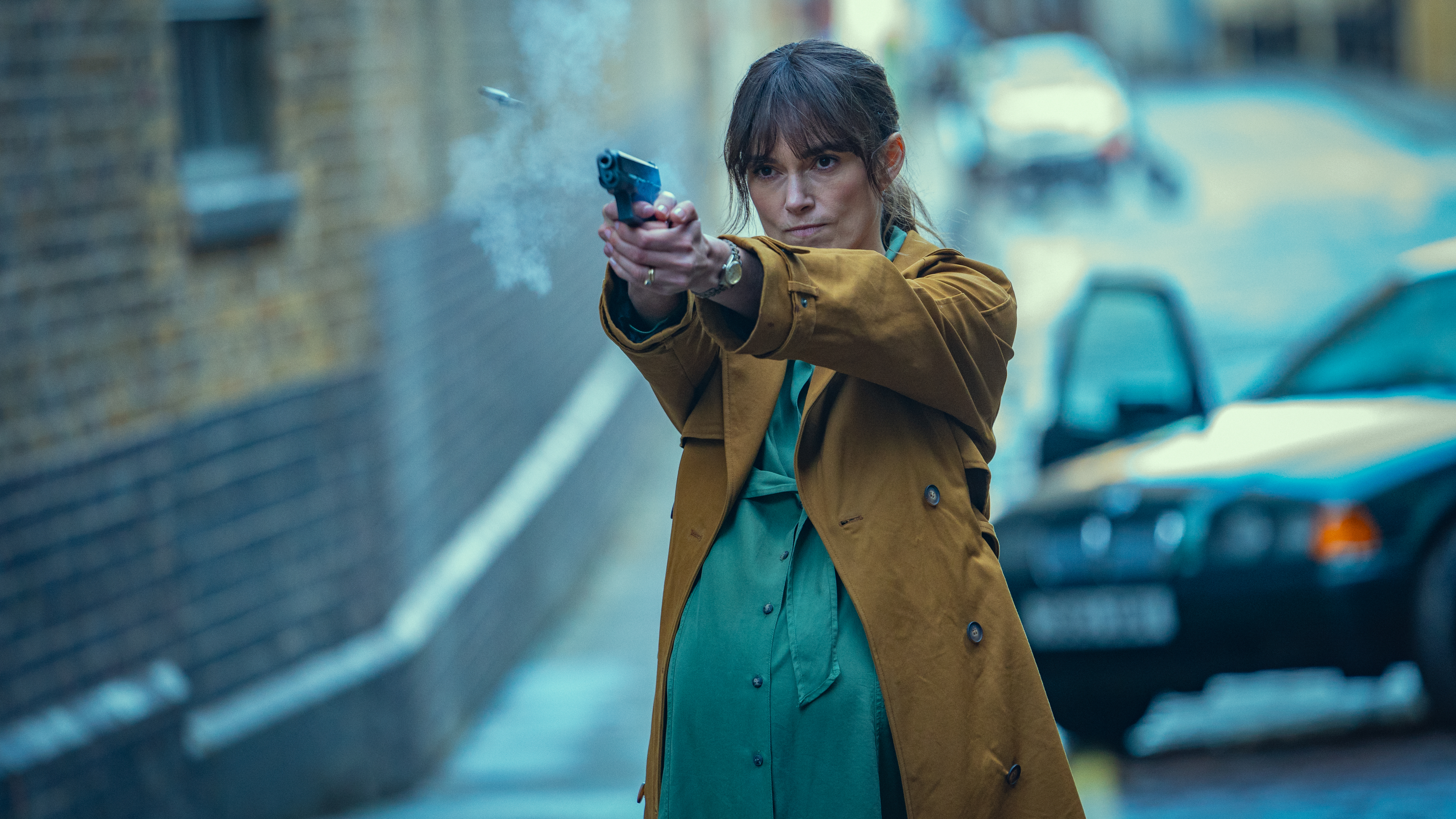
Season 2 makes that partnership more complicated rather than simply repeating the first season’s formula. Netflix’s official preview places Helen under greater pressure as her husband Wallace prepares to become prime minister, while Sam is drawn into a dangerous arrangement after his own work goes wrong. Their paths converge again as a plot threatens the Black Doves organization. The stakes rise, but the emotional logic remains rooted in two friends trying to protect one another in a profession that punishes attachment.
Witty dialogue gives the series its own action rhythm
In a conventional thriller, dialogue between action beats often exists to deliver information: who is following whom, what the target wants, or how much time remains. Black Doves uses conversation for that purpose, but it also lets dialogue reveal temperament. Characters tease, complain, undercut one another and react to danger with a kind of weary irreverence.
The humor is not always a punchline. Sometimes it is the mismatch between the scale of the crisis and the smallness of the response. A character can be discussing an urgent threat while sounding annoyed about an entirely mundane detail. That contrast makes the world feel inhabited. These people have routines, grudges and social instincts even when they are operating in a violent clandestine network.
The new season also adds Laila, played by Ambika Mod, whose sharp, anarchic energy gives Helen another kind of scene partner. Netflix describes her as an acerbic Black Doves agent sent to help on a mission. Her presence expands the show’s comic possibilities: she is not simply a replacement for Sam or a new weapon in the team, but a disruptive personality who can challenge the established rhythm.

The violence is stylized, but the emotional consequences remain visible
There is a risk in making violence entertaining: the audience can begin to treat every confrontation as a clever set piece and stop feeling the human cost. Black Doves sometimes leans into the sheer spectacle of its action, but its strongest scenes keep returning to what violence does to the people who carry it out.
Sam is especially important to that balance. His competence does not make him emotionally invulnerable. The show repeatedly frames him as someone whose work has left him lonely, tired and uncertain about what loyalty has cost him. Ben Whishaw’s performance gives the character a melancholy quality that complicates the slickness of the action. A scene can be funny and expertly choreographed while still revealing how depleted Sam has become.
Helen’s situation is different but equally conflicted. Her public identity as a political spouse and mother exists alongside her covert work. As Wallace approaches the premiership, the gap between those roles becomes more dangerous. The show can make a joke about the absurdity of her circumstances while still asking whether a person can keep a family intact through years of deception. The comedy does not resolve that question; it makes the contradiction easier to watch without making it disappear.
Why the show’s absurdity can make its espionage more believable
Real intelligence work is not a continuous sequence of elegant disguises and perfectly timed escapes. It involves bureaucracy, uncertainty, imperfect information and people making decisions with incomplete knowledge. Black Doves is heightened fiction, not a documentary reconstruction of espionage. Still, its willingness to show confusion, personality clashes and plans that become messy gives the story a different kind of credibility.
The series is not asking viewers to believe that every operation would unfold exactly this way. It asks them to accept a heightened world in which the characters’ emotional reactions feel recognizable. The jokes, awkward exchanges and occasional farce make the operatives seem less like mythic professionals and more like people who have learned to function inside an absurd system.
Season 2’s expanding cast reinforces that approach. Alongside returning characters, the story brings in figures whose loyalties and motives complicate the organization’s internal structure. Netflix’s season guide describes a network built around handlers, executives, operatives and hidden agendas. That institutional world supplies the conspiracy, while the personalities inside it supply the comedy and friction.
It is closer to a spy caper than a traditional procedural
The difference between a procedural and a caper is partly a matter of momentum. A procedural often emphasizes the methodical solving of a problem. A caper emphasizes the pleasure of watching a group of distinctive people navigate a risky scheme, often through improvisation and reversals. Black Doves borrows from both, but its appetite for ensemble chemistry and tonal surprises makes the caper comparison especially useful.
The Financial Times’ Season 2 review notes that the show doubles down on extravagant, sometimes implausible spy action while remaining lively and funny. That is not a complaint the series necessarily needs to correct. Its appeal depends on a willingness to stretch plausibility in service of pace, performance and comic timing. The question is not whether every escape would survive a forensic audit; it is whether the characters make the sequence worth watching.
There is still a limit. If the heroes always escape without meaningful consequences, the suspense can become predictable. The Guardian has questioned the lack of jeopardy in some of the show’s non-stop gunfights. That criticism identifies the trade-off at the heart of its style: the more invincible the action becomes, the more the series must rely on emotional consequences and shifting loyalties to keep viewers invested.

The emotional core keeps the comedy from becoming empty
Underneath the quips and elaborate missions, the series is interested in a simple and difficult question: what does loyalty mean when the people you love are part of the danger? Helen and Sam repeatedly choose one another, but those choices do not always make their lives safer. Their friendship is a source of strength and a reason they remain entangled in a world that keeps demanding more from them.
That emotional foundation is what separates the show from a collection of stylish action sequences. The audience can enjoy the choreography, the sharp dialogue and the ridiculous turns because there are relationships to care about beneath them. The show’s wit is not an escape from its darker themes. It is one of the ways its characters survive those themes.
Why Black Doves feels different from a standard spy thriller
Black Doves feels freewheeling because it refuses to stay in one emotional register. It can be a conspiracy story, a buddy comedy, a violent caper and a portrait of damaged friendship without fully becoming any one of them. Its action is heightened, its dialogue is quick, and its characters are allowed to be funny even when their circumstances are grim.
That mixture will not work for every viewer. Someone looking for strict realism or consistently restrained suspense may find the series too extravagant. But for viewers who enjoy character chemistry, dark humor and action that knows when to be playful, the show offers a distinctive alternative. It does not make espionage less dangerous; it makes the people caught inside it more vivid.
Ultimately, the series’ wit is not a decorative layer over a standard spy plot. It is part of the storytelling grammar. Helen and Sam’s banter, Laila’s disruptive energy, the organization’s internal absurdities and the emotional cost of their work all belong to the same world. That is why Black Doves can be both ridiculous and sincere—and why its most memorable moments often happen when the danger is real but the characters refuse to behave as though the genre has ordered them to stop having a personality.
Frequently asked questions
Why does Black Doves feel different from a standard spy thriller?
It blends espionage, action, dark comedy and friendship drama. Its characters use wit and banter even in dangerous situations, creating a lighter, more caper-like rhythm than a consistently solemn spy drama.
Is Black Doves meant to be a comedy?
It is best understood as a darkly comic spy thriller. The series contains serious violence, conspiracies and emotional consequences, but it uses absurdity, deadpan dialogue and character-driven humor throughout.
How do Helen and Sam shape the show’s tone?
Their long friendship gives the action a conversational rhythm. They understand each other’s habits and weaknesses, so their banter can remain affectionate or funny even when a mission becomes dangerous.
Does Season 2 continue the same mix of humor and action?
Yes. Netflix describes Season 2 as retaining the series’ explosive wit while raising the stakes for Helen and Sam and introducing new characters such as Laila.
Who plays Laila in Black Doves Season 2?
Ambika Mod plays Laila, an irreverent Black Doves agent who joins the story as a new ally and a disruptive presence.
Where can I watch Black Doves?
Black Doves is available on Netflix. Check the official Netflix page for regional availability and episode details.
Sources and further reading
- Netflix Tudum: Black Doves Season 2 release, story and cast guide
- The Guardian: Black Doves Season 2 review
- TheWrap: Black Doves Season 2 review
- Financial Times: Black Doves doubles down on its extravagant spy caper style
- The Independent: Keira Knightley and Ben Whishaw discuss Season 2 action scenes


