

Spoiler warning: This article discusses the London Zoo sequence in the Black Doves Season 2 finale.
The rescue at London Zoo is one of the most revealing moments in Black Doves Season 2 because Helen Webb’s maternal instinct does not arrive as a gentle interruption to her spy life. It becomes the force that drives her straight through it. Her children are in danger, the person guarding them is someone the family trusted, and the clock is running while Helen and Sam race to reach them. The sequence turns the season’s central contradiction into immediate action: Helen can be a devoted mother and a highly trained killer, and the story refuses to pretend those identities can be separated when her family is threatened.
Queue title “The Zoo Rescue Sequence” might suggest a conventional action set piece. What makes it matter is the emotional calculation underneath the movement. Helen is not trying to save strangers or complete an assignment for the Black Doves. She is trying to get to Ollie and Jacqueline, two children who have been placed in danger without understanding the larger conspiracy around them. Their ordinary day at the zoo becomes the location where the cost of Helen’s secret world finally reaches the family she has tried to keep outside it.

The danger is personal before it becomes an action scene
By the finale, Helen has already been pushed into an impossible choice. Vita’s plan uses the children as leverage to force Helen to kill Wallace, the prime minister. Helen finds a way to resist that demand, but escaping the immediate trap does not mean the children are safe. The threat has moved to the place where they are being looked after: London Zoo, with Marie, the Webbs’ longtime nanny, revealed as a covert asset working with Vita.
That betrayal changes the meaning of the rescue. Marie is not an anonymous guard or a stranger who happens to be in the wrong place. She has occupied the family home, cared for the children and been trusted with their routines. The danger is frightening precisely because it has been allowed inside the domestic circle. The children have no reason to recognize the threat, and that gap between their innocence and the audience’s knowledge gives the sequence its tension.
Netflix’s official finale explainer confirms that Marie was the family’s longtime nanny and a covert asset who worked with Vita, endangering the children she had helped raise. The episode does not frame the children as participants in the spy conflict; they are its vulnerable collateral. That distinction matters when judging Helen’s reaction: her urgency is not abstract patriotism or organizational loyalty. It is the instinct to reach her children before the danger can touch them.
Why the zoo setting sharpens the contrast
A zoo is designed as a family space. It is associated with school trips, weekend outings, animals and the small negotiations of keeping children entertained. In a spy thriller, that ordinary setting creates an uncomfortable contrast. The threat does not wait in a warehouse or a deserted safe house. It sits inside a place where children should be able to wander safely with an adult they know.

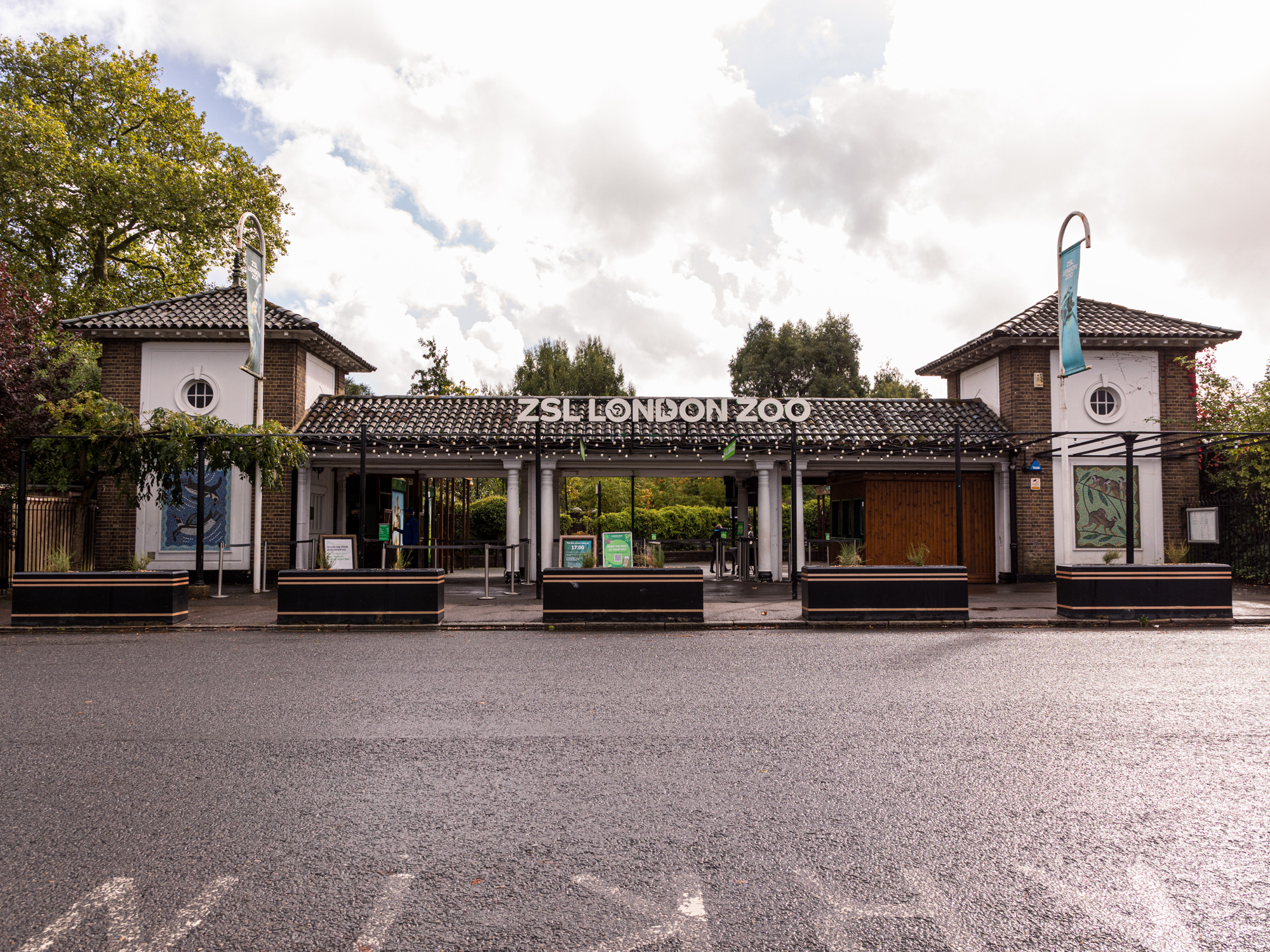
The real London Zoo is in Regent’s Park, a public visitor attraction with a long history. The location’s familiar, open character is useful dramatically: it makes the danger feel exposed. There is no visual shorthand of a secret lair to tell viewers that something terrible is about to happen. Instead, the threat intrudes on a recognizably public environment. The setting makes the children’s vulnerability more legible because it is so far removed from the hidden world that has shaped their mother’s adult life.

Helen’s mother instinct is expressed through action, not speeches
Helen is rarely given the luxury of explaining her feelings before she acts. Her work has trained her to assess danger quickly, anticipate what another person might do and make decisions under pressure. At the zoo, those skills are redirected toward a deeply personal goal. The sequence does not need a long monologue about motherhood because the urgency is visible in what she prioritizes: reach the children, remove them from danger and deal with the person who betrayed their trust.
That is not the same as saying every decision Helen makes is automatically justified because she is a mother. The series is more interesting than that. Her protective instinct explains the intensity of her response, but it does not erase the violence that follows or the moral questions surrounding it. The story lets viewers understand why she acts while leaving room to question how far she goes.

Sam’s role makes the rescue a partnership
Sam’s presence matters because Helen is not operating alone. Their friendship has always been built on an unusual level of honesty: each knows the other is capable of violence, and neither needs to pretend otherwise. At the zoo, that shared history becomes practical. Sam understands the urgency and helps Helen get to the children, then takes them away from the immediate confrontation while Helen deals with Marie.
The division of action is revealing. Sam’s instinct is to help secure the children’s safety; Helen’s confrontation with Marie is inseparable from the betrayal that has taken place inside her home. The two friends are aligned in the rescue, but the emotional burden is not identical. Helen is the children’s mother. The danger has crossed the boundary she most wanted to preserve, and the person standing in front of her is someone who had been trusted with her family.
The finale’s wider story makes the partnership even more significant. Helen and Sam have spent the season navigating separate obligations, old wounds and a conspiracy that repeatedly threatens the people around them. Their reunion at the zoo is not a cure for those problems. It is a moment when their shared skills and loyalty are directed toward something immediate and unmistakably human.
Marie’s betrayal makes the rescue emotionally complicated
Marie’s position in the family makes the confrontation difficult to reduce to a simple action-movie beat. She has been close enough to the children to know their habits and routines. She has also been working with Vita, turning that access into leverage. The betrayal is not only that she is an enemy operative; it is that she has used the trust built through caregiving while exposing the children to danger.
Netflix’s account of the finale says Helen kills Marie after confronting her about working with Vita and endangering the children. That is the confirmed event. Whether viewers read Helen’s action as justice, revenge, cold necessity or a combination of all three is interpretation. The series gives the confrontation emotional context but does not make the moral discomfort disappear.
That ambiguity is central to Helen. Her maternal instinct is real, but it does not transform her into a conventional action heroine who only uses force when every other option has vanished. The same training and decisiveness that make her effective as a spy shape the way she responds as a parent. Her love for her children and her capacity for lethal violence occupy the same person. The zoo sequence makes that collision impossible to ignore.
The children’s innocence is the most unsettling detail
One of the most disturbing aspects of the sequence is that Ollie and Jacqueline do not fully understand the danger around them. From their perspective, they are spending time at the zoo with a familiar caregiver. They are not tracking the Black Doves, Kestrel or the political threat surrounding their father. Their lack of knowledge is exactly what makes them vulnerable—and what makes the rescue feel so urgent.
For Helen, keeping the children ignorant has been part of the attempt to preserve a normal family life. But the finale exposes the weakness in that arrangement. A secret identity can be hidden from children only until the consequences of that identity reach their world. Even if they are physically rescued, the danger has already shown that the family’s ordinary routines can be used against them.
What the sequence changes for Helen after the finale
The zoo rescue does not resolve Helen’s double life. It confirms that the life she has built cannot be neatly divided into a public family role and a private intelligence role. Her children have become leverage in a conflict they never chose, and the person she trusted to care for them was part of the threat. The consequences will not vanish simply because the immediate danger ends.
Wallace’s position adds another layer. He is now prime minister, and his suspicions about Helen’s identity have become harder to contain. The finale ends before she gives him the full account of her past. That means the family’s crisis is not over when the children are safe. Helen must still face the question of how much truth she can tell her husband and what that truth will do to the life they have built.
For the Black Doves, the rescue also illustrates the cost of treating people as assets. The organization’s trade in secrets has always depended on proximity: operatives are valuable because they can get close to powerful people and private lives. But proximity creates vulnerabilities. Helen’s home becomes a route into her family, and the children become leverage in a struggle between organizations. The zoo sequence turns that abstract business model into a personal emergency.
Why this is one of Season 2’s defining emotional set pieces
The rescue works because it is not just a chase to reach a location. It is a collision between the two versions of Helen that the series has spent two seasons building. The operative knows how to move through danger. The mother knows exactly what is at stake if she arrives too late. The show does not ask one identity to defeat the other. It shows how they operate together, sometimes in ways that are effective and sometimes in ways that are frightening.
That is why the sequence leaves a more complicated impression than a simple triumph. Helen gets her children out of immediate danger, but she does so in a way that underlines how thoroughly violence has entered her family’s orbit. The rescue is an act of love, but it is also a reminder that love cannot undo the consequences of secrecy. In Black Doves, maternal instinct is powerful—not because it makes Helen innocent, but because it reveals what she is willing to do when the people she loves are threatened.
Frequently asked questions
Where does Helen rescue her children in Black Doves Season 2?
Helen and Sam reach the children at London Zoo during the Season 2 finale. The children are there with Marie, the Webb family’s longtime nanny, who is revealed to be working with Vita.
Who helps Helen rescue Ollie and Jacqueline?
Sam Young helps Helen reach the children. After they arrive, Sam helps move the children to safety while Helen confronts Marie.
Why is Marie at the zoo with Helen’s children?
Marie is the family’s nanny, but the finale reveals she is also a covert asset working with Vita. Her access to the children makes her betrayal especially dangerous.
Does Helen kill Marie after the rescue?
Yes. Netflix’s official finale explainer confirms that Helen kills Marie after confronting her about working with Vita and endangering the children.
Do the children know how much danger they were in?
The finale indicates that the children did not understand the danger surrounding them. They were unaware of the wider conflict involving their nanny and the Black Doves.
What does the zoo rescue reveal about Helen?
It shows that her maternal instinct is powerful but inseparable from the training and violence of her covert life. She protects her children, but the sequence does not erase the moral complexity of how she responds.


