

Black Doves is built on an outrageous premise: a covert intelligence outfit sells secrets to the highest bidder, a politician’s wife secretly works for that organization, and the people around her can move from a family dinner to a lethal operation with barely a pause. Its plots are not always plausible in the literal, procedural sense. People arrive at exactly the wrong moment, secrets survive astonishingly long, and London sometimes seems to contain only six streets and a handful of very well-connected spies. Yet the series keeps viewers invested. The reason is not that audiences fail to notice the improbabilities. It is that the show understands which kinds of realism matter most.
The best way to judge Black Doves is not to ask whether every coincidence could happen exactly as written. It is to ask whether the characters’ emotional choices, the consequences of violence, and the internal rules of the spy world remain coherent. When those elements hold, viewers are often willing to forgive a plot that moves like a roller coaster. When they do not, even the most spectacular action sequence can feel weightless.

The show sells emotional truth before operational accuracy
Spy fiction has always operated on a sliding scale of realism. Some stories make surveillance procedures, tradecraft and institutional politics the main attraction. Others use espionage as a pressure cooker for questions about loyalty, identity and betrayal. Black Doves belongs firmly to the second group. Its central question is not whether every intelligence handoff could survive a real-world security review. It is what happens to a person who has built a family life on top of a professional life that depends on deception.
Helen Webb’s double existence gives the series its emotional anchor. She loves her children and has a real marriage, but she also trades national secrets and works for a covert network. The conflict is not a puzzle that can be solved with one clever reveal. Every time she protects one part of her life, she risks exposing another. That emotional logic makes the story feel consequential even when the mechanics become extravagant.
Netflix’s Season 2 overview makes the escalation clear: Wallace moves toward the prime minister’s office while Helen remains an operative inside the organization that trades in secrets. Her access becomes more valuable at exactly the moment her cover becomes more dangerous. The setup is heightened, but the pressure it creates is easy to understand.
Coincidence works when character choices drive the collision
Audiences tend to be forgiving of coincidence when it brings characters into conflict, but less forgiving when it removes their agency. A surprise encounter can be dramatically satisfying if it forces someone to make a difficult decision. It feels cheap if the plot simply drops a solution into a character’s lap. Black Doves is at its strongest when its twists grow out of old loyalties, past betrayals and decisions that have been quietly accumulating.
Season 2’s Kestrel conspiracy is a useful example. The conflict reaches back into Reed’s past and exposes the consequences of an operation she once carried out in East Berlin. The connection between that history, Vita’s revenge and the current threat gives the season’s expanding cast a shared source of motivation. The revelations are melodramatic, but they are not random: the past has returned because the people who were harmed by it have not forgotten.

That structure also makes the show’s betrayals feel personal. The Black Doves are not an abstract agency with a mission statement; they are a network of people who know one another’s weaknesses. When the organization is threatened, the danger comes from relationships as much as from weapons. The plot may stretch credibility, but its emotional cause-and-effect remains legible.
London is a character, not just a convenient backdrop
One reason the show’s geography can feel more convincing than its logistics is its use of recognizable spaces. The second season moves through government corridors, public squares, parks, churches and nightlife districts. These locations give the action a texture that a generic collection of warehouses and anonymous offices would not provide. The city’s ordinary public life sits beside the covert world, creating a constant contrast between what people see and what is happening just out of view.
Netflix’s locations guide identifies real filming settings including St. Mary le Strand, Somerset House, Battersea Park, the National Theatre and Trafalgar Square. The guide also explains how the production uses London locations to connect Helen’s political life with the less visible world of the Black Doves. Those details do not prove that the story’s movements are logistically perfect, but they make the fictional world feel anchored in a place with history, routines and recognizable geography.
The tone tells viewers how literally to take the action
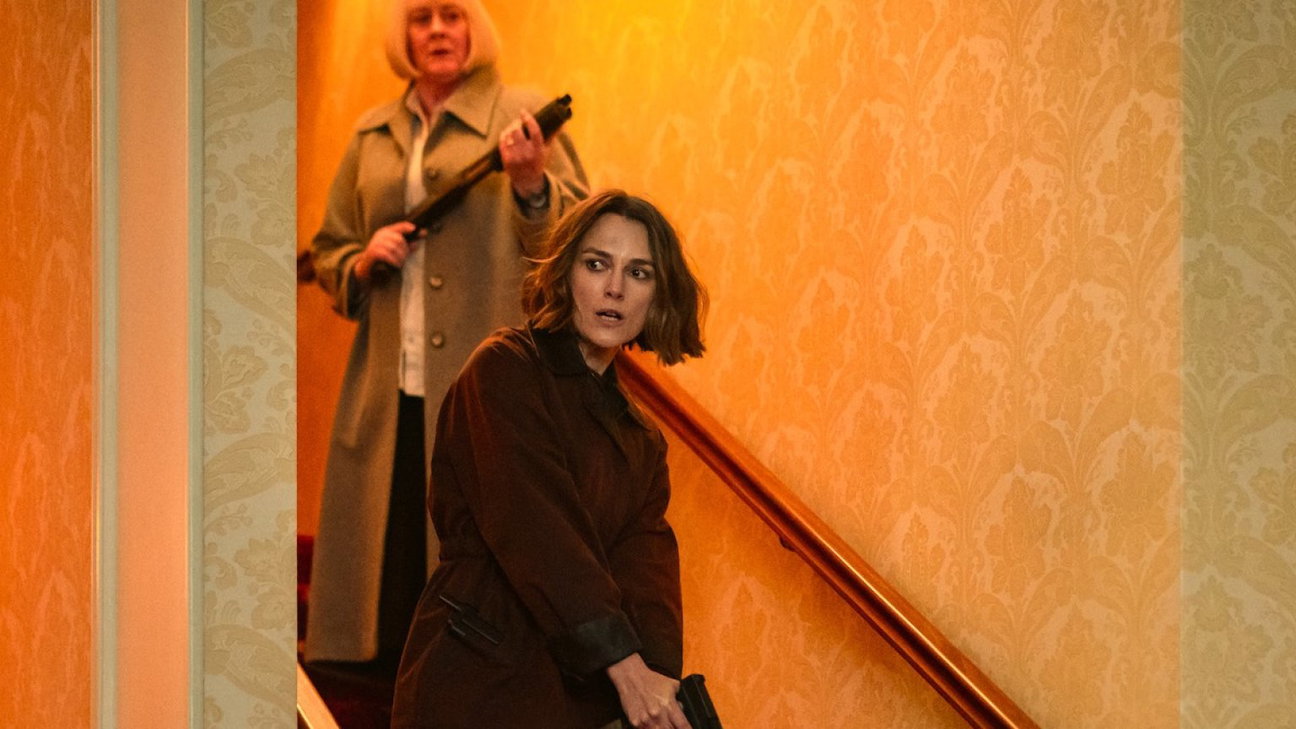
Black Doves is not asking to be watched like a documentary about intelligence work. Its tone combines a spy caper, a friendship story, dark comedy and sudden violence. That mixture is a deliberate promise to the audience. A joke in the middle of a dangerous situation does not mean the danger is fake; it tells viewers that the series is comfortable with tonal whiplash.
In an Associated Press interview, Knightley described the series as mixing “the ridiculousness with the seriousness,” while showrunner Joe Barton discussed the appeal of a friendship in which one person can call the other to rescue them from Downing Street. Those comments capture the show's balancing act: the premise can be absurd, but the relationships are played with enough commitment to make the absurdity entertaining rather than careless.
The key is consistency. If the series suddenly demanded that viewers treat every action beat as a sober procedural, its most exaggerated choices would become harder to accept. Instead, the show establishes a heightened world where the characters understand the absurdity around them and keep moving. The humor gives the audience permission to enjoy the ride without pretending the ride is ordinary.

Consequences are what keep the spectacle from feeling empty
Viewers can accept a remarkable escape or an unlikely meeting if the story remembers what happened afterward. Injuries, grief, mistrust and damaged relationships need to remain part of the world. The most effective action scenes in Black Doves are not simply displays of competence. They alter the balance between characters and leave emotional residue.
The Season 2 finale makes that principle especially clear. The conspiracy puts Helen in an impossible position, uses her children as leverage and forces her to confront the danger inside her own home. The aftermath is not a clean return to normal. Wallace knows that the life he understood was built on secrets, and the season ends with the couple beginning a conversation whose full consequences are deliberately left unresolved. Netflix’s official explainer confirms that the finale stops before Helen’s presumed full confession.
That unresolved ending is more important than whether every character could realistically reach the same place at the same time. The emotional consequence is clear: Helen’s private life can no longer be insulated from her work. The show has spent two seasons making the double life look sustainable; now it shows the cost of that arrangement.
Why viewers forgive the impossible logistics
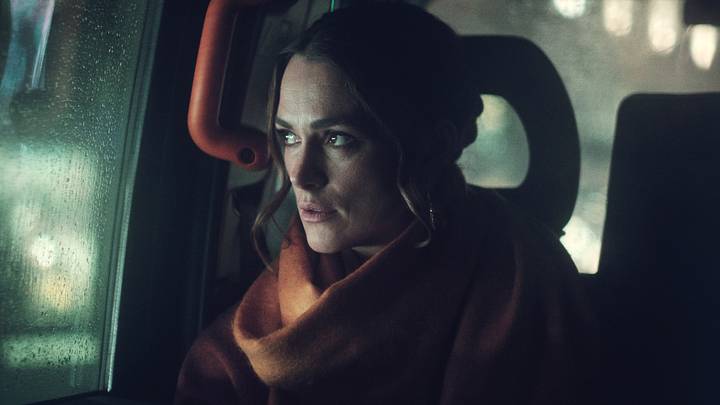
There are several reasons the audience may accept a plot that would collapse under a strict logistical audit:
- Character motivation stays readable. Even when the plan is elaborate, viewers can usually identify what Helen, Sam or Reed wants and what they fear losing.
- The show signals its heightened tone. Comedy and action coexist from the beginning, so the series does not suddenly ask the audience to apply a different realism standard.
- Relationships carry the stakes. The most important consequences land in marriages, friendships and loyalties rather than in a technical explanation of how a surveillance operation worked.
- The setting feels specific. Real London locations give the story a sense of place that helps the heightened plot feel grounded.
- The story remembers the damage. Betrayals and violence change what characters can say to one another and what they can safely do next.
These strengths do not make every plot turn equally persuasive. Some viewers will still find a particular coincidence too convenient or a character’s escape too easy. That is a fair response. The point is that a series does not need perfect logistics to create satisfying drama. It needs a coherent emotional contract with its audience—and it needs to keep honoring that contract.
Where the show risks asking too much
The same speed that makes Black Doves compulsive can also leave practical questions unanswered. How does a covert organization maintain so many layers of secrecy? How often can operatives move through public spaces without drawing attention? How much institutional access can one person plausibly exploit? These questions are not irrelevant. They become a problem when the show uses convenience to avoid a consequence that should matter.
Season 2 partly addresses this by widening the organization’s world. Netflix’s locations and season guides describe a network with handlers, executives, archives, safe houses and agents embedded in powerful households. The more the show reveals about how the Black Doves operate, the more it gives viewers a framework for understanding the organization. The framework does not need to be a complete operations manual, but it should be consistent enough that the audience can anticipate what the organization can and cannot do.
The show is most vulnerable when a twist depends on characters behaving less intelligently than the story has taught us they are. A clever operative can be surprised, outmaneuvered or emotionally compromised; they should not become inexplicably careless just because the next scene needs them in danger. The distinction is small but crucial. A character’s mistake feels dramatic when it grows out of fear, pride, loyalty or exhaustion. It feels mechanical when it exists only to move the plot.
The verdict: a ridiculous ride with a recognizable human core
The preposterous plot works because Black Doves knows that viewers are not measuring every scene against a real intelligence service’s standard operating procedure. They are watching to see whether Helen can keep the people she loves safe, whether Sam can escape the life that keeps pulling him back, and whether Reed’s past will finally catch up with her. The logistics matter, but the emotional arithmetic matters more.
That is not a free pass for lazy plotting. The series still needs clear motivations, consequences and internal rules. But its greatest strength is the way it makes an outrageous spy story feel personal. The world may be exaggerated; the fear of losing a family, the cost of a betrayal and the difficulty of leaving a violent life behind are not. Viewers forgive the impossible logistics when the human consequences feel real.
Frequently asked questions
Is Black Doves meant to be realistic?
It uses recognizable political and London settings, but it is a heightened spy thriller rather than a documentary-style procedural. Its main focus is character, loyalty, secrecy and consequence.
Why do viewers accept the coincidences in Black Doves?
The coincidences are easier to accept when they expose existing conflicts or force characters into difficult choices. The emotional cause-and-effect often matters more than strict operational realism.
Does Black Doves Season 2 explain how the organization works?
Season 2 reveals more about handlers, executives, agents and the organization’s internal power structure, while leaving some operational details deliberately unexplained.
Where was Black Doves Season 2 filmed?
Netflix identifies locations across London, including St. Mary le Strand, Somerset House, Battersea Park, the National Theatre and Trafalgar Square, with additional settings beyond the capital.
Does the Season 2 finale resolve Helen and Wallace’s relationship?
No. The finale brings them to an honest conversation about Helen’s identity and secret work, but it ends before the full discussion is shown.
Where can I watch Black Doves?
Black Doves is available on Netflix. Visit the official Netflix series page for current availability in your region.


