

Helen Webb’s children have lived close to the danger of her secret life without being allowed to understand it. In Black Doves Season 2, that distance becomes impossible to maintain. Their trusted nanny, Marie, is revealed as a covert operative whose betrayal puts the children directly in danger. Helen and Sam get them out safely, but the rescue does not answer the harder question waiting at home: what does a mother tell two children when the person they trusted to care for them was part of a plot against their family?
The series does not show Helen having that full conversation with Ollie and Jacqueline. The finale’s final conversation is with Wallace, not the children, and even that exchange stops before Helen’s complete confession. That distinction matters. The children’s emotional aftermath is an open story question, not a scene the show has already resolved. The most compelling way to read the title’s promise is as a question about the next stage of Helen’s double life: can she protect her children without continuing to build their family life around omissions?
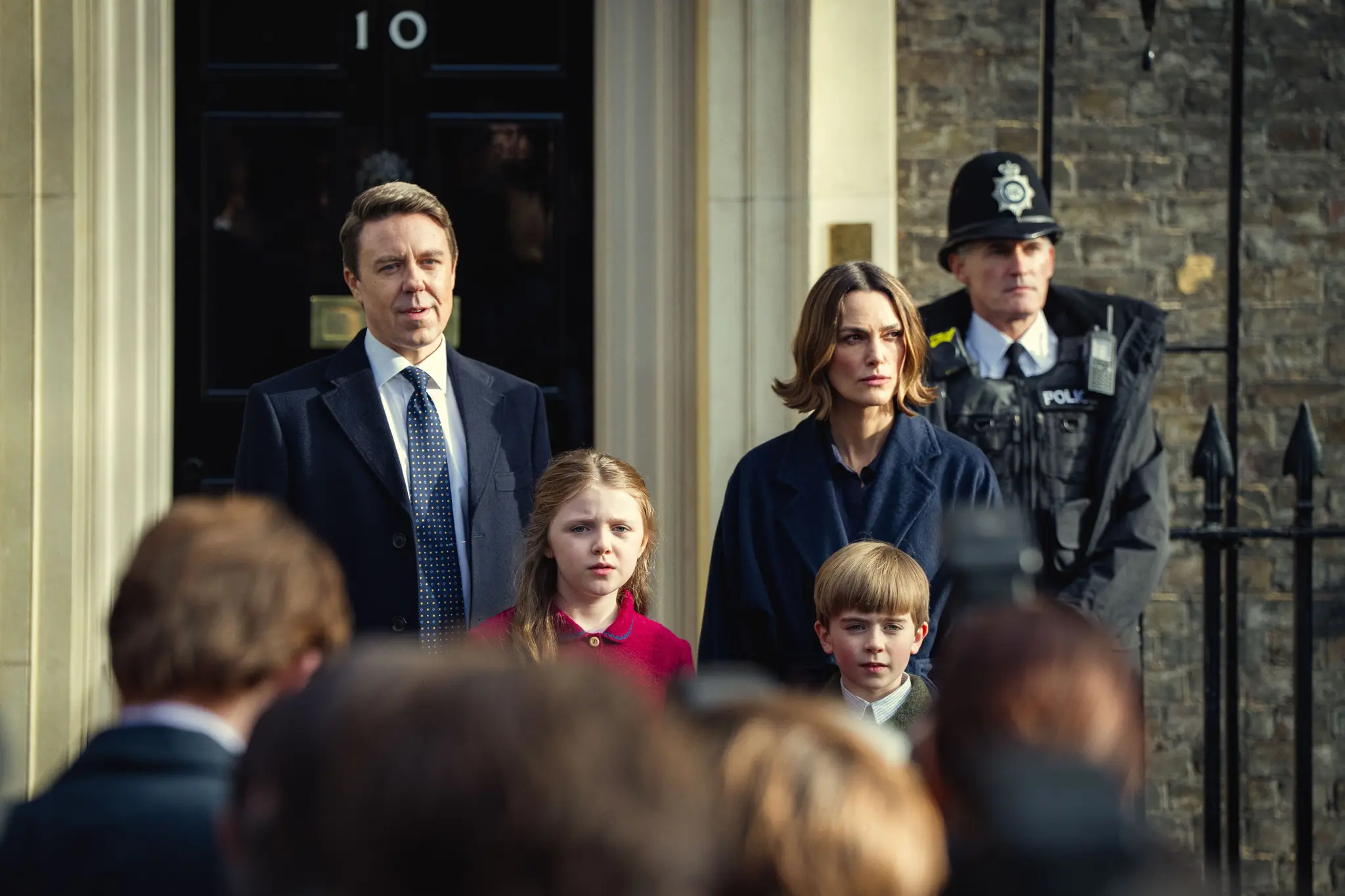
What the finale actually leaves unresolved
Season 2’s finale makes the children a target in Vita’s attempt to force Helen to kill Wallace. Marie, the family’s longtime nanny and a covert asset inside Helen’s home, has helped put them in danger. Helen and Sam reach them at London Zoo, confront the threat and get the children out. Netflix’s official ending explainer confirms Marie’s role and death, while the episode’s closing scenes turn toward Helen and Wallace’s relationship rather than showing a family debrief with the children.
That omission is deliberate in dramatic terms. The season ends on the threshold of disclosure. Wallace knows that the life he thought he shared with Helen was built around significant secrets. He asks her to begin with her name, and the episode cuts away before she gives the full account. The show leaves the audience with a larger question about how the truth will reshape the household. If Helen has not yet finished explaining herself to her husband, the children’s version of the truth is even further away.
It would be inaccurate to say that Ollie and Jacqueline already know Marie was a Kestrel asset, that Helen is a Black Doves operative, or that the series depicts Helen telling them those facts. What viewers do know is that the children were endangered, that the nanny they trusted was involved, and that their mother intervened to save them. Everything beyond that—what they were told afterwards, what they remember, and what Helen plans to explain—remains open.
Marie’s betrayal makes the conversation more complicated than a simple warning
For the children, Marie was not an anonymous enemy. She was part of the ordinary rhythm of home: a familiar adult entrusted with their care. That is what makes the betrayal emotionally different from a stranger’s attack. A parent can tell a child to be careful around unknown people; it is much harder to explain that someone who helped make the home feel safe was secretly working against the family.
Helen would have to navigate two truths at once. Marie did betray the family and help expose the children to danger. But she was also a person the children may have known, liked and relied on. A conversation that simply labels her a monster might not answer the children’s practical questions: Was any of the care real? Were they ever safe with her? Did their parents know? Could it happen again?
The series has not supplied Helen’s answers. A plausible next step would be a careful, age-appropriate explanation that does not burden the children with operational details. That is an interpretation of what responsible parenting might require in this fictional situation, not a confirmed script decision or a claim about what Helen has already said.

How much truth can Helen tell without making the children carry it?
Helen’s instinct is to control information. Her work depends on knowing what to reveal, what to conceal and when to change the subject. Those habits may help her survive as an operative, but they are a poor foundation for rebuilding trust at home. The children do not need a briefing on Black Doves, Kestrel or the political intelligence trade. They do need a truthful account of the danger that reached them and reassurance grounded in actions rather than promises.
There is a difference between protecting children from adult detail and asking them to live inside a false explanation. Helen could avoid describing the violence while still acknowledging that Marie was not who the family believed her to be, that the children were put at risk, and that the adults are changing how they keep them safe. Such a conversation would preserve boundaries without pretending that nothing happened.
But Helen faces a harder problem: her secret is not limited to one incident. Her identity, her work for the Black Doves and the political position of her husband are all connected. If she tells the children only that one dangerous person has been removed, she may leave them with a reassuring explanation that becomes harder to maintain as Wallace’s questions grow. If she tells them everything, she risks transferring a burden they are too young to carry. The show has not revealed where Helen will draw that line.
Wallace’s discovery changes the family’s future
The conversation Helen must eventually have with her children cannot be separated from the conversation she has yet to finish with Wallace. The finale gives the marriage a new starting point: Wallace knows Helen has used another name and lived a life he did not understand. His request to begin with her name signals that he wants a coherent account, not another partial reassurance.
That moment could change the family’s practical arrangements as much as its emotional atmosphere. Wallace is now prime minister, which brings security protocols and public scrutiny into the family home. Netflix’s Season 2 overview describes Helen as a devoted mother and covert operative whose roles are becoming harder to keep separate. The family is no longer dealing only with the private consequences of a secret affair or a hidden job; its safety is entangled with political power.

Wallace may become an ally in protecting the children, but the series has not yet shown how much he knows or what boundaries he will demand. His decision to cover for Helen when MI5 questions him is significant, but it is not the same as full understanding. A parent-to-parent agreement about safety may need to come before a shared explanation for the children.
Helen’s maternal instinct is real, but it does not erase the danger she brings home
One of the series’ strongest tensions is that Helen’s love for her children is not presented as a disguise. She acts decisively when they are threatened. The zoo rescue makes that instinct visible in the most immediate way: she does not treat their safety as an abstract concern or a secondary consideration in the spy game.
Yet maternal devotion does not automatically neutralize the risks created by her work. Helen’s proximity to political secrets, covert organizations and violent operatives is part of the reason the family becomes vulnerable. The same skills that help her respond to danger also keep her inside the world that produces it. That contradiction is central to the character, and the children’s eventual conversation with her could force it into the open.
It would be too simple to frame Helen as either a heroic mother who can do no wrong or a selfish spy who does not care about her family. The story gives evidence of genuine love and of choices that endanger the people she loves. A serious conversation with the children would have to reckon with both, even if the children receive only a small, age-appropriate portion of the truth.

What the children might need to hear first
If the series returns to this family thread, the first conversation need not be a complete account of Helen’s past. It could begin with the facts that affect the children directly: Marie was involved in something dangerous; the children were not responsible for what happened; their parents are taking steps to keep them safe; and they can ask questions without being blamed for asking.
That approach would also give the writers room to show the children reacting as individuals rather than as props in a spy plot. One might be angry about being misled, another frightened by the loss of a familiar caregiver, and both might have questions that adults cannot answer immediately. Those are possibilities, not established character reactions. The show has not yet given the twins a post-rescue scene in which they process the betrayal.
Most importantly, Helen would need to avoid promising that danger can never return. In her world, that guarantee would be impossible to keep. A more honest reassurance would focus on what the adults will do differently, who the children can turn to, and how they will be told if a change affects their safety.
Why this may become one of Helen’s hardest tests
Helen has spent much of her life managing what other people know about her. With Wallace, that strategy has reached its breaking point. With her children, it may be even harder to abandon because the impulse to protect them can make secrecy feel like kindness. But children can sense when the adults around them are withholding something, especially after a frightening event that changes the feel of home.
The most meaningful version of this storyline would not require Helen to reveal every operational detail. It would require her to stop treating silence as the only form of protection. She may be able to keep the children away from the mechanics of espionage, but she cannot rebuild their sense of safety through a story that denies what happened.
That is why the title’s promised conversation matters. It is not simply about explaining a nanny’s betrayal. It is about whether Helen can begin to separate being a protective mother from being the person who controls every piece of information in the household. Season 2 ends before she answers that question. The conversation with her children remains one of the story’s most important unresolved emotional consequences.
Frequently asked questions
Does Helen tell her children that Marie was a spy?
The series does not show that conversation. It confirms Marie was a covert asset who worked with Vita and endangered the children, but what Helen tells Ollie and Jacqueline afterwards is left unresolved.
Who are Helen’s children in Black Doves?
Helen and Wallace have two children, Ollie and Jacqueline. They are part of the family life Helen tries to protect while maintaining her covert work.
Were Helen’s children aware that Marie was dangerous?
Netflix’s finale explainer says the children were endangered by Marie’s role, but the show does not establish that they understood the full threat while it was happening.
Does Wallace know Helen’s real identity by the end of Season 2?
Wallace has learned that Helen’s life contains major secrets and asks her to start by explaining her name. The finale cuts off before she gives him the full story.
Is Helen’s conversation with her children shown in the finale?
No. The finale closes on the beginning of a conversation between Helen and Wallace. A separate conversation with the children has not been shown.


