

Helen Webb’s most unsettling skill in Black Doves is not simply that she can kill. It is that she can move from lethal work back into the rituals of respectable domestic life without appearing to leave a trace. One moment she is making decisions that determine who lives and who dies; the next she is standing beside her husband, the prime minister, performing the role of a polished political spouse. Season 2 makes that contrast harder to ignore. The question is no longer whether Helen can maintain two identities. It is what those identities are doing to the same person.
The strangeness of Helen’s double life is the emotional engine of the series. She is not a conventional assassin hiding behind a fake marriage, nor is she simply a mother whose past occasionally interrupts family life. Her marriage, motherhood and covert work are all real parts of her existence. That is precisely why the collisions between them feel so disturbing. The person who can show tenderness at home is also the person who has learned to treat violence as a practical answer to a problem.
A political wife whose other job is lethal
Helen’s cover is unusually demanding because it is not a cover she can simply clock out of. Wallace is not an invented contact or a temporary mark: he is her husband, and their children are part of the family life she wants to protect. When Wallace rises to become prime minister, the household moves into the most visible address in British politics. Helen’s public role becomes more exposed at exactly the moment her secret work becomes more dangerous.
Netflix’s official Season 2 description identifies the central contradiction plainly: Helen continues passing national secrets to the covert organization she serves while Wallace prepares to become prime minister. The official cast guide describes her as a political spouse, devoted mother and covert operative—three roles that are increasingly difficult to keep separate. The drama comes from the fact that none of these identities is merely an act. Helen has genuine attachments inside the life she is also using as cover.
That makes the title’s contrast—murdering people, then returning as the prime minister’s wife—more than a sharp bit of irony. It captures the mental switching that the show asks viewers to witness. Helen has to move between the intimacy of family routines and the cold decisions of espionage. A dinner, a public appearance or a conversation with Wallace can carry the same tension as an operation because the consequences of her secret work are always close by.
Season 2 removes the distance between Helen and political power
In the first season, Helen’s marriage to a rising politician already created a dangerous overlap between private life and national affairs. Season 2 raises the stakes by placing Wallace at the center of government. The family’s move into the orbit of 10 Downing Street gives Helen access to political information, but it also makes the consequences of her betrayals larger. She is no longer merely a spy married to someone who hopes to wield power. She is the spouse of the person who holds it.
Netflix’s location guide notes that the move to 10 Downing Street puts Helen’s double life under greater scrutiny. Showrunner Joe Barton describes her work as more important and the risks and betrayals as bigger. This is a useful way to understand the season’s pressure: Helen’s methods may be familiar, but the environment around her has changed. Her old ability to compartmentalize is being tested by a public role that leaves fewer places to hide.
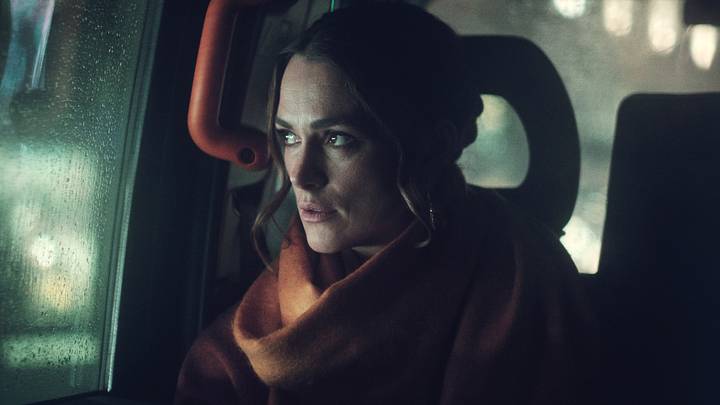
The political setting also changes how viewers interpret her choices. A lie told to Wallace is no longer only a marital betrayal; it can affect the security of the government. Information she passes to the Black Doves may have consequences far beyond the organization. Her personal decisions and national consequences are now intertwined, and she cannot reliably predict where one ends and the other begins.
Violence does not disappear when Helen walks through the front door
One of the show’s most effective ideas is that Helen’s domestic scenes do not erase the operative. She may be affectionate with her children and emotionally invested in Wallace, but those attachments do not make her harmless. Nor does her ability to kill mean that every feeling she expresses at home is false. The discomfort comes from accepting that both sides can be genuine at once.
This is why Helen is more compelling than a standard secret-agent character whose family life exists only to raise the stakes. Her family is not just a weakness villains can exploit. It is a real part of her identity, and protecting it is one of her strongest motivations. Yet the work she does in the name of protection can also endanger the very people she wants to keep safe. The contradiction is not a writing mistake to solve; it is the central problem the character lives with.
Season 2 makes that problem concrete through Marie, the Webb family’s longtime nanny and a covert asset inside Helen’s home. Netflix’s finale explainer confirms that Helen kills Marie after discovering her cooperation with Vita and the danger she poses to the children. The scene is especially unsettling because the conflict takes place inside the family’s intimate world. The nanny is not an anonymous target in a foreign safe house. She is someone who has been part of the household and helped raise the children.

Helen’s decision can be understood as an attempt to protect her children, but understanding a motive is not the same as excusing an act. The series leaves room for both reactions: the audience can recognize the threat Marie represents and still feel the horror of Helen killing someone who belonged to the family’s daily life. That emotional double vision is what the show asks of us.
Wallace’s rise makes the marriage itself part of the operation
For years, Helen has been able to keep Wallace at a distance from the full truth. Their marriage gives her a credible public identity, but it also demands constant emotional management. She has to decide what to reveal, what to conceal and how much of herself can safely appear in front of him. As Wallace becomes prime minister, the gap between what he believes and what Helen knows becomes more consequential.
The finale pushes that gap toward a breaking point. Netflix’s official explainer says Helen is pressured to kill Wallace while their children are used as leverage. Instead, she fires at the bulletproof car window, saving him. She tells him more truth than she has before, but does not explain everything. Wallace later protects her when MI5 asks about her whereabouts, then asks to begin with her real name. The episode ends before she gives the full confession.
That ending matters because it does not magically resolve the double life. Wallace’s growing awareness changes the marriage, but the audience is not shown the entire conversation that follows. It would be inaccurate to claim that he learns every detail by the end of Season 2. The cliffhanger leaves the central question open: can a relationship built around concealment survive once the concealed identity is finally named?

Sam sees the operative Helen cannot always hide
Sam’s friendship with Helen offers a different kind of intimacy from her marriage. He knows the violence, the compromises and the history that Wallace has not been allowed to see. With Sam, Helen does not need to maintain the same image of a political spouse. Their connection can be blunt and darkly funny because both understand the world they have chosen—or been pulled into.
That does not make their bond uncomplicated. The finale gives them a painful farewell as Sam leaves for Italy, while promising that Helen can call if she needs him. Netflix’s account of the ending emphasizes how close they are to their whole selves around each other. Their relationship exposes the cost of Helen’s double life in a way that her public marriage cannot: Sam knows the person behind the performance, but he cannot make the consequences vanish.
Sam also provides a reminder that Helen is not the only person whose identity has been shaped by violence. Their friendship is built on shared history and mutual recognition, not innocence. That makes it a refuge of sorts, but not a clean escape from the world they inhabit.
Is Helen a devoted mother, a killer, or a political operator?
The most honest answer is that she is all three. The series does not require viewers to choose one identity as the “real” Helen and dismiss the others as a disguise. Her love for her children can be sincere while her work remains morally disturbing. Her loyalty to the Black Doves can be strategically useful while also exposing her family to danger. Her marriage can contain genuine affection and serious deception at the same time.
This layered characterization is what makes the show’s title-like contrast so effective. Returning to the prime minister’s home after a killing is not a reset button. Helen carries the action with her, whether or not the people around her can see it. The ordinary details of domestic life become charged because the audience knows what she has done and what she is capable of doing next.

It is also important not to mistake the show’s stylish action for moral approval. The series can make violence look choreographed, fast and even darkly comic. But the emotional aftermath remains. Marie’s death, Wallace’s suspicion and the danger surrounding the children are not erased by a clever line or a briskly staged fight. The show’s tonal mixture works best when the humor makes the violence more unsettling rather than less serious.
What the double life means for Helen’s future
By the end of Season 2, Helen’s old arrangement is becoming impossible to maintain. Wallace knows that her identity is not what he believed. Reed’s view of Helen is also changing: Netflix’s finale explainer says she is no longer seen only as a political asset, but as someone who could help shape the organization’s future. Helen may have more influence inside the Black Doves, but that possibility comes with a different kind of exposure.
Her next challenge is not simply to keep both lives running. It is to decide what happens when the people in each life begin to know about the other. Wallace’s questions threaten the marriage’s old foundations. The Black Doves’ losses and restructuring may offer Helen a larger role, but also deepen her involvement in the work that has already damaged her private world.
That is the real strangeness of Helen Webb’s double life: she has spent years treating separation as a survival strategy, but the two halves of her existence have never been truly separate. Season 2 brings them closer together until the boundary is almost gone. She can return to the prime minister’s home, but she cannot return to being the person Wallace thought he married—or to a version of herself untouched by what she has done.
Frequently asked questions
Why is Helen Webb’s double life so strange in Black Doves?
Helen is both a devoted family member and a covert operative who uses violence and trades government secrets. The unsettling contrast is that her domestic attachments are genuine, even as her actions can put the same family at risk.
Does Helen kill Marie in Season 2?
Yes. Netflix’s official finale explainer confirms that Helen kills Marie after discovering that the Webb family’s longtime nanny has been working with Vita and endangering the children.
Does Wallace learn Helen’s real identity?
He learns that Helen has been hiding a major part of her life and asks her to begin with her real name. The finale ends before the full confession is shown, so viewers do not see him learn every detail.
Does Helen stop being a spy when Wallace becomes prime minister?
No. Season 2 continues to show her passing national secrets to the Black Doves while Wallace rises to the premiership. His new position makes her covert work more dangerous and more exposed.
Is Helen a good person or a villain?
The series deliberately avoids a simple answer. Helen can act out of love and still cause serious harm. Her motives may be understandable in some moments, but they do not automatically justify her choices.
Where can I watch Black Doves Season 2?
Black Doves is available on Netflix. Visit the official Netflix page for the series and regional availability.


