
Black Doves has a distinctive way of moving from a conversation about loyalty, government secrets, or a damaged friendship straight into a sudden act of violence. The shift is not an accidental tonal wobble. It is one of the series’ defining creative choices: espionage is treated as serious work, while the people doing it often behave as if a gunfight is simply another item on a crowded day’s schedule.
Quick answer: Black Doves mixes intense spy talk with casual violence by making its characters discuss betrayal, politics, and personal loyalty in dry, everyday language, then placing those conversations beside abrupt, sometimes absurdly choreographed bursts of action. The contrast creates dark comedy, but it also exposes how normalized violence has become inside the characters’ professional world.

Why the tonal contrast is central to Black Doves
Many spy dramas use violence to signal that a situation has become serious. Black Doves often reverses that relationship. A scene can already be serious because of what the characters are saying: a handler is missing, an organization is being destabilized, a political relationship is under strain, or a friend is being pulled into another dangerous job. The violence arrives not as a new genre but as the practical punctuation of a world that has been dangerous all along.
That approach makes the dialogue especially important. Characters do not always announce the danger with solemn speeches. They trade observations, make jokes, complain, flirt, or argue about ordinary details while the audience understands that a threat may be only seconds away. The result is a kind of conversational whiplash: the words sound familiar and human, while the circumstances are anything but ordinary.
The contrast also stops the series from becoming relentlessly grim. Humor gives the audience a way into the characters’ personalities, while the violence reminds viewers that their work has real consequences within the story. Neither side completely cancels the other.
Helen and Sam: intimacy in the middle of danger

Helen Webb and Sam Young are the clearest expression of this balance. Their friendship is built around trust, shared history, and an unusually frank understanding of each other’s flaws. They can talk with the ease of old friends even when the subject is a dangerous assignment. That familiarity makes the violence around them feel both more surprising and more revealing: these are not strangers entering a combat zone, but people whose personal bonds have grown alongside their capacity for harm.
Helen’s double life adds another layer. She has to maintain the appearance of a political spouse and parent while continuing to serve a covert organization. Her public conversations and private work operate by different rules, yet both require performance. A polite exchange can be as calculated as a field operation. When violence breaks into that carefully managed life, it exposes how little separation she can truly maintain between the roles.
Sam’s humor is different. His weary manner and self-deprecating remarks can make him seem almost detached, but the series repeatedly connects his actions to loyalty and emotional damage. His ability to move through violent situations does not mean that he is unaffected by them. The gap between his casual delivery and his personal cost is part of what makes the character compelling.
The assassins make violence look like workplace routine

The series’ supporting operatives sharpen the workplace quality of its violence. Eleanor and Williams are not presented as solemn action icons who pause to explain every tactical decision. Their partnership is full of friction, teasing, and personal chemistry. They can move from banter to lethal efficiency with very little ceremony. That contrast makes them funny, but it also suggests how thoroughly their profession has shaped their idea of an ordinary day.
Laila brings a different flavor of nonchalance. Netflix’s cast guide describes her as quick-witted and chaotic, and Ambika Mod has discussed the character’s unusually matter-of-fact attitude toward killing. The important distinction is that Laila’s casualness is a character trait, not proof that the show believes violence is harmless. Her attitude unsettles the people around her precisely because it is so relaxed.
Reed, meanwhile, embodies the administrative and strategic side of the same world. She is a handler and power broker, not simply someone who appears when a weapon is needed. Her decisions show that violence in Black Doves is supported by systems: information, money, authority, favors, and the ability to decide whose life is expendable. The calm language of organizational politics can be as chilling as a shootout.
Action that can be shocking, funny, and uncomfortable at once

The show’s action is often staged with a heightened, almost graphic-novel sensibility. The violence can be abrupt, exaggerated, and carefully timed for surprise. A character’s line may land like a punchline just before the scene turns physical. That structure is one reason critics have reached for comparisons to action cinema and dark comedy when describing the series.
But a joke does not automatically make a violent moment comfortable. The suddenness can be funny in a formal sense—the timing, the mismatch between words and action, the sheer audacity of the scene—while the act itself remains disturbing. This tension is important. If every violent beat were played as a gag, the show would lose its stakes. If every beat were treated with solemn realism, it would lose much of its distinctive voice.
Season 2’s expanded cast gives the writers more ways to vary that rhythm. Helen and Sam can carry emotional scenes; Eleanor and Williams can turn a tense assignment into a chaotic double act; Laila can puncture a room’s seriousness; and Reed can make a quiet decision feel threatening. The show can change tone without relying on one character to do all the work.
Why the comedy does not erase the consequences
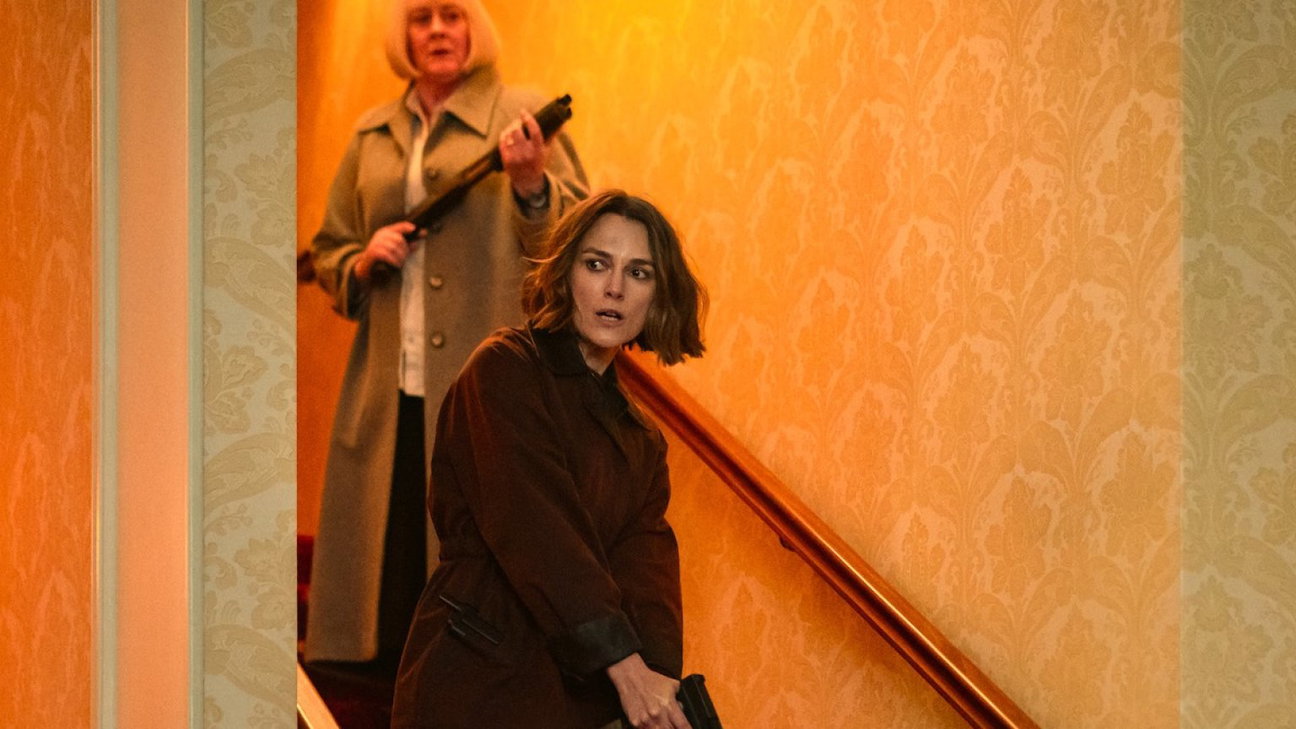
The strongest version of this tonal mix keeps the aftermath in view. Violence changes relationships, creates obligations, and narrows the characters’ choices. Sam’s loyalty can put him in danger; Helen’s professional decisions can threaten the family life she is trying to preserve; and the organization’s internal power struggles make it clear that a successful operation does not necessarily produce a stable outcome.
That is also where the series invites criticism. The speed and frequency of the action can make some characters appear unusually protected from consequences. Viewers who want a grounded procedural account of injury, trauma, or law enforcement may find the show’s heightened style too breezy. The Guardian’s review, for example, notes the way repeated gunfights can reduce the sense of jeopardy, even while recognizing the show’s entertaining cast and moments of poignancy.
That criticism is worth taking seriously rather than dismissing. The series is not aiming for documentary realism, but stylization still has a responsibility to make its stakes legible. Its best scenes do this by allowing a joke to reveal character while leaving the emotional cost intact. Its weaker moments risk making danger feel like decoration.
What critics are responding to
Reviews of the second season have repeatedly identified the same unusual combination: fast-moving espionage, gruesome action, dry comedy, and genuine affection between characters. The Times’ review, quoted by Rotten Tomatoes, called the season “funny and gruesome,” while TheWrap compared its pleasures to a Bond adventure filtered through Quentin Tarantino. Those descriptions point to the show’s defining contrast rather than a simple claim that it is either a comedy or a thriller.
The Independent has also highlighted the series’ very British dry humor alongside its bloody action, while RogerEbert.com has emphasized the way the show connects espionage to the emotional costs of relationships. Taken together, the reviews suggest that the tonal mixture is not merely a novelty. It is the feature that makes the series recognizable—and the element that determines whether a viewer finds it exhilarating or too glib.
Final verdict: the danger is serious, the delivery is not always solemn
Black Doves works because its characters rarely behave like they are trapped in a conventional spy-thriller script. They are friends, partners, parents, colleagues, rivals, and damaged professionals. They make jokes because they know one another; they speak casually because danger has become routine; and they sometimes treat an extraordinary act as if it were just another problem to solve.
The result is a series where intense spy talk and casual violence are not opposites. They are two expressions of the same world. The humor makes the characters feel alive, the action gives their choices immediate force, and the emotional fallout reminds viewers that a clever line cannot undo what happened. When the balance holds, Black Doves is both sharply entertaining and unexpectedly human.
Frequently asked questions
Is Black Doves a comedy or a spy thriller?
It is primarily a spy thriller with strong dark-comedy elements. Its espionage plots and violent action are presented alongside dry dialogue, absurd timing, and character-driven humor.
Why does Black Doves make violence feel casual?
The characters work in a world where covert operations and lethal force have become routine. Their relaxed language highlights how normalized that environment is, while the story’s emotional consequences show that the violence still matters.
Which characters best represent the show’s dark humor?
Sam, Helen, Eleanor, Williams, and Laila each contribute a different kind of humor. Sam and Helen use familiar banter, Eleanor and Williams bring chaotic partnership energy, and Laila often treats danger with striking nonchalance.
Is the violence in Black Doves realistic?
The series favors stylized action and heightened genre storytelling over strict realism. Some critics have questioned how easily characters survive repeated confrontations, while others praise the show’s kinetic and comic approach.
Where can viewers watch Black Doves Season 2?
Black Doves Season 2 is available on Netflix. Check the official Netflix series page for availability in your region.
Sources and further reading
- Netflix Tudum: Black Doves Season 2 — cast, plot, and series overview
- Netflix Tudum: Black Doves Season 2 cast and characters
- TheWrap: Black Doves Season 2 review
- The Guardian: Black Doves review
- Rotten Tomatoes: Black Doves Season 2 critics’ reviews
- The Independent: Black Doves Season 2 review
- RogerEbert.com: Black Doves Season 2 review
- Stylist: Black Doves Season 2 first-look coverage
- Digital Spy: Black Doves Season 2 guide
By Shivam Das


