

Mrs. Reed has spent much of Black Doves presenting herself as the person who knows what every dangerous situation requires. She is controlled, strategic and rarely willing to expose the feelings beneath her decisions. Season 2 complicates that image by revealing the history she has kept buried: during an undercover operation in East Berlin, Reed had a daughter, Vita, and then left her behind. What Reed may have understood as a way to keep a child away from espionage and violence became, in Vita’s memory, the defining act of abandonment.
That contradiction gives Reed one of the season’s most affecting storylines. Her decision can be understood as an attempt to protect Vita from a brutal world, but the intention does not erase the damage. Vita grew up without the mother she wanted, without the full truth about her origins and eventually with a deep sense of grievance. Reed, meanwhile, continued living with the consequences of a choice she never truly resolved. The series does not ask viewers to choose one woman’s pain and dismiss the other’s. It makes both part of the same family tragedy.

What Reed’s past in East Berlin reveals
Netflix’s official Season 2 ending explainer confirms that Reed operated undercover in East Berlin in 1988. Her codename was Wallflower, and the mission placed her inside the political action group Kestrel. During that five-year operation, she had a daughter, Vita, with Kestrel operative Franz. The assignment eventually turned violent: Franz killed a Black Doves agent to save Reed, and a young Vita walked in on the aftermath before running away in fear.
Those details matter because Vita’s childhood did not begin with a simple family disagreement. She was born into a world in which her mother’s identity, loyalties and work were dangerous secrets. The violence surrounding Reed’s operation was not an abstract threat. It became part of the child’s earliest experience, and it shaped the circumstances in which Reed made the decision that would define their relationship.
Vita was raised in a Soviet orphanage without a name, according to Tudum’s account of the finale. That detail makes the word “protection” especially difficult. Even if Reed believed that removing her daughter from the spy world was the least dangerous option available, the result was a childhood marked by separation and the loss of identity. Protection that a child cannot understand—and that leaves her alone—can feel indistinguishable from rejection.
Why Reed may have believed leaving Vita was an act of love
The series gives viewers a reason to consider Reed’s decision through the logic of her profession. Reed knows what happens to people caught between intelligence organizations, political factions and covert operations. She has seen how quickly an assignment can turn lethal. If she believed that remaining with her would expose Vita to further danger, leaving her behind may have seemed like the only way to remove the child from the immediate threat.
But the story does not present Reed’s reasoning as a clean moral defence. The decision also meant that Reed continued her life inside the organization while Vita grew up without her. Reed may have told herself that distance was safer, but she also avoided the ordinary responsibilities and emotional demands of motherhood. The show leaves room for the possibility that duty, fear and self-preservation were mixed into the choice.
That mixture is what makes Reed compelling. She is not simply a cold spymaster who suddenly discovers that she has feelings. Her love for Vita appears to have survived the years, but it existed alongside decisions that denied Vita the chance to know her mother. Reed’s tragedy is not that she felt nothing. It is that whatever she felt did not translate into the care Vita needed.
Vita experienced the decision as abandonment
From Vita’s perspective, the explanation Reed might give is not enough. She was left to grow up in an institution, separated from her mother and deprived of the history that could have helped her understand why it happened. Netflix’s finale explainer says Vita blamed Reed for abandoning her and spent years plotting revenge against her mother. The grievance is not difficult to understand, even as the scale and consequences of Vita’s retaliation become devastating.
Vita’s anger also exposes the limits of Reed’s control. Reed could manage an operation, conceal her identity and shape the information available to colleagues. She could not control the story her daughter built from the absence. In the years when Reed was protecting her secrets, Vita was making meaning out of the one fact she could see: her mother was gone.

That difference in perspective is central to the title’s idea of a “loving” abandonment. The word loving describes the motive Reed may have believed she was acting on. Abandonment describes what Vita actually experienced. One does not cancel the other. The emotional force comes from the distance between the intention and the result.
How Vita’s identity changes the Season 2 conspiracy
For much of the season, the mystery around Katia Chernov encourages viewers to question who she is and what she wants. The finale reveals that Katia is actually Vita, Reed’s long-lost daughter. Her plan is not simply a personal confrontation with her mother. She becomes the central force behind an attempt to destroy the Black Doves, using the organization’s own history and vulnerabilities against it.
Vita’s revenge is aimed at Reed, but the damage spreads far beyond their relationship. The attack on Black Doves headquarters leaves multiple people dead and the organization badly weakened. Vita also engineers a crisis around Helen and Wallace, seeking to force Helen into killing the prime minister and thereby expose the organization to scrutiny. Her private wound has become an operation with national and institutional consequences.
This is one of the season’s sharpest ideas: the personal histories that intelligence organizations bury do not necessarily stay buried. The organization treated Reed’s past as something that could be compartmentalized. Vita turns that past into leverage. The people who believed they could separate family from work discover that the two have been connected all along.
The final reunion: love arrives too late to repair the damage
After the violence at headquarters, Vita is fatally wounded. She retreats to an empty floor, where Reed finds her. Netflix’s account of the finale describes Reed telling her daughter that she never stopped loving her as Vita quietly dies. It is a devastating moment because it gives Reed the chance to say what she may have believed for years, but not the time to build a relationship around those words.
The scene does not turn the past into a misunderstanding that can be fixed with one confession. Vita has lived with the consequences of Reed’s absence. Reed has lived with the secret and the decision. Their final exchange can reveal love, but it cannot return Vita’s childhood or undo the years in which she felt discarded.
That restraint is important. A less complicated drama might use the reunion to absolve Reed or make Vita’s revenge seem like a simple mistake. Black Doves leaves the grief intact. Reed’s love can be sincere, and Vita’s pain can remain justified. The tragedy is that both truths arrive together at the end.
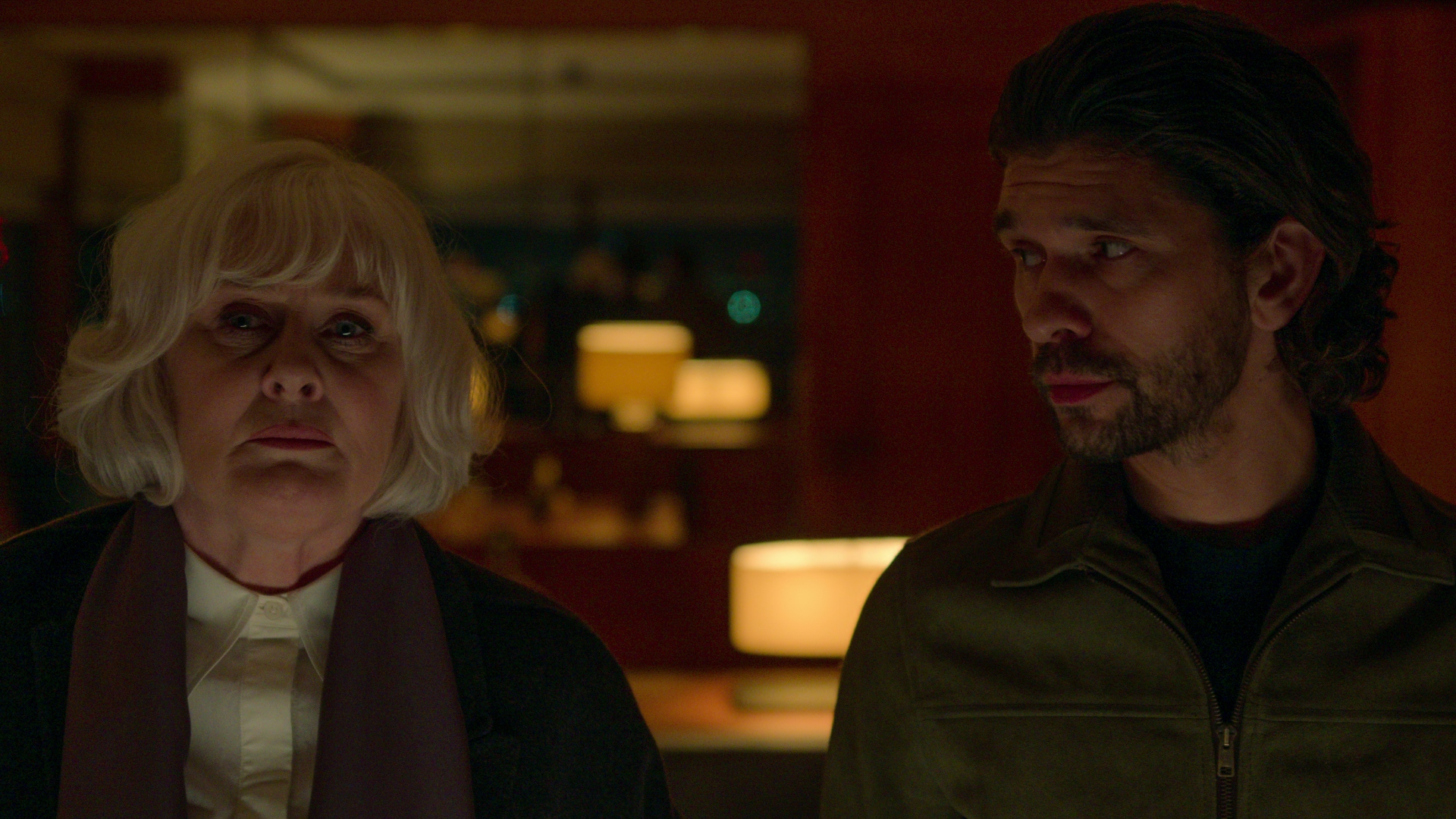
What the story says about Reed as a mother and a handler
Keira Knightley has described Helen’s relationship with Reed as a toxic maternal dynamic. In a Radio Times interview, Knightley said she had long viewed Reed as a kind of mother figure for Helen—one who repeatedly fails to give Helen what she wants. She also noted the parallels between Reed’s past and Helen’s determination to keep her own children safe. Sarah Lancashire, in the same coverage, described Reed as someone who sees a great deal of herself in Helen.
Those comments offer a useful lens on the season’s family story. Reed has become a maternal authority figure to an agent whose own children are central to her choices. Yet Reed’s history shows how badly that kind of protection can fail when it is shaped by secrecy and control. Helen is trying to prevent her children from being pulled into danger; Reed once made a decision that left her own child to grow up in the aftermath of a dangerous world.
The parallel is not exact. Helen’s circumstances, choices and relationship with her children are different. But the show invites viewers to consider whether the habits that make someone effective in espionage—compartmentalizing, withholding information, deciding what others are allowed to know—can become destructive when carried into family life. Reed’s past is a warning about the emotional cost of treating loved ones as people who must be managed rather than trusted.
Why Reed’s “protection” cannot be the whole explanation
It is tempting to describe Reed’s decision as a sacrifice: she gave up her daughter so Vita could escape the dangers surrounding her. That interpretation may capture part of Reed’s thinking, but it is incomplete. It places the emphasis on the mother’s intention and risks overlooking the child’s experience. A decision can be made in the name of love and still leave someone profoundly harmed.
It is equally simplistic to reduce Reed to a villain who never cared. Her final words to Vita and the emotional weight of their reunion suggest that the bond mattered to her. The problem is that love kept at a distance can become almost impossible for the person who needs to receive it. Reed’s feelings did not give Vita a stable home, an honest account of her identity or a chance to grow up with her mother.
That is why the storyline works as more than a twist. It changes how viewers understand Reed’s authority, Helen’s dependence on her and the organization’s habit of treating personal lives as operational liabilities. The past is not simply an explanation for Reed’s icy exterior. It is a record of what her choices cost someone else.
What happens to Reed after Vita’s death?
The finale leaves Reed alive, but not untouched. With the Black Doves headquarters attacked and many members lost, she and Mr. Conteh are among the surviving leaders left to rebuild the organization. Netflix’s explainer also suggests that Helen’s role may evolve: Reed no longer sees her only as a political asset, but as someone who could help shape what the Black Doves become next.
That future is uncertain. Reed has lost the chance to repair her relationship with Vita, and the organization she helped lead has been exposed to a crisis that cannot be solved by returning to business as usual. If the Black Doves continue, Reed will have to carry both the institutional consequences of the attack and the personal knowledge that her daughter died believing she had been abandoned.
For now, the most important outcome is emotional rather than strategic. Reed’s story has moved from the secrets she controlled to the truth she can no longer change. Her decision may have begun as an attempt to keep Vita safe, but the years that followed show why protection without presence, explanation or trust can become another form of loss.
Frequently asked questions
Why did Reed abandon Vita in Black Doves?
Reed was working undercover in East Berlin and had a daughter, Vita, with Kestrel operative Franz. The series frames the decision in the context of a dangerous espionage world. Reed may have believed leaving Vita was the safest option, but the story does not erase the harm caused by the separation.
Who is Vita in Black Doves Season 2?
Vita is Reed’s daughter from her East Berlin undercover operation. She later uses the identity Katia Chernov and becomes the central figure behind the plot against the Black Doves.
Did Reed ever stop loving Vita?
No. In the finale, Reed tells her fatally wounded daughter that she never stopped loving her. The scene confirms Reed’s feelings, but it does not undo Vita’s experience of growing up without her mother.
Why does Vita want revenge on Reed?
Vita blames Reed for leaving her behind. Raised in a Soviet orphanage without a name, she grows up with a deep sense of abandonment and eventually directs that anger against Reed and the Black Doves.
Does Vita survive the Black Doves Season 2 finale?
No. Vita is fatally wounded during the attack on the Black Doves headquarters. Reed finds her before she dies, and the two share a final emotional moment.
What does Reed’s story reveal about Helen?
Reed’s history creates a contrast with Helen’s determination to protect her own children. It also highlights the danger of using secrecy and control as substitutes for honesty and emotional presence in family relationships.


