

Black Doves does not treat its women as exceptions who happen to know how to fight. Its world is built around women who plan operations, pull triggers, manage intelligence networks and make decisions that can ruin lives. That choice gives the Netflix thriller a different energy from the familiar action formula in which a few capable women are added to a story still dominated by imposing male assassins. Joe Barton’s writing is more interested in what happens when women occupy the centre of the criminal and espionage machinery—and when their personalities are as varied, funny, selfish and dangerous as the men traditionally given those roles.
The distinction is visible across the series. Keira Knightley’s Helen Webb is a political wife and covert operative whose domestic life is inseparable from her work. Sarah Lancashire’s Reed runs an organisation with a cold, strategic authority. Gabrielle Creevy’s Williams and Ella Lily Hyland’s Eleanor form a lethal partnership whose bickering can be as memorable as their gunplay. Ambika Mod’s Laila arrives with a brashness and appetite for action that immediately changes the room. These are not interchangeable “strong female characters.” They have different motives, voices, histories and ways of using power.

Why female assassins change the texture of the spy story
Action fiction has often relied on a narrow visual shorthand for danger: size, muscle, physical intimidation and a man who can overpower almost anyone in a room. Black Doves does not need to pretend that physical strength is irrelevant. Instead, it broadens the definition of threat. A character can be dangerous because she reads people quickly, understands the room, knows when to joke, or can make a decision without waiting for permission.
That approach creates more kinds of tension. Helen can use social access and political proximity as effectively as a weapon. Reed can control people through information and institutional authority. Williams and Eleanor can turn teamwork, timing and a shared sense of humour into an advantage. Laila’s unpredictability makes her difficult to anticipate. The series lets these differences matter instead of giving every woman the same action-hero personality.
It is important to be precise about the claim behind this discussion. Public interviews support the idea that Barton and the cast are interested in complex female antiheroes and in widening the show's spy world. They do not establish a verified verbatim statement from Barton that women hitpeople are inherently more interesting than physically imposing men. That comparison is an interpretation of the creative effect of the series, not a direct quotation attributed to him.
Barton’s writing gives women room to be funny, flawed and frightening
One of the most revealing comments about the series comes from Ambika Mod, who plays Laila. In her Radio Times interview, Mod describes the role as enormous fun and notes that roles like this do not often come her way. She also points to the show's female antiheroes as diverse, complex, smart and flawed. Her comments help explain why Laila does not feel like a token addition: she is allowed to be rude, funny, physically capable and morally compromised without the script asking her to apologise for taking up space.
Mod’s description also gets at the show's tonal balance. The women can be violent without every scene becoming solemn. Their jokes do not cancel out the brutality, and their brutality does not erase their comic timing. That mixture is central to the series' identity. A female assassin is not automatically framed as a novelty or as a lesson about empowerment. She is a character in a darkly comic thriller, with all the contradictions that entails.
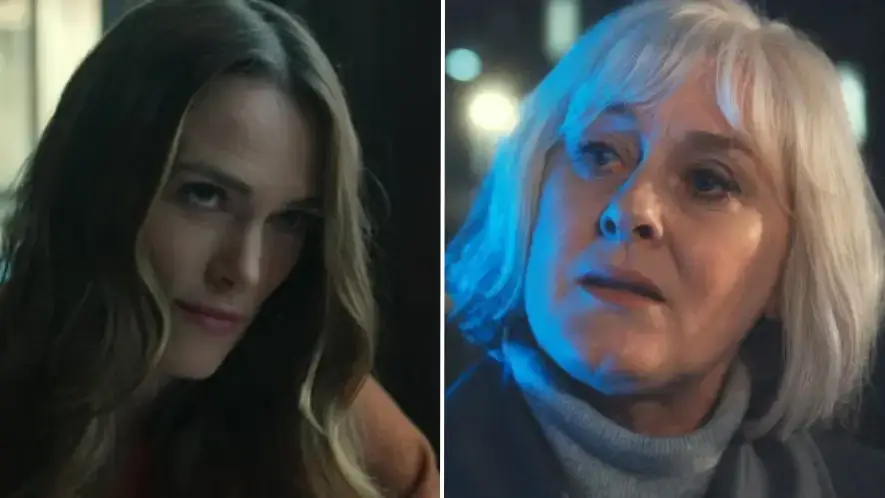
Joe Barton has also described finding the emotional complexity of the characters more interesting than simple moral absolutes. In a GQ interview about the first season, he discussed Sam’s personal code as a kind of life raft: Sam insists that he only kills bad people, while the story challenges the comfort of that belief. That interest in self-justification extends to the women. Helen, Reed and the other operatives are not arranged into a clean moral hierarchy. Their choices are shaped by affection, ambition, survival and institutional loyalty, often at the same time.
Williams and Eleanor make partnership part of the action
Williams and Eleanor are among the clearest examples of what the show gains by building its action around women with distinct personalities. Their partnership is not simply a two-person version of a familiar male hitman duo. Their verbal rhythm, professional trust and emotional evasions are all part of the character work. Netflix Tudum's Season 2 interview with Gabrielle Creevy and Ella Lily Hyland explains how the characters' relationship developed from the chemistry between the performers and how the story lets their connection grow under pressure.
Barton has said that he initially imagined Williams as a Season 1 antagonist seeking revenge on Sam, then developed Eleanor as a new character after Creevy and Hyland clicked in their reading together. That is a useful example of the show's collaborative character-building. The female assassin partnership was not just a box to tick; it became a relationship with its own emotional direction, comic language and narrative importance.
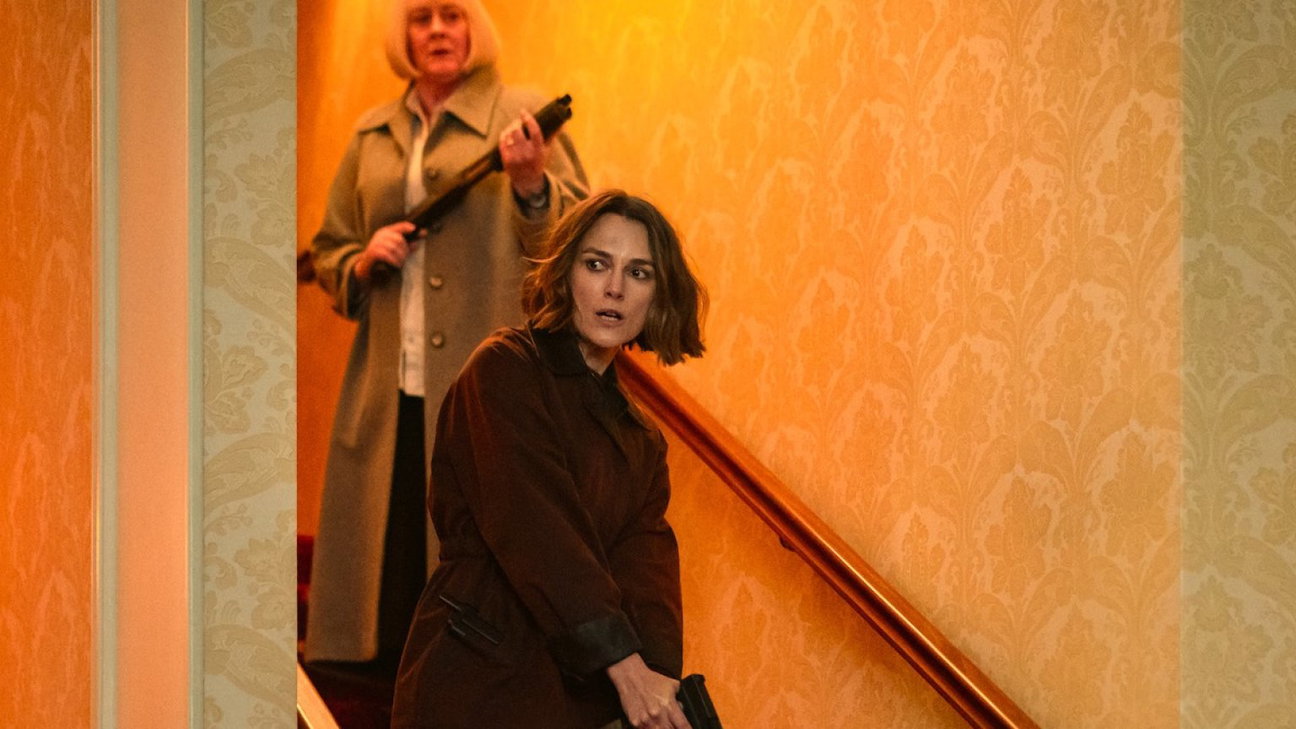
Their scenes also show why action can be more engaging when the characters have something to lose beyond the immediate mission. Williams and Eleanor's feelings complicate their work. A moment of hesitation can carry emotional meaning; a joke can conceal fear; a perfectly executed move can become an expression of trust. The result is not less action but action with more layers attached to it.
Helen and Reed represent different kinds of power
Helen and Reed are not simply the field agent and the boss. Their relationship is built around competing forms of authority. Helen has the ability to improvise, adapt and operate in the world outside the organisation. Reed has institutional reach, information and the experience to anticipate how people will behave. Both understand manipulation, and both know that affection can become leverage.
Season 2 gives that relationship greater emotional weight by exposing more of Reed's history and the personal consequences of the organisation's decisions. Netflix's cast guide describes Reed as one of the most powerful and inscrutable figures connected to the Black Doves, while Barton says that giving her a personal story allowed the creative team to chip away at her icy exterior and reveal vulnerability. That is a more interesting use of a female authority figure than making her a simple substitute for a male mastermind.

It also prevents the series from treating women in power as automatically virtuous. Reed can be compelling and ruthless. Helen can be sympathetic and manipulative. The show is not asking viewers to approve of them because they are women. It is asking viewers to follow what happens when people with complicated histories gain access to extraordinary power.
Why the show does not need a “female version” of a male action hero
The strongest thing about Black Doves is that it rarely pauses to announce that its women can do what men do. It simply lets them do it, then gives them different personalities and consequences. Laila's brash confidence is not the same as Helen's careful compartmentalisation. Williams and Eleanor have a shared rhythm that belongs to them. Reed's authority is shaped by years of institutional survival. Those distinctions are more persuasive than a generic claim that the women are tougher than the men.
The series also avoids pretending that violence is liberating in itself. Its assassins may be entertaining to watch, but the work damages relationships and narrows the possibility of an ordinary life. The characters' competence does not free them from the systems they serve. In that sense, the show is more interested in the cost of being effective than in celebrating the act of killing.

What Joe Barton’s approach says about the future of the series
In interviews around Season 2, Barton has spoken about expanding the organisation and giving the audience a closer look at how it works. Netflix Tudum's Season 2 coverage describes his interest in widening the spy world and showing more of its internal mechanics. That expansion creates room for more kinds of operatives, more competing loyalties and more women whose roles are not limited to supporting the lead.
It also makes the ensemble more sustainable. A series built around only one exceptional woman risks making every other character feel secondary. Black Doves has the opportunity to move between Helen, Reed, Laila, Williams and Eleanor without making them copies of one another. Their conflicts can be ideological, personal, professional or simply a clash of temperament. That range is one of the show's strongest assets as it looks toward further stories.
The appeal of deadly women in Black Doves
The women of Black Doves are compelling not because they prove that women can be as violent as men, but because the series gives them the full range of character traits usually reserved for the centre of an action drama. They can be brilliant, petty, funny, loyal, selfish, wounded and terrifying. Their gender shapes how the world reads them, but it does not reduce them to a single message.
That is why the casting and writing feel more refreshing than a simple swap of male assassins for female ones. The show creates a world in which women hold the power, make the plans and live with the consequences. Its most effective scenes come from the friction between those women: their alliances, rivalries, jokes, secrets and shifting loyalties. The result is not a lecture about representation. It is a more unpredictable spy thriller.
Frequently asked questions
Why are the female assassins in Black Doves so distinctive?
They have different motives, voices and working styles. Helen relies on social access and improvisation, Reed on institutional authority, Laila on unpredictability, and Williams and Eleanor on coordination and personal chemistry.
Did Joe Barton say women hitpeople are more interesting than burly men?
The available interviews support the show's interest in complex female antiheroes, but they do not establish that exact wording as a direct quote from Barton. It is best understood as an interpretation of the series' creative approach, not a verified quotation.
Who plays Laila in Black Doves Season 2?
Ambika Mod plays Laila, an unpredictable operative who joins the Season 2 ensemble.
Who are Williams and Eleanor?
Williams is played by Ella Lily Hyland and Eleanor is played by Gabrielle Creevy. They are an assassin partnership whose professional teamwork develops into a more personal relationship.
Who created Black Doves?
Joe Barton created the series and serves as its writer and executive producer.
Where can viewers watch Black Doves?
Black Doves is available on Netflix. Check the official Netflix series page for availability in your region.
Sources and further reading
- Radio Times: Ambika Mod on playing Laila and the show's female antiheroes
- Netflix Tudum: Joe Barton, Gabrielle Creevy and Ella Lily Hyland on Williams and Eleanor
- Netflix Tudum: Black Doves Season 2 cast and characters
- British GQ: Joe Barton on the show's moral code and character choices
- The Independent: Joe Barton on creating Black Doves and its second season


