

Spoilers for Black Doves Season 2, including the finale.
At first glance, the Webb household looks like the kind of family a political thriller is supposed to protect: a rising public figure, a composed spouse, two children, a carefully managed home and a life that appears to be moving toward the center of national power. But Black Doves Season 2 keeps pulling at the seams of that picture. The more Helen Webb tries to preserve the appearance of a normal family, the more clearly the series shows that the people closest to her are living with different versions of the truth.
The season’s idea of family is much wider than a husband, wife and children. Helen and Sam have a bond that often feels more honest than either of their conventional relationships. Reed and Vita carry the consequences of a mother-daughter separation across decades. The Black Doves itself operates like a damaged family business, with handlers, agents, rivals and executives bound by loyalty that can turn into control. Even the people who seem to belong safely inside the Webb home are not necessarily who Helen believes they are.
That is what makes the season’s family story so fragile. These relationships are not simply threatened by outside violence. They are weakened by secrecy, inherited decisions, competing loyalties and the fact that love does not automatically produce trust. Season 2 does not offer one tidy definition of family. It shows several forms of belonging, each with its own fault line.

The Webb family is held together by a version of Helen that Wallace no longer recognizes
Helen’s marriage to Wallace has always depended on selective truth. He knows the polished political spouse, the attentive mother and the woman who can move comfortably through official dinners and public appearances. He does not know the full history behind her other name, her work for the Black Doves or the violence that has shaped her adult life. The gap is not a minor omission. It is the architecture of their marriage.
Season 2 makes that arrangement harder to sustain because Wallace’s political rise changes the consequences of every secret. As he becomes prime minister, Helen is no longer merely married to an ambitious politician. She is living at the heart of government while continuing to pass information to a covert organization. The public family image becomes more visible at precisely the moment the private truth becomes more dangerous.
Netflix’s official season description frames Helen as walking a more treacherous line as Wallace approaches the premiership. Its cast guide also describes her roles as political spouse, devoted mother and covert operative becoming harder to keep separate. That overlap is central to the season: the family is not a refuge outside Helen’s work. It is now one of the places where the consequences of that work arrive first.
Wallace’s growing suspicion does not mean the marriage was entirely false. The emotional history between them matters, which is why the deception hurts. Helen can love her husband and still have built their shared life around a version of herself that he was never allowed to question. Wallace can care for Helen and still be entitled to know what kind of danger surrounds his family. The season refuses to make either side of that contradiction disappear.
The children make the idea of a protected home impossible to maintain
Helen’s children represent the part of her life she most wants to keep beyond the reach of the Black Doves. Yet the season repeatedly demonstrates that a secret life cannot be sealed off by good intentions. The children live in the same household, move through the same routines and depend on adults whose loyalties Helen cannot fully control. Their safety is connected to decisions made long before they understood the world around them.
The finale brings that vulnerability into sharp focus. Vita’s plan uses the children to put Helen under unbearable pressure and force a choice involving Wallace. Marie’s betrayal makes the threat more intimate because she has been trusted inside the family home. The danger is not only that an enemy can reach the children; it is that the ordinary systems of care around them have become difficult to trust.
Helen’s response is protective, but the season does not pretend that protection restores the household to its former state. Even when the immediate threat is stopped, the family has been changed by what Wallace now knows and by how close the children came to being used in a political operation. A home can survive an emergency and still lose the sense of safety that made it a home.
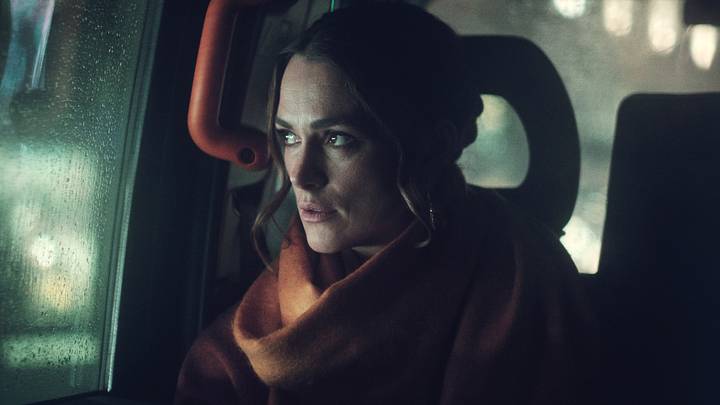
Reed and Vita show how a family wound can outlive the original decision
The relationship between Reed and Vita gives the season its most direct portrait of family damage passed from one generation to another. Reed’s past undercover work in East Berlin separated her from the daughter she had with Franz. Vita grew up without the stable knowledge of who she was or why her mother was absent. What Reed may have understood as a choice made within an impossible intelligence operation became, for Vita, an abandonment that shaped her entire identity.
The revelation that Katia Chernov is actually Vita changes the scale of the conflict. Her campaign is not simply an attack by a rival operative. It is an attempt to make the organization and the woman who left her pay for a history she has never been able to put behind her. The Black Doves become the institution through which the family wound is expressed, but the emotional center remains a daughter who believes her mother chose the mission over her.
Netflix Tudum’s finale explanation confirms the history behind Vita’s identity and describes the final meeting between mother and daughter. Reed tells Vita that she never stopped loving her, but the confession arrives after years of damage and at a moment when it cannot repair what happened. The tragedy is not that love was absent in every sense. It is that love, as Reed understood it, did not reach Vita in a form she could recognize.
That distinction makes their story more complicated than a simple villain-versus-victim conflict. Reed’s reasons do not erase the consequences. Vita’s pain does not make the destruction she causes harmless. The series allows both realities to exist, showing how family loyalty can become a story people tell themselves long after the other person has experienced it as betrayal.

Helen and Sam are a chosen family, but closeness does not make them safe
Helen and Sam’s connection offers a different model of family. They are not related, and their relationship does not fit neatly into the categories of spouse, colleague or ordinary friendship. They share a history of danger and a rare ability to recognize the person beneath the performance. With Sam, Helen does not have to pretend that she is simply a political wife. With Helen, Sam is not required to present himself as a cleanly rehabilitated former hitman.
That honesty is valuable, but it is not the same as stability. Their bond is shaped by violence, guilt and the knowledge that either person can bring danger to the other. Sam’s decisions during the season show how loyalty can become a burden. He is pulled into a bargain involving Reed and Patrick, while the compromising material used against him is tied to Helen’s past. Protecting a person he loves does not give him a clear or painless route through the crisis.
Their farewell at the end of the season is therefore not a simple rejection of the friendship. Sam leaves for Italy, a place associated with the possibility of a quieter life, while making clear that Helen can still reach him if she needs him. The separation is an attempt to create distance from a cycle that keeps putting them in danger. It is also a reminder that chosen family can be emotionally real and still be unable to provide the ordinary security people hope to find in it.

The Black Doves organization behaves like a family without offering family-level protection
The organization at the center of the series is built on a particular kind of belonging. Agents are connected by shared work, secrets, handlers and the practical need to rely on one another. Reed is both a boss and a formative presence in Helen’s life. The organization supplies structure and identity, but it also treats information and loyalty as resources that can be traded or withheld.
Season 2 pulls back the curtain on that internal culture. The crisis around Reed, the pressure from Kestrel and the attack on the headquarters reveal how quickly a network of colleagues can become a collection of competing interests. Dani’s betrayal, the struggle to rescue Reed and the deaths inside the organization all show that the Black Doves cannot rely on a shared mission to guarantee mutual care.
There is an important difference between a family metaphor and a functioning family. The Black Doves can offer its members a sense of purpose and a place in a larger structure, but it can also discard them when their usefulness changes. That is why the organization’s internal conflict feels so personal. Characters have invested years in a system that has shaped their identities, yet the system does not promise the kind of unconditional protection that the word family implies.
Showrunner Joe Barton’s comments to Netflix about exploring more of the organization’s inner workings help explain why this season’s institutional story matters. The Black Doves are not just a backdrop for Helen’s missions. They are a social world with its own hierarchy, history and emotional obligations. When that world breaks, the damage reaches beyond an office or an operation.
Why the season’s different family stories belong together
The Webb marriage, Reed and Vita, Helen and Sam, and the Black Doves organization are not identical relationships. Their differences are the point. One is a nuclear family built around a major secret. One is a mother-daughter bond broken by an old decision. One is a chosen-family friendship that cannot escape the danger surrounding it. One is an institution that imitates family language while operating through professional leverage.
What connects them is the gap between belonging and knowing. Wallace belongs to Helen’s household but does not know her full identity. Vita is Reed’s daughter but does not feel that she was wanted. Sam knows Helen more completely than many people do, yet cannot make their shared life safe. Black Doves agents work within the same organization but cannot assume that their colleagues will protect them when loyalties shift.
That gap also explains why the season’s emotional turns feel so consequential. A secret is not merely information withheld for a plot twist. It changes what one person believes a relationship is. When the truth arrives, the relationship may continue, but it cannot return to its previous shape. Season 2 repeatedly places its characters at that threshold.
What the finale leaves unresolved for the Webb family
The finale does not show Wallace receiving a complete account of Helen’s past. It ends as the couple prepare to begin a conversation that has been postponed for years. Wallace asks her to start with her name, creating a direct opening for the truth without showing what Helen says next. Netflix’s explanation confirms that the scene stops before the presumed full confession.
That ending matters because the next stage of their family life cannot be built on the same arrangement. Wallace has already protected Helen when MI5 questions him, but protection is not the same as understanding. Helen may be ready to tell him more, but honesty will not automatically repair the trust that secrecy has worn down. The children’s future also depends on how the adults manage a truth that can no longer be kept outside the household.
Sam’s departure adds another unresolved change. Helen still has someone who understands her, but he is no longer physically beside her. Reed and the surviving Black Doves leadership must rebuild after a crisis that exposed deep internal weaknesses. Each relationship moves forward, but none returns to its old position.
The spy family is fragile because love cannot undo the past
Black Doves Season 2 does not argue that family is meaningless or that loyalty is always a trap. It shows that love can be genuine while the relationships built around it remain damaged. Helen’s commitment to her children is real, but it cannot erase the danger created by her secret work. Reed’s love for Vita does not cancel the years of absence. Sam’s loyalty to Helen cannot guarantee that staying close is the safest choice. The Black Doves can offer belonging, but not unconditional care.
That is why the season’s spy family feels more fragile than ever. Its members are connected by affection, history and shared danger, yet each bond carries information that has been hidden, choices that cannot be reversed or obligations that may eventually pull people apart. The series finds its emotional force not in proving that these characters are secretly one happy family, but in showing how hard they keep trying to protect one another when the foundations of those relationships are already cracked.
Frequently asked questions
What does “spy family” mean in Black Doves Season 2?
It refers to the overlapping relationships around Helen: her household with Wallace and their children, her close bond with Sam, Reed’s history with Vita, and the covert organization whose agents depend on one another. The season shows how each form of belonging can be strained by secrecy and danger.
Why is the Webb family more fragile in Season 2?
Wallace’s rise to prime minister increases the public and political stakes, while Helen’s hidden identity becomes harder to conceal. The finale leaves their marriage at the start of a difficult truth-telling conversation rather than offering a quick restoration of trust.
How does Reed’s relationship with Vita affect the story?
Vita is Reed’s long-lost daughter. Their separation and unresolved pain become a major motive behind the attack on the Black Doves, connecting the organization’s crisis to a deeply personal family history.
Are Helen and Sam considered family?
They are not related, but their long history and unusually deep understanding of one another make their friendship resemble a chosen-family bond. Season 2 also shows how that closeness can expose both of them to further danger.
Does Wallace learn Helen’s full secret in the finale?
No complete confession is shown. Wallace asks Helen to begin with her name, and the season ends before the conversation reveals the full truth.
Does Black Doves present the organization as a family?
The organization has family-like structures of loyalty, mentorship and shared identity, but it is still a covert institution built around secrets and utility. Season 2 makes clear that those bonds do not guarantee safety or unconditional support.
Sources and further reading
- Netflix Tudum: Black Doves Season 2 guide and series overview
- Netflix Tudum: Black Doves Season 2 ending explained
- Netflix Tudum: Season 2 cast and character guide
- Netflix Tudum: Season 2 locations and production guide
- Radio Times: Black Doves Season 2 ending explained
- Entertainment Weekly: Black Doves Season 2 finale recap
By Shivam Das


