

Spoiler warning: This review discusses major plot developments from “The Opportunity to Become Savage,” Season 2, Episode 4 of Black Doves.
One early audience reaction to Black Doves Season 2, Episode 4 called it “incredible.” That is a memorable response, but it should be treated as one viewer’s opinion rather than proof of a universal verdict. What makes the episode stand out is easier to explain: it gives the series’ coldest character a painful history, lets Sam briefly imagine a different life, and reveals how Helen crossed a line she can never uncross.
“The Opportunity to Become Savage” was released with the rest of Season 2 on November 5, 2026. The 57-minute chapter moves between the present-day danger surrounding Reed and several carefully staged flashbacks. Rather than simply advancing the conspiracy, it changes how viewers understand the people caught inside it. Netflix’s official Season 2 guide describes the larger story as one of buried history, fractured trust and painful choices; Episode 4 makes those themes personal. Netflix Tudum’s Season 2 guide.
Why Episode 4 feels different from the rest of the season
The episode’s structure is its first major distinction. Instead of cutting rapidly between every character and location, the story gives its past-tense chapters room to unfold. The result is closer to a character study wrapped inside a spy thriller. The flashbacks do not feel like decorative background information: each one changes the meaning of a present-day relationship.
That approach is also why the episode can divide viewers. A review from We Have Issues praised the chapter as one of the season’s most revealing and gripping, particularly for the way it expands Reed’s history. By contrast, The Brisbane Times argued that the extended fourth episode slows the season’s momentum. Both reactions point to the same creative choice: the episode prioritizes explanation and emotional consequence over constant forward motion.
Reed’s East Berlin past changes the whole story
The biggest revelation belongs to Elizabeth “Reed” Reed, played by Sarah Lancashire. In 1988 East Berlin, she is living undercover inside Kestrel under the codename Wildflower. Her assignment has become deeply personal: she has built a family life with Franz and their young daughter, Vita, while also carrying on a relationship with her station chief, Peter Maddison.
When Franz proposes moving the family to Amsterdam, Reed does not simply face a difficult professional decision. She panics at the possibility of losing the life she has built in Berlin and the relationship she wants to preserve. She invents a terrorist threat, setting in motion an operation that destroys the Kestrel cell. The lie becomes a chain of violence: Franz learns the truth, Peter kills him, Peter then turns on Reed, and Reed shoots Peter in self-defense. In the chaos, Vita is left behind.
The revelation is disturbing because Reed is not exposed as a flawless strategist who made one necessary sacrifice. She is shown as a person whose selfishness, fear and desire for control helped create the very danger she later spends decades managing. Vulture’s Episode 4 recap also emphasizes how the Berlin operation connects directly to the present-day Kestrel threat.

Sam’s Italian chapters add a quieter kind of heartbreak
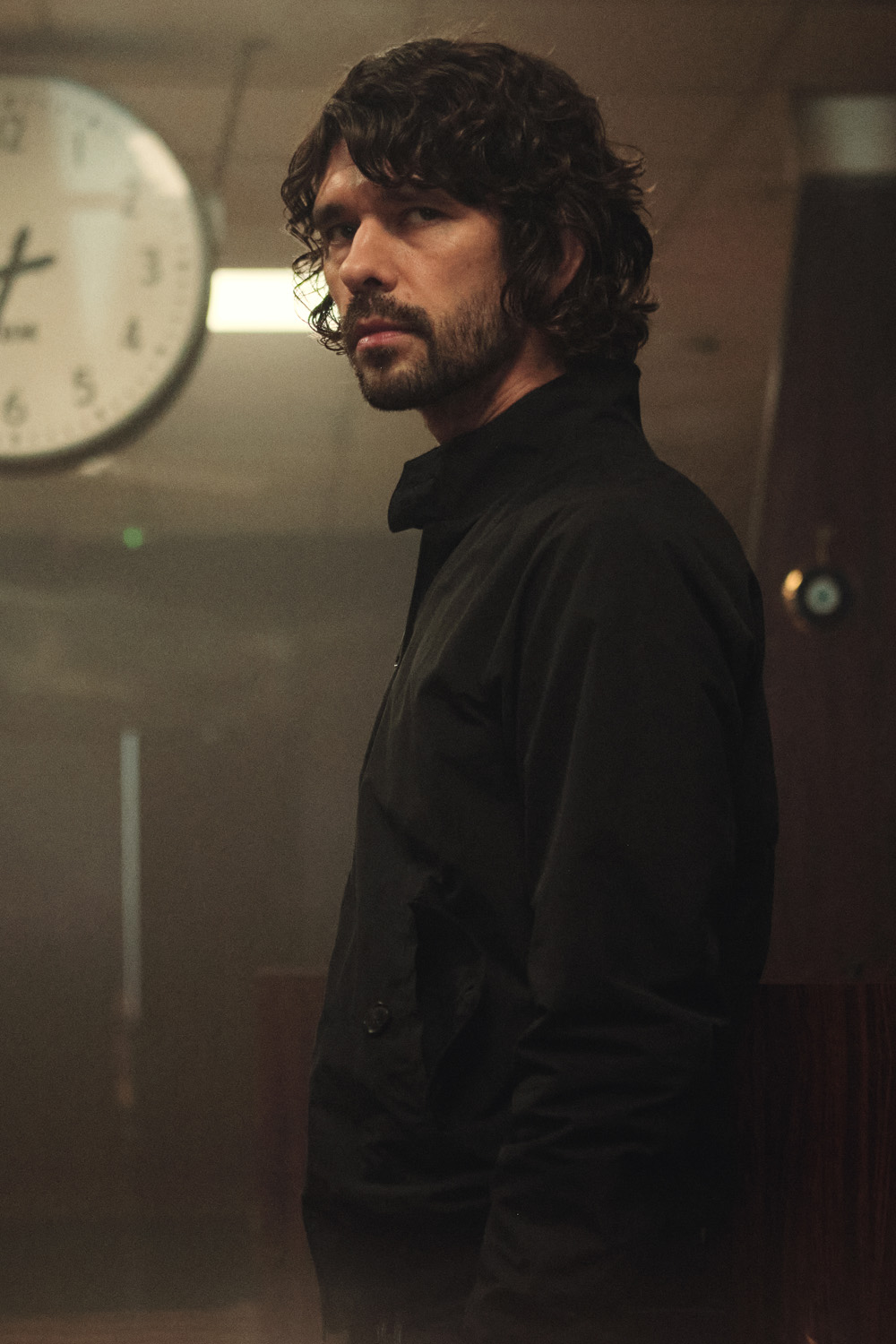
Sam’s storyline provides the episode’s emotional counterweight. After the violence of his earlier assignments, he has found a temporary refuge in an Italian village. Helping at a local bar gives him a glimpse of ordinary routine and human connection. He begins to form a bond with the owner, Matteo, but his guilt over killing Aldo, the village priest, keeps intruding on that fragile peace.
When Reed finds him and asks him to locate Franz, Sam investigates but ultimately refuses to take the job further. His refusal matters because it is one of the rare moments when he tries to protect a life outside the machinery of the Black Doves. The episode does not pretend that a quiet village can erase his past; it shows how hard he is trying to believe that another version of himself might still be possible.
Helen’s first assassination becomes more than a plot point
Helen’s flashback is quieter but just as consequential. Shortly after giving birth to her twins, she is struggling with the demands of family life when Reed orders her to kill Franz, who is now living in Dorset and dying of cancer. Helen resists the assignment, but eventually takes the gun and carries it out.
This is the moment her role expands from intelligence work into assassination. Franz’s final message—that he has found Vita—turns the killing into something more complicated than an operational task. Helen has followed an order that helps preserve Reed’s secrets, but the information she carries back also threatens to reopen a history that has been buried for decades.

Williams and Eleanor bring the episode’s emotional spark
The present-day scenes involving Williams and Eleanor give the episode a different rhythm. While they are pinned down during an attempted hit on Laila, Williams finally struggles to say what she feels. The confession is awkward, funny and sincere—exactly the kind of tonal collision that has become part of Black Doves’ identity.
Their scene also works structurally. It bookends the longer historical material, reminding viewers that the characters in this show are not only operatives completing assignments. They are people trying to make sense of love, loyalty and fear while danger is still unfolding around them. The show’s dark humor does not erase the threat; it makes the emotional moments feel more human.
What early audience reactions actually tell us
The word “incredible” appeared in an early viewer comment about Episode 4 on the season’s audience-review listing. That is worth noting, but it is not a representative poll and should not be presented as a consensus. Early online reactions are useful as a snapshot of what caught an individual viewer’s attention—not as a substitute for a large, verified audience sample.
The broader critical response to Season 2 has also been positive while acknowledging the show’s excesses. The Guardian praised the performances and emotional poignancy while questioning the plausibility of the spy plotting. NME highlighted the season’s pace, cast and flashbacks, while still noting that the series asks viewers to suspend disbelief. Those season-wide reviews do not rate Episode 4 on its own, but they help explain the mix of strengths and reservations surrounding the show.
Is Episode 4 one of the season’s standout chapters?
For viewers who value character revelations, morally complicated decisions and carefully constructed flashbacks, Episode 4 has a strong case. It gives Reed a history that is both revealing and uncomfortable, makes Sam’s desire for peace feel tangible, and shows the cost of Helen’s loyalty to the organization. It also gives Williams and Eleanor a moment of emotional honesty without abandoning the show’s sharp humor.
For viewers who prefer a faster-moving conspiracy, the extended flashbacks may feel like a pause in the main story. That criticism is fair. But the episode’s slower structure is also what allows the later events of the season to carry more weight. It does not simply tell viewers that Reed has secrets; it shows the choices that made those secrets dangerous.
For more context, read our related coverage of the Wildflower files and Reed’s East Berlin mission and Williams and Eleanor’s confession under sniper fire.

Frequently asked questions
What is Black Doves Season 2 Episode 4 called?
Episode 4 is titled “The Opportunity to Become Savage.” It was released on November 5, 2026, alongside the other episodes in Season 2.
Why is Episode 4 important to Reed’s story?
It reveals Reed’s 1988 undercover operation in East Berlin, her relationship with Franz and Peter, and the decisions that separated her from her daughter Vita.
Does Episode 4 focus only on Reed?
No. It also follows Sam’s attempt to find peace in Italy, Helen’s first assassination, and the developing relationship between Williams and Eleanor.
Is “incredible” the general audience verdict?
No. It is an individual early viewer reaction, not proof of a majority opinion. The episode’s reception includes praise for its character revelations as well as criticism of its slower pacing.
Final verdict
“The Opportunity to Become Savage” stands out because it makes the past impossible to ignore. Reed’s history reshapes the present, Sam’s brief escape reveals what his life could have been, and Helen’s decision shows how easily duty can become complicity. The episode may slow the season’s momentum, but it gives the characters a depth that makes the surrounding conspiracy matter. That is why one viewer’s “incredible” reaction is understandable—even if the fairest verdict is that Episode 4 is a bold, divisive and emotionally revealing chapter.
By Shivam Das


