

Quick answer: Ambika Mod says working with Keira Knightley on Black Doves Season 2 was easy because Knightley was welcoming, grounded and generous on set. That warmth sits in delicious contrast with their characters: Mod’s sharp-tongued Laila and Knightley’s controlled operative Helen begin with friction, trade cutting remarks, and become an unexpectedly effective team. Their chemistry is not just dialogue-driven; it is tested in physical set pieces, especially the elaborate Somerset House gallery fight.
Spoiler note: This article discusses the characters and action sequences in Season 2.

What Ambika Mod said about working with Keira Knightley
In an interview with Stylist, Mod described Knightley as “grounded,” “cool” and welcoming, adding that working with her felt easy. That matters because the two actors were building a partnership that needed to feel both combative and comfortable. Helen and Laila are not instant friends. Their scenes depend on the sense that each woman can challenge the other without either losing her footing.
Mod also spoke about Knightley in a separate Radio Times interview, calling her lovely, genuine, generous and very cool. Asked about the experience of working together, Mod’s comments were notably uncomplicated: she found Knightley supportive and easy to work with. There is no suggestion that the off-screen relationship needed to imitate the characters’ antagonism. Instead, the actors could approach the tension as a performance problem to solve together.
That distinction is important. On screen, Laila is deliberately abrasive. She needles Helen, questions her instincts and is unimpressed by the privileges surrounding the political world Helen inhabits. Off screen, Mod describes a colleague whose steadiness helped make the work less intimidating, particularly when the scenes became physically demanding.

Why Helen and Laila clash from their first scene
The friction begins with personality, but it quickly becomes a clash of outlook. Helen is practiced at managing appearances. She is a political spouse, a mother and a covert operative, and each role demands a different kind of control. Laila is far less interested in making herself palatable. She is direct, sarcastic and happy to puncture Helen’s carefully maintained composure.
In a Radio Times interview published on November 5, 2026, Mod described a generational divide between the characters. She said there are “gaps and divides” between them, especially in their first scene, and noted that Laila enjoys roasting Helen. The actor also suggested that their differences may be ideological. Knightley has described Helen as “pure capitalist,” while Mod imagined that Laila might have something more socialist about her — although she joked that Laila’s taste for designer clothes and expensive trainers complicates that theory.
The contradiction is part of Laila’s appeal. She is not a tidy political symbol. She can mock privilege while enjoying luxury; she can be fiercely independent while working for an organization; and she can treat lethal work with a casualness that makes other characters uncomfortable. Mod’s performance lets those contradictions coexist instead of explaining them away.
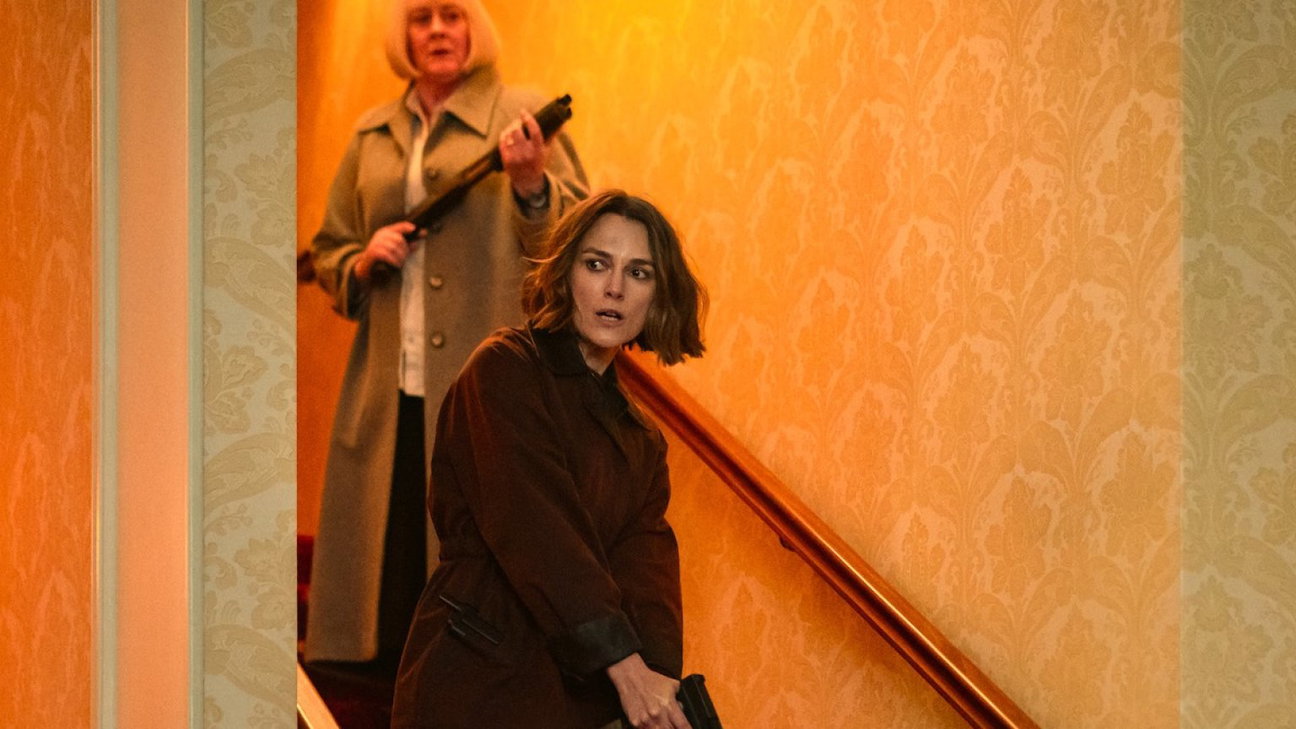
The Somerset House fight: chemistry under pressure
The clearest physical expression of the partnership arrives in the Somerset House sequence. Mod has said she had not done this kind of stunt work before and was keen to learn. In her Radio Times interview, she described the art-exhibition sequence as a standout: it is staged as a continuous shot in which Helen and Laila move through the gallery, using whatever is at hand to fight off attackers. Mod singled out the moment when Laila hits a man with a tray and throws a champagne bottle at another as especially satisfying.
In a separate conversation with Glamour UK, Mod explained that the action choreography required her to learn movements thoroughly and then adapt when the cameras were rolling. She credited Knightley’s calm attitude with helping keep the experience manageable. Knightley’s advice, as Mod recalled it, was essentially to accept that a shoot will unfold as it unfolds. For a performer taking on unfamiliar physical work, that kind of reassurance can be more useful than a grand motivational speech.
The sequence works because the actors’ contrasting styles remain visible inside the choreography. Helen is controlled and strategic; Laila is more impulsive and physical. The fight is not simply two people performing the same moves side by side. It is a visual extension of their character dynamic: they do not need to agree on everything to become effective together.

Why the pairing feels fresh in the spy genre
Spy stories often build partnerships around a familiar division of labour: one character supplies discipline, another supplies improvisation. Black Doves gives that structure a sharper edge by making the women’s differences social and personal as well as professional. Helen is deeply embedded in political respectability. Laila is suspicious of that world and refuses to pretend she is impressed by it.
The comedy comes from the fact that both women are capable and both know it. Laila can be rude without being incompetent; Helen can be polished without being weak. Their verbal sparring is entertaining because neither is simply there to make the other look good. Each has the ability to expose the other’s blind spots.
There is also a welcome refusal to make their relationship sentimental too quickly. They can cooperate, save one another and still disagree. That gives the partnership room to develop beyond a simple “unlikely friends” formula. The audience can enjoy their chemistry without needing every exchange to end in mutual admiration.
Ambika Mod’s Laila is a different kind of role
Mod has previously been widely associated with emotionally demanding roles in This Is Going to Hurt and One Day. Laila gives her a different register: brash, funny, physically confident and comfortable being the most disruptive person in a room. Mod told Stylist that she shares some of Laila’s honesty and unseriousness, but not the character’s confidence that nobody can take her down.
She has also been clear that the physical side of the role appealed to her. In the Radio Times interview, Mod said she was not naturally coordinated and undertook stunt training, with the cast performing much of the action themselves. That effort is visible in the finished sequences, where Laila’s movements feel like part of her characterization rather than a generic action-hero routine.
Mod has said she would like to explore more of Laila’s background. The character remains something of an enigma, and the actor has expressed curiosity about where she came from and what shaped her. That open question could become one of the most useful threads for a future season: Laila is entertaining because of what she reveals, but also because of what she keeps hidden.
What the chemistry could mean for a future season
The strongest reason to keep Helen and Laila together is that their partnership still has room to change. They have established a working rhythm, but their differences have not disappeared. A future story could test whether their mutual respect survives a serious disagreement, whether Laila becomes more invested in the Black Doves organization, or whether Helen’s growing exposure at the heart of government makes her harder for Laila to trust.
Mod herself has said she would be interested in discovering more about Laila’s history and motivations. That is not confirmation of a third season or a promise about the character’s future. It is an indication that the actor sees unexplored territory in the role. For now, the most satisfying part of the pairing is its balance: two capable women who can disagree, trade insults and still make a dangerous team.
My take: the chemistry works because the show does not force Helen and Laila to become versions of each other. Knightley brings control and accumulated experience; Mod brings comic unpredictability and a different kind of confidence. Their scenes are most alive when both qualities remain intact. The clash is not a problem for the partnership. It is the reason the partnership is worth watching.
Frequently asked questions
What did Ambika Mod say about working with Keira Knightley?
Mod described Knightley as grounded, cool, welcoming and easy to work with. She also praised Knightley’s calm attitude during the demanding action work.
Who does Ambika Mod play in Black Doves Season 2?
Mod plays Laila Joshi, an unpredictable Black Doves operative who is sent to work with Helen Webb, played by Keira Knightley.
Why do Helen and Laila clash?
Their conflict comes from differences in personality, generation and outlook. Laila is blunt and irreverent, while Helen is more controlled and accustomed to navigating political and professional appearances.
Which Black Doves action scene did Ambika Mod enjoy most?
Mod singled out the Somerset House art-gallery sequence, particularly the continuous-shot fight involving a serving tray and a champagne bottle.
Did Ambika Mod perform her own stunts?
Mod said she undertook stunt training and that the cast performed much of the action themselves. The exact stunt responsibilities vary by sequence.
Will Laila return in Black Doves Season 3?
There is no confirmed character-specific return announcement in the interviews cited here. Mod has expressed interest in exploring Laila’s backstory, but that is not a renewal or casting confirmation.
Sources and further reading
- Stylist: Ambika Mod on Black Doves, working with Keira Knightley and her surprising dream co-star
- Radio Times: Ambika Mod on playing Laila and working with Keira Knightley
- Radio Times: Mod and Knightley discuss the gaps and divides between Helen and Laila
- Glamour UK: Ambika Mod on Black Doves, stunts and her on-screen chemistry with Knightley
- Netflix Tudum: Black Doves Season 2 cast, story and release guide
- British GQ: How Ambika Mod’s Laila changes the energy of Black Doves
By Shivam Das


